
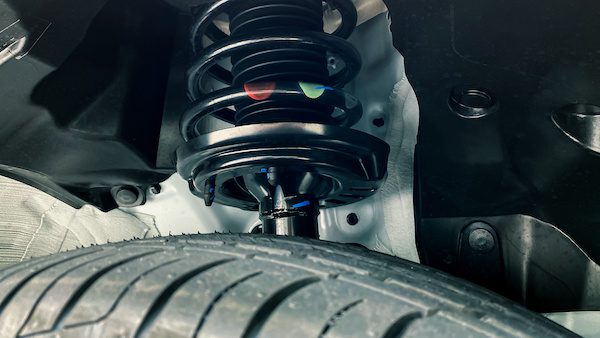
A vehicle’s suspension system plays an important role in providing a comfortable, stable, and safe driving experience. Whether driving on smooth highways, uneven city roads, or rough country routes, the suspension system helps keep the vehicle balanced and its tyres connected to the road. It also reduces the impact of bumps, controls body movement, and supports proper handling during turns and braking.
Several components work together to make this system function correctly. Shocks, struts, springs, and control arms are among the most important suspension parts. Each has a different purpose, but all contribute to vehicle stability and ride quality. When one or more of these components become worn or damaged, drivers may notice unusual noises, excessive bouncing, uneven tyre wear, or difficulty controlling the vehicle.
Understanding how these suspension parts work can help car owners recognize potential problems, make informed repair decisions, and maintain their vehicles properly.
Why the Suspension System Matters
The suspension system connects the vehicle’s body and frame to its wheels. Its main purpose is to manage the movement created when tyres travel over different road surfaces.
Without a properly working suspension system, every bump and road imperfection would transfer more force into the vehicle’s body. This would make driving uncomfortable and could affect the driver’s ability to maintain control.
A well-maintained suspension system provides several important benefits.
- Improved ride comfort: Suspension components absorb and manage road impacts, making journeys more comfortable.
- Better handling: They help control body movement when turning, accelerating, and braking.
- Tyre contact: The system helps keep tyres in contact with the road for better traction.
- Vehicle stability: It reduces excessive body movement and helps maintain balance.
- Component protection: Proper suspension operation reduces unnecessary stress on other vehicle parts.
Suspension systems vary between vehicles. A small passenger car may use a relatively simple design, while larger SUVs and performance vehicles may have more advanced suspension arrangements.
Shocks: Controlling Vehicle Movement
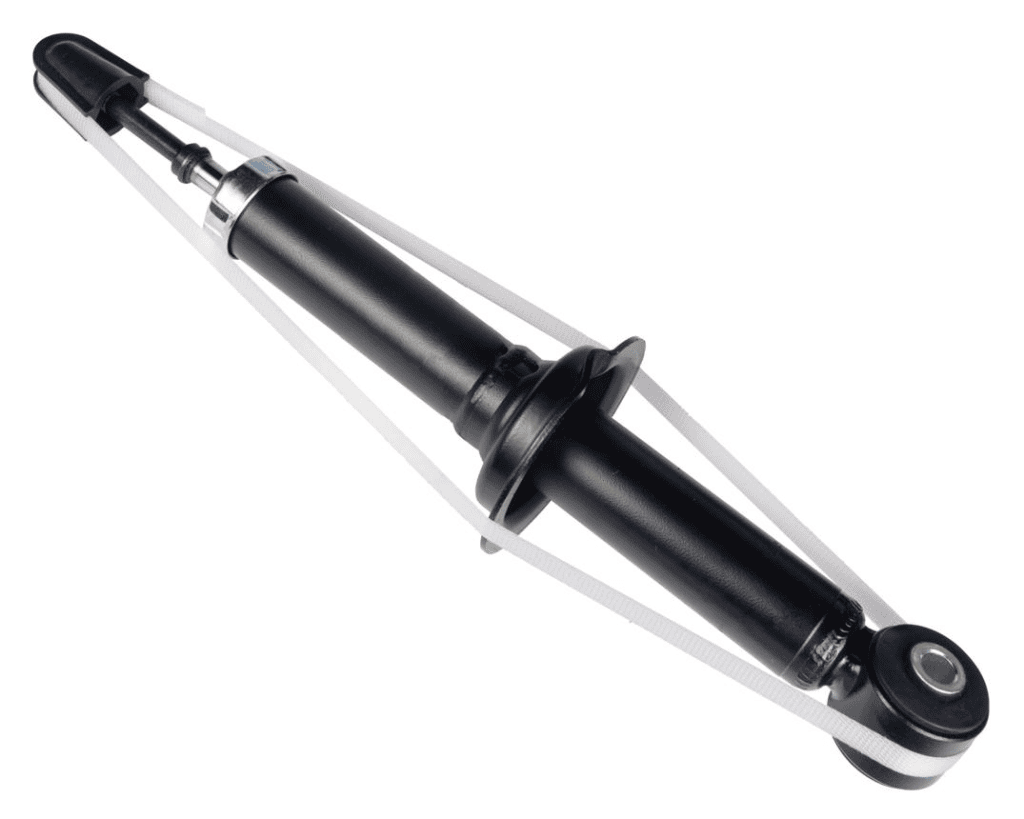
Shock absorbers, commonly called shocks, are designed to control the movement of the suspension system. Their main purpose is to reduce excessive bouncing after a vehicle travels over a bump or uneven surface.
When a wheel moves upward after hitting a road imperfection, the suspension spring compresses. Without a shock absorber, the spring could continue moving up and down several times. This would make the vehicle unstable and uncomfortable.
Shock absorbers control this movement through hydraulic resistance. Most traditional designs use a piston moving through hydraulic fluid inside a cylinder. This process helps convert suspension movement into heat and reduces unwanted bouncing.
How Shock Absorbers Work
When a vehicle travels over a bump, the wheel and suspension move. The shock absorber resists this movement and helps the vehicle return to a stable position.
It controls both compression and rebound movements. Compression happens when the suspension moves upward, while rebound occurs when it extends again.
Modern shock absorbers are designed to respond to different road conditions and driving demands. Some vehicles also use electronically controlled dampers that adjust their resistance according to driving conditions.
Signs of Worn Shock Absorbers
Shock absorbers gradually lose their effectiveness. Drivers may notice several warning signs as they wear out.
- Excessive bouncing after driving over bumps.
- The front end dipping noticeably during braking.
- Increased body movement when turning.
- Uneven tyre wear.
- Oil leaking from the shock absorber.
- A less stable feeling at higher speeds.
These symptoms do not always confirm a shock absorber problem. Worn tyres, damaged suspension bushings, and other faults can create similar signs.
When Should Shocks Be Replaced?
There is no single replacement interval that applies to every vehicle. Shock absorber life depends on road conditions, vehicle weight, driving habits, and component quality.
A mechanic should inspect shocks when the vehicle develops unusual bouncing, leaking, handling problems, or other suspension-related symptoms.
Replacing worn shocks in pairs on the same axle is often recommended to maintain balanced suspension performance. However, the correct repair approach depends on the vehicle manufacturer’s guidance and the condition of the remaining components.
Struts: Supporting the Suspension and Steering System
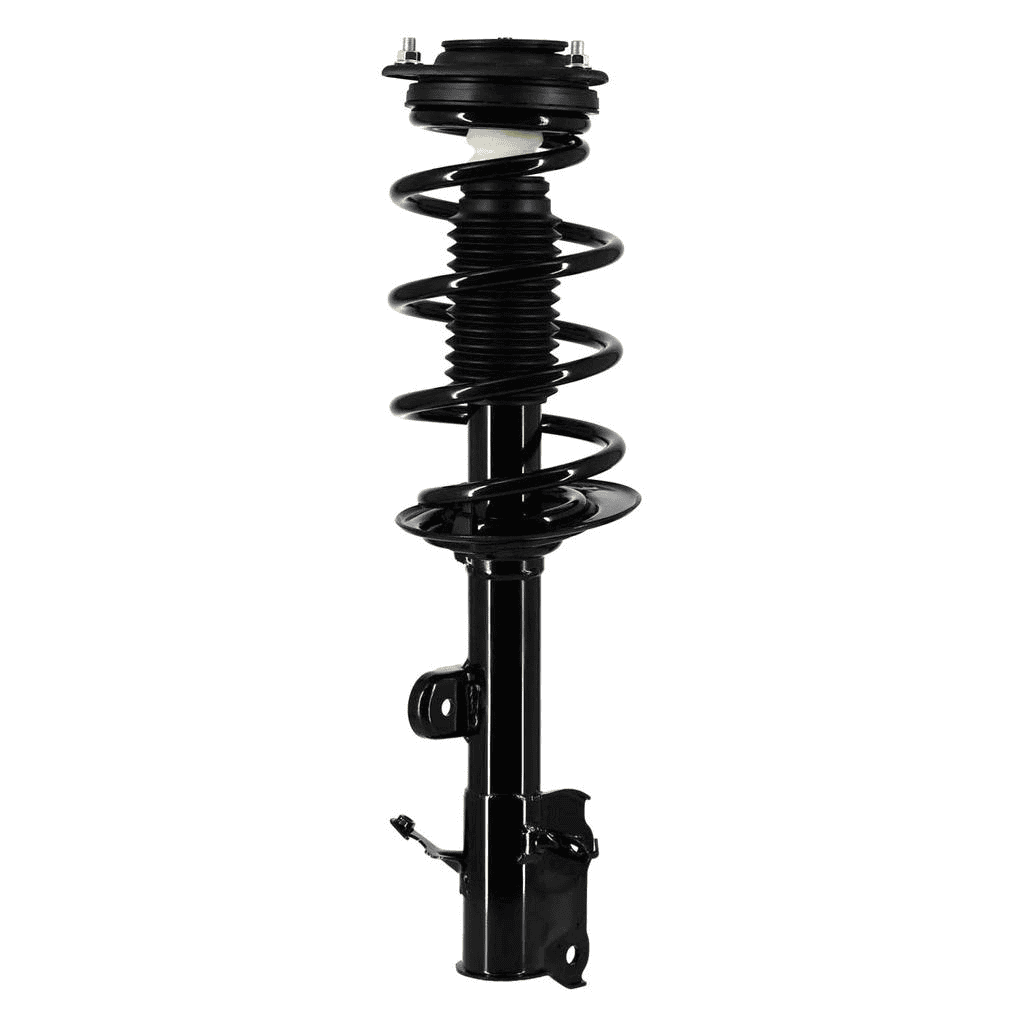
Struts are another important suspension component. They perform a damping function similar to shock absorbers, but they also provide structural support within certain suspension designs.
A common example is the MacPherson strut system, which is widely used in passenger cars. In this arrangement, the strut connects the vehicle body to the steering knuckle and works with the coil spring.
Because struts are structural parts of the suspension system, they influence more than ride comfort. They also help maintain wheel positioning and support the vehicle during driving.
How Struts Differ From Shocks
Although shocks and struts both control suspension movement, they are not exactly the same.
A shock absorber mainly controls the movement of the suspension spring. It is not usually a primary structural support for the suspension.
A strut combines a damping function with a structural role. It may support the coil spring and help locate the wheel assembly.
This difference is important when choosing replacement parts. A vehicle designed for struts cannot simply use ordinary shock absorbers in their place without changing the suspension design.
Common Signs of Strut Problems
Worn or damaged struts can affect ride quality, handling, and tyre condition.
Some common symptoms include:
- Excessive bouncing over uneven roads.
- Knocking or clunking sounds from the suspension.
- Vehicle instability during turns.
- Uneven tyre wear.
- Fluid leakage from the strut body.
- Reduced steering control or unusual vehicle movement.
If a strut becomes severely worn, it may also affect the performance of other suspension components.
Strut Replacement Considerations
Replacing struts may involve removing several connected suspension components. Depending on the design, the repair may require specialized tools and careful handling of the spring assembly.
Many repair shops recommend replacing struts in pairs on the same axle when both sides have similar wear or when balanced performance is important.
A wheel alignment may also be required after replacement, particularly if the repair affects steering or suspension geometry.
Springs: Supporting Vehicle Weight and Absorbing Road Impacts
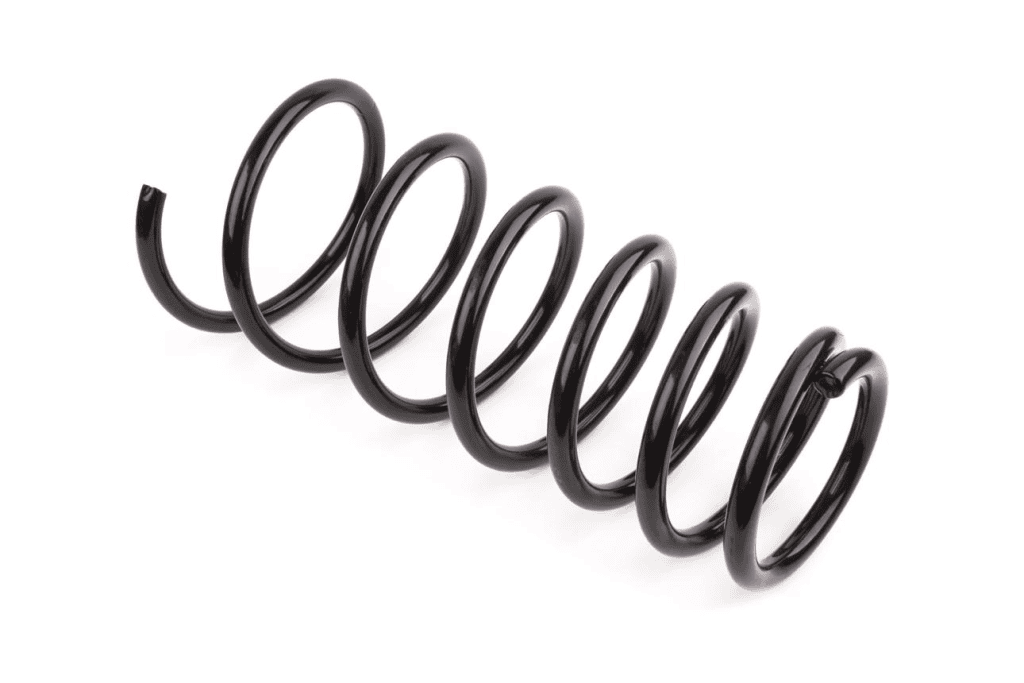
Suspension springs support the weight of the vehicle and allow the wheels to move when they encounter bumps or uneven surfaces.
They are responsible for absorbing much of the initial impact from road imperfections. When a wheel hits a bump, the spring compresses and stores energy. It then releases that energy as the suspension returns toward its normal position.
However, springs alone cannot control repeated bouncing effectively. This is why shock absorbers or struts work alongside them.
Different Types of Suspension Springs
Vehicle manufacturers use different spring designs depending on the suspension layout and vehicle requirements.
Coil Springs
Coil springs are among the most common suspension spring types. They have a spiral shape and are widely used in passenger cars, SUVs, and other vehicles.
They provide support while allowing controlled suspension movement. Their design can vary depending on vehicle weight and intended driving characteristics.
Leaf Springs
Leaf springs consist of several curved metal strips arranged in layers. They are commonly found in pickup trucks, commercial vehicles, and some older vehicle designs.
They are particularly useful for carrying heavier loads and supporting vehicles designed for demanding work.
Torsion Bars
Torsion bars use the twisting resistance of a metal bar to provide suspension support. They are used in certain vehicle designs and can offer a relatively compact suspension arrangement.
Air Springs
Air suspension systems use flexible air-filled components instead of conventional steel springs in certain applications.
They allow some vehicles to adjust ride height and suspension characteristics according to load or driving conditions. Air suspension is commonly found in selected luxury vehicles, SUVs, and commercial applications.
Warning Signs of Damaged Springs
Suspension springs can weaken, crack, or break over time. Drivers may notice:
- One side of the vehicle sitting lower than the other.
- A noticeable change in ride height.
- Clunking or metallic noises over bumps.
- Poor handling or unusual suspension movement.
- Uneven tyre wear.
- Visible cracks or broken spring sections.
A broken spring should be inspected promptly. Continuing to drive with a damaged spring may affect tyre clearance, suspension movement, and vehicle stability.
Why Spring Quality Matters
Choosing the correct replacement spring is important because springs are designed to support a specific vehicle weight and suspension setup.
Installing an unsuitable spring can change ride height, handling, and suspension behavior.
Vehicle owners should select springs that match the vehicle’s specifications, intended load, and suspension design.
Control Arms: Connecting the Wheels to the Vehicle
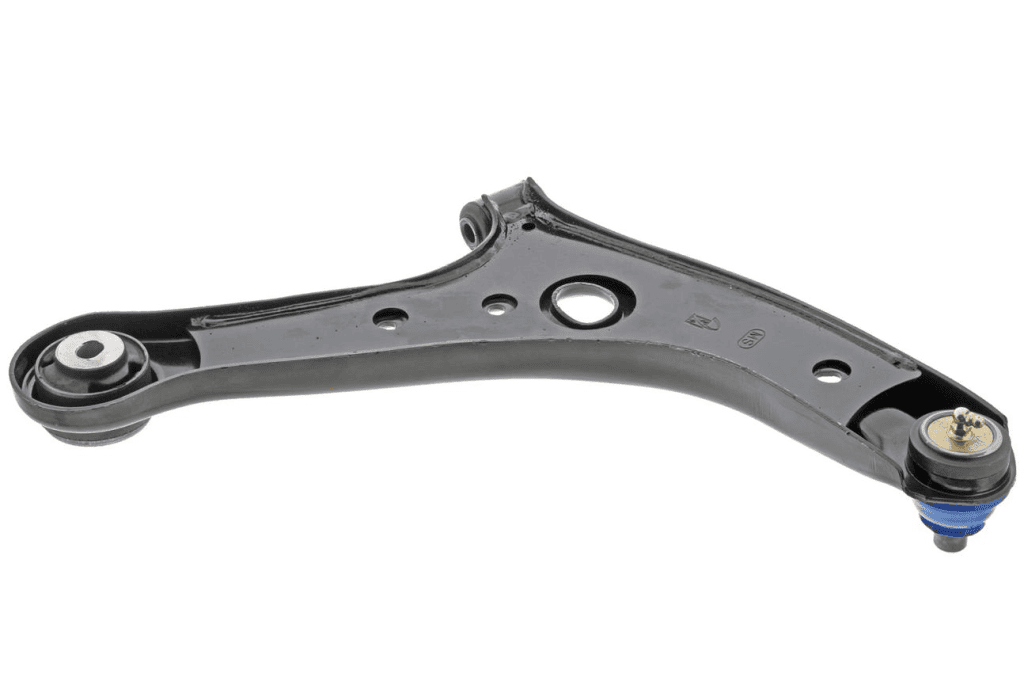
Control arms are important suspension components that connect the wheel assembly to the vehicle’s frame or subframe.
They help guide the movement of the wheels as the suspension travels over uneven surfaces. Their design also helps maintain the correct wheel position during acceleration, braking, and cornering.
Many vehicles use upper and lower control arms, while others use different arrangements depending on their suspension design.
How Control Arms Work
A control arm generally connects to the vehicle structure through bushings and to the steering knuckle through a ball joint.
Bushings allow controlled movement while reducing vibration and noise. Ball joints provide a flexible connection that allows the steering and suspension systems to move together.
As the wheel moves over a bump, the control arm helps guide its movement while maintaining the suspension geometry.
Control arms are especially important for proper wheel alignment and steering stability.
Signs of Worn Control Arms
Control arm problems often develop gradually. Some common warning signs include:
- Clunking noises when driving over bumps.
- Steering that feels loose or unstable.
- Uneven tyre wear.
- Vehicle pulling to one side.
- Vibrations through the steering wheel.
- Visible cracks or damage to control arm bushings.
A damaged ball joint can create serious steering and suspension problems. If it becomes severely worn or separates, the driver may lose control of the affected wheel.
For this reason, unusual suspension noises and steering changes should be inspected without unnecessary delay.
Replacing Control Arms
Control arms may be replaced as complete assemblies or serviced with individual bushings and ball joints, depending on the vehicle design.
Replacing the complete assembly can be a practical option when several parts are worn or damaged. However, replacing individual serviceable components may be more economical when the remaining parts are in good condition.
After control arm repairs, a wheel alignment is often necessary to restore the correct suspension geometry.
Shocks, Struts, Springs, and Control Arms: Understanding the Differences
Although these components work together, each performs a different function.
| Suspension Part | Main Function |
| Shocks | Control bouncing and suspension movement |
| Struts | Provide damping and structural suspension support |
| Springs | Support vehicle weight and absorb road impacts |
| Control Arms | Connect and guide wheel movement |
Understanding these differences helps drivers communicate more effectively with mechanics and make better repair decisions.
For example, replacing a worn shock absorber may improve excessive bouncing, but it will not repair a broken spring or damaged control arm bushing.
A complete suspension inspection is often the best way to identify all components that need attention.
How Suspension Problems Affect Driving Safety
The suspension system has a direct effect on vehicle handling and road contact. When its components become worn, the vehicle may not respond as expected during normal driving.
Reduced Steering Control
Damaged control arms, worn ball joints, or faulty struts can affect wheel positioning and steering response.
Drivers may notice that the vehicle feels loose or requires more effort to maintain a straight path.
Longer or Less Stable Braking
Worn suspension components can allow excessive vehicle movement during braking. This may affect tyre contact with the road and reduce braking stability.
The braking system itself should also be inspected because worn brake pads, damaged rotors, or other faults can create similar concerns.
Poor Handling on Uneven Roads
A weak suspension system may struggle to control wheel movement over bumps and rough surfaces.
This can make the vehicle feel unstable, particularly during cornering or emergency maneuvers.
Increased Tyre Wear
Suspension problems can change wheel alignment and tyre contact patterns. As a result, tyres may wear unevenly or develop unusual wear patterns.
Regular tyre inspections can help identify possible suspension or alignment problems before they become more expensive.
What to Consider Before Replacing Suspension Parts
Suspension repairs can involve different components, labor requirements, and costs. Vehicle owners should consider several factors before approving replacement work.
Confirm the Actual Problem
Unusual noises, vibrations, and handling changes do not always indicate the same suspension fault.
A mechanic should inspect the vehicle and identify the damaged component before recommending replacement.
Replacing parts without proper diagnosis can increase expenses without solving the original problem.
Choose Compatible Replacement Parts
Suspension components are designed for particular vehicle models and configurations.
Before purchasing parts, confirm the make, model, year, engine or trim level where relevant, and correct part number.
Using components with unsuitable dimensions or specifications may affect ride height, alignment, and handling.
Compare OEM and Aftermarket Components
Original equipment manufacturer (OEM) parts are supplied through the vehicle manufacturer’s parts system or made to its specifications.
Aftermarket parts are produced by independent manufacturers. Some offer good quality and competitive prices, while others may differ in material quality and durability.
Compare manufacturer reputation, compatibility, warranty coverage, and product specifications before making a decision.
Consider Replacing Parts in Pairs
For some suspension components, replacing both sides of the same axle is recommended to maintain balanced performance.
This is particularly relevant when shocks or struts have experienced similar wear over time.
However, the correct replacement strategy depends on the component, vehicle manufacturer’s guidance, and inspection results.
Check Wheel Alignment
Suspension repairs can affect wheel positioning and alignment.
After replacing control arms, struts, or other geometry-related components, a wheel alignment may be necessary.
Proper alignment helps support stable steering and even tyre wear.
Understand Labor and Additional Costs
Suspension repairs may require specialized tools and additional work. The total cost depends on the vehicle design, accessibility of parts, and extent of damage.
Ask the repair shop for a clear estimate covering parts, labor, alignment, and any additional components that may need attention.
Practical Maintenance Tips for a Healthy Suspension System
Regular attention can help vehicle owners identify suspension problems before they become more serious.
- Inspect tyres regularly for uneven wear.
- Pay attention to knocking, squeaking, or clunking noises.
- Avoid driving over potholes at excessive speeds.
- Have suspension components inspected during routine maintenance.
- Check vehicle ride height for unusual changes.
- Repair damaged bushings, ball joints, and other components promptly.
- Follow the manufacturer’s recommendations for suspension maintenance.
- Arrange wheel alignment after relevant suspension repairs.
Driving carefully on rough roads and responding early to unusual vehicle behavior can help reduce unnecessary wear.
Frequently Asked Questions About Car Suspension Parts
What Is the Difference Between Shocks and Struts?
Shocks control suspension movement and reduce bouncing. Struts also provide damping but serve as structural components in certain suspension designs. They are not interchangeable in every vehicle.
How Do I Know If My Suspension Springs Are Bad?
Common warning signs include uneven vehicle height, unusual clunking noises, poor handling, and visible spring damage. A broken or weakened spring should be inspected by a qualified mechanic.
Can Bad Control Arms Affect Wheel Alignment?
Yes. Worn control arm bushings, damaged ball joints, or bent control arms can affect suspension geometry and wheel positioning. This may cause steering problems and uneven tyre wear.
How Long Do Suspension Parts Last?
Suspension component lifespan depends on road conditions, driving habits, vehicle weight, and part quality. There is no universal replacement interval for all shocks, struts, springs, or control arms.
Should Shocks and Struts Be Replaced Together?
Shocks and struts do not always need to be replaced together because they serve different roles and may be used in different suspension arrangements. Replacement decisions should be based on the vehicle design and inspection results.
Keeping Your Vehicle Comfortable and Stable
A properly working suspension system is essential for comfortable driving, reliable handling, and consistent tyre contact with the road. Shocks control unwanted bouncing, struts combine damping with structural support, springs carry vehicle weight, and control arms guide wheel movement.
When these components become worn or damaged, drivers may experience unusual noises, poor handling, uneven tyre wear, and reduced driving comfort. Ignoring these warning signs can lead to additional repairs and potentially affect vehicle safety.
Regular inspections, compatible replacement parts, and timely maintenance can help keep the suspension system in good condition. Understanding how each component works also makes it easier to discuss repairs with a mechanic and choose the right solution for long-term vehicle performance.
