
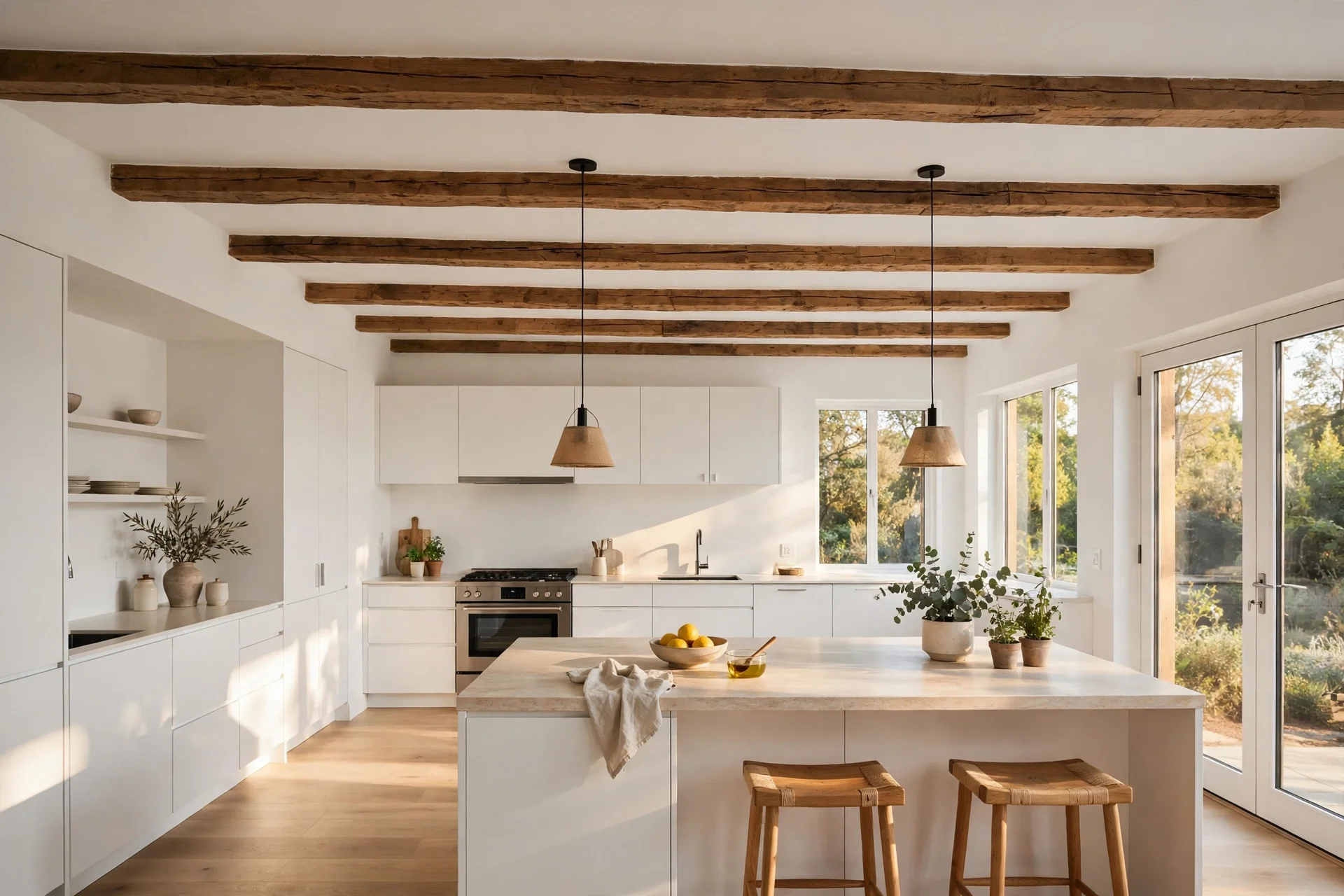
A plain kitchen ceiling is easy to ignore, and that is exactly why it can make the whole room feel unfinished. The cabinets may be new, the worktops may be beautiful, and yet the space above eye level remains a flat, blank surface. Ceiling beams change that balance at once. They draw the eye upward, add texture and rhythm, and give a kitchen a sense of structure that paint alone rarely achieves.
Beams do not belong only to farmhouses or period cottages. In a modern kitchen, a slim, smooth beam in a pale finish can frame an island, hide a ceiling change, or carry pendant lights without adding clutter. In a traditional kitchen, a deeper, warmer timber beam can soften hard surfaces such as stone, tile, and steel. The trick is to match the beam’s size, colour, and spacing to the ceiling height and the kitchen’s existing materials, rather than copying a look seen in a much larger room.
What Kitchen Ceiling Beams Do to a Plain Room
Beams work visually in two ways. First, they break a large flat surface into a pattern, so the ceiling feels intentional rather than leftover. Second, they create lines that lead the eye in a chosen direction: across the room to make it feel wider, along the island to make the cooking zone feel anchored, or toward a window to emphasise light. In a small kitchen, that sense of direction can make a low ceiling feel taller, because the eye is invited upward instead of stopping at the wall tops.
Beams also add warmth through material. Wood brings grain, variation, and a natural tone that softens the cool surfaces common in kitchens. Painted beams keep the texture while matching a modern palette, and metal or dark-stained beams add contrast in an industrial scheme. The material choice should echo something already in the room, such as flooring, shelving, or a table, so the beams feel connected rather than added as an afterthought.
Real Timber, Faux Wood, and Painted Kitchen Beams Compared
Real timber beams are heavy, beautiful, and best suited to structural or semi-structural use, or to rooms where their weight can be supported safely. They need sealing against kitchen moisture and grease, and their colour will change slightly over time. Faux wood beams, usually made from lightweight polyurethane or hollow timber boxes, give much of the same look at a fraction of the weight. They are easier to fit on a standard ceiling, can hide wiring or pipes, and are a practical choice for a decorative-only project.
Painted beams are not a separate material but a finish decision that changes the whole effect. White or soft-grey painted beams keep a kitchen bright and suit a modern or coastal scheme, while a dark stain adds drama and suits a larger room with plenty of light. Whitewashing sits between the two, softening the grain without hiding it. Whichever finish you choose, test it on a sample in the kitchen’s own light, because artificial lighting and daylight can make the same stain look very different.
Kitchen Beam Layouts That Suit Low, Standard, and Vaulted Ceilings
Ceiling height should decide the layout before style does. On a low ceiling, a single beam or a pair of slim beams, placed to frame the island or the main work zone, adds interest without lowering the perceived height. Deep, closely spaced beams on a low ceiling can feel oppressive and make lighting awkward. On a standard ceiling, parallel beams spaced evenly across the room give a calm, ordered rhythm, while a grid or coffered pattern suits a larger kitchen with a central island.
Vaulted or sloped ceilings offer more freedom, because beams can follow the slope and emphasise the height rather than fight it. In that case, align beams with the roof structure where possible, and use them to carry lighting down to a useful level. Whatever the ceiling, keep beams clear of cooker hoods, extractor ducts, and sprinkler or smoke-alarm positions, and plan lighting at the same time as layout, not as an afterthought. A beam that blocks a downlight is a design problem that is easy to avoid on paper.
Decorating Kitchen Beams With Colour, Lighting, and Texture
Colour is the fastest way to change a beam’s character. Matching the beam to the ceiling colour makes it subtle, almost architectural, while contrasting it with the ceiling makes it a feature. A useful middle ground is to match the beam to another timber element in the kitchen, such as open shelving, a butcher block, or a dining table. That repetition makes the room feel designed as a whole, rather than decorated in isolated parts.
Lighting transforms beams after dark. Pendant lights hung from a beam over an island give focused task light and a clear focal point. Recessed lights set between beams wash the ceiling evenly, while a strip of warm light tucked behind a beam creates a soft glow without visible fittings. Avoid harsh, cool light directly on raw timber if the aim is warmth; a warm-white tone usually suits wood better. Also consider grease and steam: beams above a hob need a wipeable finish and enough distance from heat and cooking vapour.
Kitchen Beam Finishes That Survive Steam and Grease
Kitchen beams live in a harder environment than beams in a bedroom. Steam, cooking grease, and frequent temperature changes can dull an untreated finish and attract dust. A sealed, wipeable finish, whether a clear lacquer, a hardwax oil, or a washable paint, makes cleaning far easier. Plan a simple cleaning routine, such as a dry dusting followed by a damp wipe, and avoid abrasive pads on stained timber. A finish that cannot be cleaned will look tired within a year, however good it looked on installation day.
Hanging Lights, Pots, and Shelves From Kitchen Ceiling Beams
Beams are useful as well as decorative, but anything hung from them must be fixed properly. Pendant lights are the most common use, and they should be wired by a qualified electrician where new circuits or ceiling roses are involved. A hanging pot rack can save cabinet space and look wonderful over an island, yet it adds significant weight and needs fixings rated for that load, plus head clearance so nobody walks into it. Check the beam’s construction first: a hollow faux beam cannot carry the same load as a solid timber beam.
Open shelving hung from beams, or a beam used as a support for a rail, should follow the same rule. Keep the load modest, distribute fixings along the beam, and avoid hanging anything directly above a hob where heat and steam will damage it. If you are unsure about the ceiling structure, ask a builder or joiner to confirm what the beam can carry before drilling. A beautiful beam that sags or pulls away from the ceiling is worse than no beam at all.
Kitchen Beam Ideas for Plain Modern Interiors Without a Farmhouse Look
A modern kitchen does not need rustic beams to benefit from ceiling detail. Slim, square-edged beams in a pale oak or painted finish can add structure without farmhouse associations, especially when they are spaced widely and kept shallow. A single dark beam used as a contrast line, or a pair of beams framing a skylight, can give a minimalist kitchen a focal point without clutter. The key is restraint: fewer, cleaner beams usually suit modern interiors better than a dense, distressed grid.
Colour and texture should stay quiet in a modern scheme. Smooth finishes, simple joints, and a palette limited to two or three materials keep the room calm. Pair beams with flat-front cabinets, a simple splashback, and understated lighting, and let the beam be the one textural element in the room. In a plain white kitchen, even a light timber beam can be enough to stop the space feeling clinical, while still keeping the clean lines that define modern design.
Kitchen Ceiling Beam Costs, Fitting, and Safety Checks
Costs vary widely with material, size, and whether the beams are structural. For a broad estimate, lightweight faux beams for a standard kitchen are usually far cheaper than solid timber, and painting existing beams is cheaper still. Labour is a major factor: fitting beams level, hiding joints, and integrating lighting takes skill, especially on an uneven ceiling. Get a written quote that separates materials, fitting, finishing, and electrical work, so you can compare like with like.
Safety checks matter before any beam is fixed. Confirm the ceiling can support the chosen beam, keep beams clear of heat sources and ventilation routes, and do not cover smoke alarms, vents, or access panels. If a beam is structural, never cut, notch, or remove it without a structural engineer’s advice. Decorative beams should be clearly distinguished from structural ones in any future sale or renovation notes, so nobody mistakes a hollow box for a load-bearing member.
Final Thoughts: Kitchen Beams That Add Character Without Overwhelming the Room
The best kitchen beams feel inevitable, as if they were always part of the room. Choose a size that suits the ceiling height, a finish that echoes another material in the kitchen, and a layout that supports lighting and the island rather than competing with them. Keep the number of beams restrained in a modern kitchen, seal the finish against steam and grease, and fix anything hung from them properly. Done well, beams turn a plain ceiling into the kitchen’s quiet centrepiece.
Kitchen Ceiling Beam Decorating FAQs
Do kitchen ceiling beams make a low ceiling feel lower?
They can, if they are deep and closely spaced. On a low ceiling, use slim beams, space them widely, and paint them a light colour or match them to the ceiling. A single beam framing the island usually adds character without making the room feel cramped.
Are faux wood beams a good choice for a kitchen?
Yes, for decorative use. Faux beams are light, easier to fit, and can hide wiring, which suits most kitchen projects. They are not suitable for structural loads or for hanging heavy pot racks unless the fixing goes through to the ceiling structure behind them.
How do I clean kitchen ceiling beams?
Dust regularly with a dry cloth or soft brush, then wipe with a damp cloth and a mild cleaner suitable for the finish. Avoid abrasive pads on stained timber. A sealed, wipeable finish makes this far easier, especially above cooking areas where grease settles.
Can I hang pendant lights from a kitchen beam?
Yes, and it is one of the best uses for a beam over an island. Have new wiring done by a qualified electrician, check the beam can carry the fitting, and plan pendant height so lights do not hang at head height or interfere with cooking. Keep pendants clear of extractor hoods.
What colour should kitchen beams be in a modern kitchen?
Pale oak, white, or soft grey usually suit modern kitchens, because they add texture without dominating the room. Match the beam to shelving, flooring, or another timber element for a coordinated look, and test the finish in the kitchen’s own daylight and artificial light before committing.
Do I need permission to add decorative kitchen beams?
Decorative beams usually need no planning permission, but structural changes, listed buildings, and flats with lease restrictions are different. Check lease terms and local rules before cutting into a ceiling, and never alter a structural beam without professional advice.
