
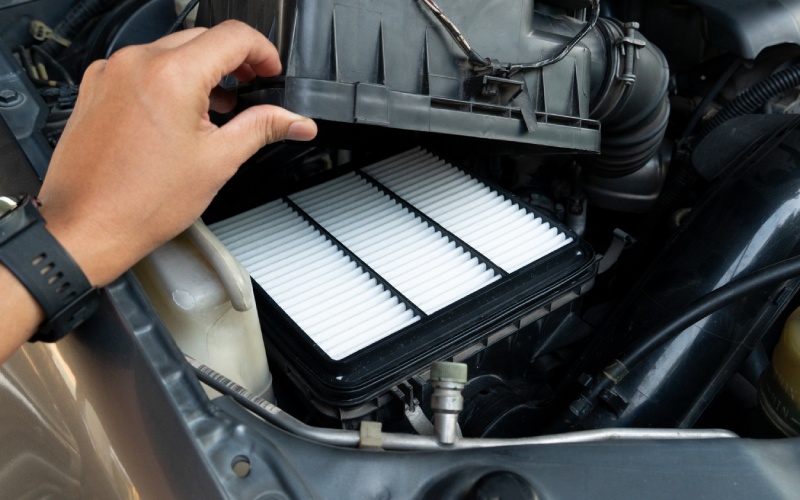
When we think about vehicle maintenance, we often focus on engine oil, tires, brakes, or the battery. The engine air filter may not seem as important, but it plays a simple yet essential role in keeping the engine healthy.
Every time an engine runs, it needs a steady supply of air. That air must be reasonably clean because dust, dirt, sand, and other particles can cause damage if they enter the engine. The air filter acts as a barrier, allowing air to pass through while trapping unwanted contaminants.
A filter that is clean and in good condition helps the engine receive the airflow it needs. On the other hand, a heavily restricted or damaged filter can affect engine operation and may contribute to reduced performance.
Let’s take a closer look at how engine air filters work, why they matter, and how we can tell when one may need attention.
What Is an Engine Air Filter?
An engine air filter is a component located within the vehicle’s air intake system.
Its primary purpose is to clean the air before it enters the engine.
The filter is usually made from specially designed paper, synthetic material, foam, or another filtering medium. As outside air passes through it, the filter traps particles that could otherwise enter the engine.
These particles may include:
- Dust
- Dirt
- Sand
- Pollen
- Small debris
- Other airborne contaminants
The exact design varies between vehicles, but the basic purpose remains the same.
The engine needs air for combustion, and the air filter helps ensure that the incoming air is cleaner.
Why Does an Engine Need Air?
An internal combustion engine needs oxygen to burn fuel.
During normal operation, air enters the intake system and eventually reaches the combustion chambers. The engine combines air with fuel, and the mixture is burned to produce the energy needed to move the vehicle.
Without enough air, the engine cannot operate as efficiently as it was designed to.
This is why airflow is so important.
The air filter has to perform two jobs at once. It must remove contaminants while still allowing enough air to pass through.
A good filter is designed to balance filtration and airflow.
How Does the Air Filter Work?
The process is relatively straightforward.
Outside air enters the vehicle’s intake system.
It then passes through the air filter.
The filter material traps unwanted particles while cleaner air continues toward the engine.
From there, the air moves through the intake system and into the engine, where it becomes part of the combustion process.
As the filter collects dirt over time, its appearance may become darker or dusty.
However, a dirty-looking filter is not always automatically due for replacement. The appropriate replacement interval depends on the vehicle, driving conditions, and manufacturer’s recommendations.
Why Clean Air Matters for the Engine
The inside of an engine contains many precision components that move at high speed.
If large amounts of dirt and abrasive particles enter the engine, they can contribute to wear over time.
A functioning air filter helps reduce the amount of contamination reaching these components.
This is especially important for vehicles driven in dusty environments.
For example, a vehicle regularly used on unpaved roads may encounter much more airborne dust than one driven primarily on clean paved roads.
The filter therefore acts as an important line of defense.
Can a Dirty Air Filter Reduce Performance?
A heavily restricted air filter can reduce the amount of air entering the engine.
Modern engines use sensors and computer controls to manage fuel delivery and airflow. Because of this, the effect of a dirty filter can vary significantly from one vehicle to another.
In some modern vehicles, a moderately dirty filter may have little noticeable effect on everyday driving until it becomes significantly restricted.
In other situations, a severely clogged filter may contribute to reduced engine performance.
We may notice:
- Slower acceleration
- Reduced responsiveness
- Difficulty maintaining performance under load
- Rough running in some circumstances
However, these symptoms can have many other causes.
A dirty air filter should not automatically be blamed for every performance problem.
What About Fuel Efficiency?
Fuel economy is another reason people pay attention to air filters.
The relationship between a dirty filter and fuel consumption is more complicated than it may appear.
In older carbureted engines, a severely restricted air filter could affect the air-fuel mixture and potentially reduce fuel efficiency.
Modern fuel-injected engines can often compensate for changes in airflow using electronic engine management.
As a result, replacing a moderately dirty air filter may not produce a dramatic improvement in fuel economy on every modern vehicle.
Still, maintaining the correct airflow is important for proper engine operation.
If the filter is severely clogged, replacing it can help restore the intake system to its intended condition.
Signs Your Air Filter May Need Attention
A dirty or restricted air filter does not always produce obvious symptoms.
However, some possible signs include:
- Reduced acceleration
- Poor engine responsiveness
- Reduced fuel economy
- Unusual engine sounds
- A visibly dirty filter
- Check engine light in certain cases
These symptoms can also be caused by other mechanical or electronic problems.
If your vehicle is experiencing noticeable performance changes, a complete inspection is better than assuming the air filter is the only issue.
A Dirty Filter vs. a Damaged Filter
Not every air filter problem is caused by dirt.
A filter can also become damaged.
Tears, holes, poor sealing, or incorrect installation may allow unfiltered air to enter the engine.
This can be more concerning than a filter that is simply dirty.
If the filter does not fit correctly inside its housing, air may bypass the filtering material.
This is why replacement filters should always be installed correctly.
Driving Conditions Make a Difference
The recommended air filter replacement interval is not the same for every driver.
Someone who drives mostly on clean highways may experience different conditions from someone who regularly travels through:
- Dusty roads
- Construction areas
- Desert environments
- Rural dirt roads
- Heavy traffic pollution
Vehicles used in dusty environments may need more frequent inspections.
Following the manufacturer’s maintenance schedule is a good starting point, but severe driving conditions may require additional attention.
How Often Should an Engine Air Filter Be Replaced?
There is no universal replacement interval.
The recommended schedule depends on the vehicle’s design and the conditions in which it is driven.
Some manufacturers recommend checking the filter during routine service and replacing it at specific mileage or time intervals.
The best approach is to consult the owner’s manual.
In some cases, a filter may need replacement sooner than the scheduled interval if inspection shows that it is heavily contaminated or damaged.
Can We Clean a Disposable Air Filter?
Most standard paper engine air filters are designed to be replaced rather than washed or cleaned.
Trying to clean them aggressively can damage the filtering material.
Compressed air may also be inappropriate for certain filters because excessive pressure can create tiny holes or damage the filter media.
Always follow the manufacturer’s instructions.
Some specialized reusable filters are designed to be cleaned and serviced, but they are different from standard disposable filters.
Don’t Confuse the Engine Air Filter With the Cabin Air Filter
Vehicles often have two different types of air filters.
The engine air filter protects the engine by filtering air used for combustion.
The cabin air filter cleans air entering the passenger compartment.
These two filters perform completely different jobs.
A dirty cabin filter may affect airflow from the vehicle’s heating and air-conditioning system.
A dirty engine air filter affects the air entering the engine.
When servicing a vehicle, we should make sure we are checking the correct filter.
The Importance of Proper Installation
Replacing an air filter is usually a straightforward maintenance task, but installation still matters.
The filter should sit correctly inside its housing.
The housing should close securely.
Any clips, fasteners, or seals should be properly positioned.
If the filter is installed incorrectly, unfiltered air may bypass it.
In some vehicles, the intake system contains sensors that can also be affected by improper installation or damaged components.
If we are unsure about the correct installation process, it is better to consult the owner’s manual or a qualified technician.
What Happens if We Ignore a Severely Dirty Filter?
The consequences depend on the vehicle and how restricted the filter becomes.
A moderately dirty filter may have little noticeable effect.
A severely clogged filter can restrict airflow and potentially affect engine performance.
In extreme situations, continued operation with poor filtration or a damaged filter can increase the risk of contaminants entering the engine.
The exact outcome varies, but regular inspection is a simple way to reduce unnecessary risk.
Does a High-Performance Air Filter Improve Power?
Aftermarket performance air filters are widely available, and some are marketed as a way to increase horsepower or improve fuel economy.
The actual results depend on the vehicle and the complete intake system.
Simply installing a different filter does not guarantee a noticeable power increase.
Modern engines are designed around specific airflow requirements, and the engine control system may already be optimized for the factory intake system.
Some performance-oriented vehicles may benefit from carefully engineered intake upgrades, but these are different from simply replacing a standard filter with a more expensive one.
We should also be cautious about products that make dramatic claims without providing reliable evidence.
What About Reusable Filters?
Some aftermarket filters are designed to be cleaned and reused.
This can reduce the number of disposable filters that need to be replaced over time.
However, reusable filters require proper maintenance.
They must be cleaned and serviced according to the manufacturer’s instructions.
If a reusable filter is over-oiled or incorrectly serviced, it may potentially cause problems for certain airflow sensors.
The benefits and drawbacks depend on the vehicle and filter design.
Air Filters and Turbocharged Engines
Turbocharged engines force additional air into the engine to produce more power.
Because airflow is particularly important in these systems, maintaining the intake system is essential.
A damaged or poorly installed air filter can allow contaminants into the turbocharger and engine.
For turbocharged vehicles, it is especially important to follow the manufacturer’s recommendations for air filter inspection and replacement.
Dusty Environments Require Extra Care
If we frequently drive on dirt roads or in areas with heavy dust, the air filter deserves additional attention.
A filter may become contaminated much faster under these conditions.
In such environments, checking the filter during routine maintenance can be a smart habit.
We should also inspect the filter housing and surrounding intake components for signs of dust intrusion.
If dust is appearing beyond the filter where it should not be, the system may not be sealing properly.
Air Filter Maintenance Is Relatively Simple
One of the advantages of the engine air filter is that it is generally easier and less expensive to maintain than many other engine components.
Depending on the vehicle, inspecting or replacing it may take only a short amount of time.
However, the location of the filter housing varies.
Some vehicles have easily accessible air boxes, while others may require removing additional components.
Always make sure the engine is off and follow appropriate safety precautions when inspecting anything under the hood.
Don’t Expect a Miracle After Replacement
Replacing a dirty air filter can be beneficial when the old filter is genuinely restricted or damaged.
However, we should keep our expectations realistic.
If the vehicle has a serious engine problem, replacing the air filter will not fix it.
Poor acceleration may be caused by ignition problems, fuel delivery issues, sensor faults, transmission problems, or many other factors.
Likewise, poor fuel economy can have numerous causes, including low tire pressure, aggressive driving, excessive vehicle weight, mechanical problems, or changes in driving conditions.
An air filter is one piece of the larger picture.
Other Factors That Affect Engine Airflow
The air filter is only one part of the intake system.
Other components include:
- Air intake ducts
- Airbox
- Mass airflow sensor
- Throttle body
- Intake manifold
- Turbocharger on equipped vehicles
A problem anywhere in this system can affect engine performance.
For example, a cracked intake hose may allow unmetered air to enter the engine.
A faulty airflow sensor can also create drivability problems.
This is why a professional diagnosis may be necessary when performance symptoms continue after routine maintenance.
When Should We Check the Air Filter?
It makes sense to inspect the air filter during regular vehicle maintenance.
We can also check it when:
- The vehicle has been driven in unusually dusty conditions
- Engine performance changes
- Fuel economy decreases unexpectedly
- The vehicle reaches the manufacturer’s recommended service interval
- The filter housing has been opened for other maintenance
Checking the filter is a relatively simple step that can help us understand the condition of the engine’s intake system.
A Simple Maintenance Habit With Long-Term Benefits
The engine air filter may not be the most complicated component under the hood, but its role is important.
By keeping unwanted particles away from the engine, it helps protect internal components while allowing the engine to receive the air needed for combustion.
Regular inspection and replacement when necessary are simple parts of responsible vehicle maintenance.
We should also remember that a clean filter is only one part of maintaining good engine performance.
Proper oil changes, correct tire pressure, regular servicing, and attention to warning signs all contribute to keeping a vehicle reliable.
Final Thoughts
The engine air filter is a small component that performs an important job. It allows the engine to receive air while helping prevent dust, dirt, and other contaminants from entering sensitive internal components.
A severely dirty or restricted filter can affect airflow and may contribute to reduced performance, although the effect varies between vehicles. Modern engines can often compensate for moderate restrictions, so replacing a filter does not always create a dramatic improvement in fuel economy or horsepower.
Still, there is little reason to ignore a filter that is damaged, heavily contaminated, or past its recommended service interval.
Checking the engine air filter as part of routine maintenance is a simple way to support the health of the intake system. Drivers who regularly travel through dusty or dirty environments may need to inspect their filters more frequently.
