
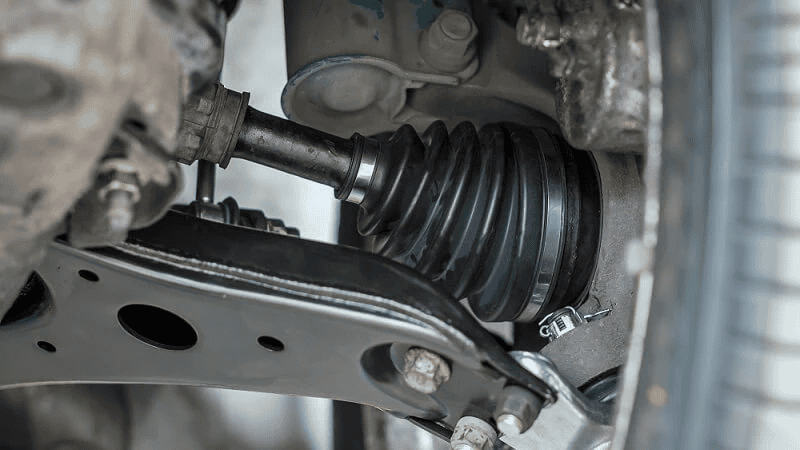
A vehicle’s drivetrain contains several important components that work together to transfer engine power to the wheels. Among these components, CV axles and joints play a major role in helping a vehicle move smoothly, turn properly, and maintain consistent power delivery. They are especially important in front-wheel-drive vehicles, although many all-wheel-drive and some rear-wheel-drive vehicles also use CV joints.
CV stands for Constant Velocity. A CV joint allows power to travel from the transmission or differential to the wheels while the suspension moves and the steering system changes direction. Without these joints, the wheels would not receive power smoothly when moving over uneven roads or turning around corners.
Although CV axles are designed to handle demanding driving conditions, they can eventually wear out or become damaged. Problems such as clicking noises, vibrations, grease leaks, and unusual driving behavior may indicate that a component needs attention.
Understanding how CV axles and joints work can help drivers recognize early warning signs, avoid unnecessary repairs, and maintain better vehicle performance.
What Are CV Axles and Joints?
A CV axle is a drivetrain component that transfers rotational power from the transmission or differential to the driven wheels. It usually consists of an axle shaft with a CV joint at each end.
The joints allow the axle to operate at different angles without interrupting the smooth transfer of power. This flexibility is important because the wheels move up and down with the suspension, while the front wheels of many vehicles also turn left and right.
Most front-wheel-drive vehicles have two CV axles, one connected to each front wheel. Each axle normally includes an inner and outer CV joint.
The inner joint connects to the transmission or differential, while the outer joint connects to the wheel hub. Both joints have different responsibilities, but they work together to keep power flowing smoothly.
In many vehicles, CV joints are protected by flexible rubber or thermoplastic boots. These boots hold special grease inside the joint and prevent water, dust, and road debris from entering.
When a boot becomes damaged, the grease may escape and contaminants can enter. This can eventually cause the joint to wear out.
How CV Axles Transfer Power to the Wheels
The engine produces rotational power, which passes through the transmission and differential before reaching the driven wheels. CV axles form an important connection between these drivetrain components and the wheels.
When the driver presses the accelerator, the transmission delivers power to the differential. The differential distributes that power to the drive axles, allowing the wheels to rotate.
As the vehicle moves, the suspension continuously adjusts to road conditions. The wheels may rise over bumps, drop into dips, or move at different angles. The CV joints allow the axle shafts to accommodate these movements without stopping power transfer.
This is especially important when turning. The outer CV joint must operate at a greater angle as the steering wheel turns, while the inner joint accommodates changes in axle length and suspension movement.
Because of this flexible design, CV axles help maintain smooth acceleration and consistent power delivery in different driving situations.
Different Types of CV Joints Used in Vehicles
Not all CV joints have the same construction. Different designs are used depending on the vehicle’s drivetrain, suspension arrangement, and performance requirements.
Rzeppa Ball-Type CV Joint
The Rzeppa joint is commonly used as an outer CV joint in front-wheel-drive vehicles.
It contains several steel balls positioned inside specially shaped tracks. These balls allow the joint to transfer rotational power while operating at different angles.
The design supports large steering angles, making it suitable for front wheels that need to turn in both directions.
Rzeppa joints are often associated with the clicking noise drivers hear when an outer CV joint becomes worn.
Tripod CV Joint
Tripod joints are commonly used as inner CV joints.
They contain three roller bearings mounted on a central component. These rollers move within tracks inside the joint housing, allowing the axle to change its effective length as the suspension moves.
This movement is known as plunge. It helps prevent unwanted pressure on the transmission and suspension when the wheels move up and down.
Tripod joints are useful because they accommodate both angular movement and changes in axle length.
Double Offset CV Joint
A double offset joint is another design used in certain drivetrain applications. It allows angular movement and axial movement while transferring rotational power.
Its construction can vary depending on the vehicle, but its purpose is similar to other inner CV joint designs.
These joints may be used where suspension movement requires additional flexibility.
Fixed and Plunging Joints
CV joints can also be described according to how they move.
A fixed joint maintains a relatively constant position along the axle while allowing angular movement. It is commonly used at the outer end of front-wheel-drive axles.
A plunging joint allows the axle assembly to change length as the suspension moves. It is often installed at the inner end.
Both designs are important for maintaining smooth power delivery under changing driving conditions.
Common Warning Signs of a Failing CV Axle or Joint
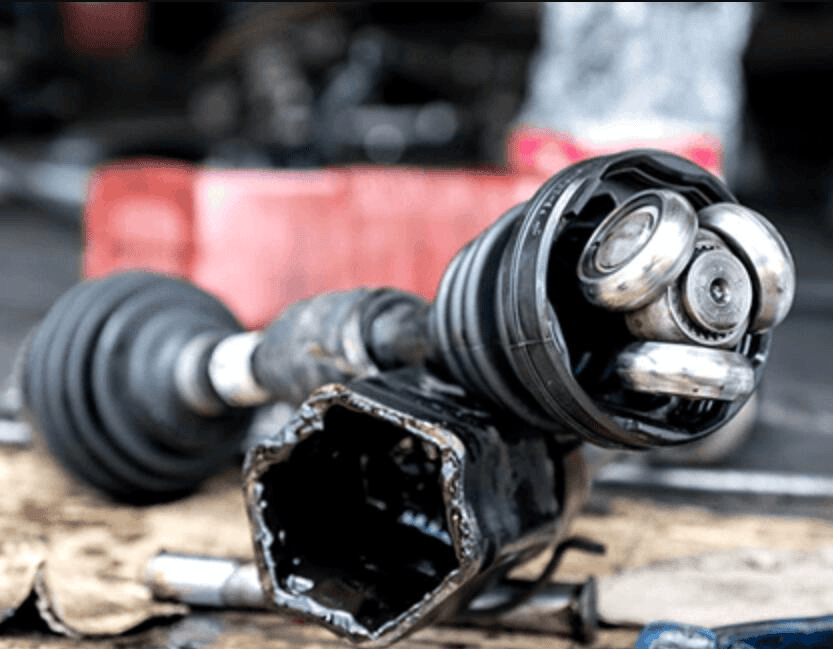
CV axle problems often develop gradually. Drivers may notice unusual noises, vibrations, or grease around the wheel area before a joint becomes severely damaged.
Recognizing these symptoms early can help prevent additional drivetrain problems.
Clicking Noise When Turning
A repeated clicking or popping sound during sharp turns is one of the most recognizable signs of a worn outer CV joint.
The noise may become more noticeable when accelerating while turning. For example, a driver may hear repeated clicking when making a tight turn in a parking area.
This sound can occur because the internal components of the joint have become worn or damaged.
Although a clicking noise is commonly associated with an outer CV joint, other steering and suspension components can also create similar sounds. A proper inspection is needed to confirm the problem.
Vibration During Acceleration
A damaged CV axle may cause vibration that becomes stronger when the vehicle accelerates.
This can happen when an axle shaft becomes bent, unbalanced, or worn. Problems with an inner CV joint may also create vibration during acceleration.
Drivers may feel the vibration through the floor, steering wheel, or vehicle body.
Wheel imbalance, damaged tires, worn engine mounts, and other drivetrain problems can produce similar symptoms. The vehicle should be inspected before replacing any components.
Grease Around the Wheel or Suspension
CV joints need grease to reduce friction between their internal moving parts.
A protective boot surrounds the joint and keeps the lubricant inside. If the boot cracks, tears, or becomes loose, grease may escape while the vehicle is moving.
Drivers may notice dark grease on the inside of the wheel, suspension components, or nearby bodywork.
A leaking boot does not always mean the joint has already failed. If the damage is discovered early and the joint remains clean and undamaged, replacing the boot and lubricant may be possible.
However, if dirt or water has entered the joint, replacement may be necessary.
Clunking Noise During Acceleration or Deceleration
A worn CV joint may produce a clunking sound when the driver changes between acceleration and deceleration.
The noise can result from excessive movement or looseness inside the joint or axle assembly.
However, worn transmission mounts, differential components, and other drivetrain parts can also cause clunking.
A mechanic should inspect the complete drivetrain to determine the actual source.
Shuddering at Higher Speeds
Some damaged CV axles cause shaking or shuddering that becomes noticeable as the vehicle gains speed.
This may be related to axle wear, shaft damage, or problems with the joints.
If the vibration increases during acceleration or changes depending on vehicle speed, the axle assembly should be checked.
Ignoring repeated shuddering can make driving uncomfortable and may allow additional drivetrain damage to develop.
What Causes CV Axles and Joints to Wear Out?
CV axles are designed to handle constant movement and power loads, but several conditions can shorten their service life.
Damaged CV Boots
A damaged boot is one of the most common reasons for CV joint failure.
The boot protects the joint from dust, water, stones, and other road contaminants. It also keeps the special grease inside.
Over time, rubber boots may become brittle because of age, heat, and exposure to road conditions. Small cracks can develop before a larger tear appears.
Once grease escapes, the joint may lose lubrication. Dirt and moisture can then enter and damage the internal surfaces.
Checking CV boots during routine maintenance can help identify problems before the entire joint needs replacement.
Normal Wear and Tear
CV joints contain moving metal components that experience friction and pressure during everyday driving.
After many miles, their internal tracks, rollers, balls, and other surfaces may gradually wear down.
Vehicles used for frequent city driving may experience repeated turning and acceleration cycles, while vehicles driven over rough roads may experience additional stress.
Eventually, normal wear can create looseness, noise, or vibration.
Aggressive Driving Habits
Hard acceleration, sudden changes in direction, and repeated sharp turns can place extra pressure on CV joints.
This is particularly important when drivers accelerate heavily while the steering wheel is turned sharply.
Although CV joints are designed to handle normal driving movements, repeated aggressive use can increase stress and contribute to premature wear.
Smooth acceleration and controlled steering can help reduce unnecessary strain.
Rough Roads and Potholes
Driving over potholes, damaged roads, and uneven surfaces can place additional stress on the axle and suspension.
A severe impact may damage a CV boot, bend an axle shaft, or affect other nearby components.
Regularly driving on rough surfaces can also increase wear over time.
Reducing speed when approaching road hazards helps protect the drivetrain and suspension.
Incorrect Installation
CV axles must be installed correctly to work as intended.
Incorrect fitting, damaged seals, unsuitable replacement parts, or improper handling can lead to premature problems.
Some vehicles require specific procedures when removing or installing axle assemblies. Following manufacturer instructions helps prevent damage to the transmission, wheel hub, and surrounding components.
CV Axle Problems in Different Types of Vehicles
CV axle designs are used across several vehicle categories, but their arrangement depends on the drivetrain.
Front-Wheel-Drive Vehicles
Front-wheel-drive vehicles commonly use two front CV axles to transfer power from the transmission to the front wheels.
These axles must handle both driving force and steering movement. Their outer joints allow the front wheels to turn, while the inner joints accommodate suspension movement.
Because the front wheels perform multiple tasks, CV joints in these vehicles experience different types of stress during normal driving.
All-Wheel-Drive Vehicles
All-wheel-drive vehicles may use several CV axles to deliver power to both front and rear wheels.
The number and arrangement of axles depend on the vehicle’s design. Some models use CV joints at both ends of multiple axle shafts.
Because more drivetrain components are involved, diagnosing an unusual noise or vibration may require checking several joints and related parts.
Rear-Wheel-Drive Vehicles
Traditional rear-wheel-drive vehicles often use a driveshaft to transfer power from the transmission to the rear differential.
However, many independent rear suspension systems use CV axles to connect the differential to the rear wheels.
These axles allow the rear suspension to move while maintaining power delivery.
CV Axle Repair and Replacement Options
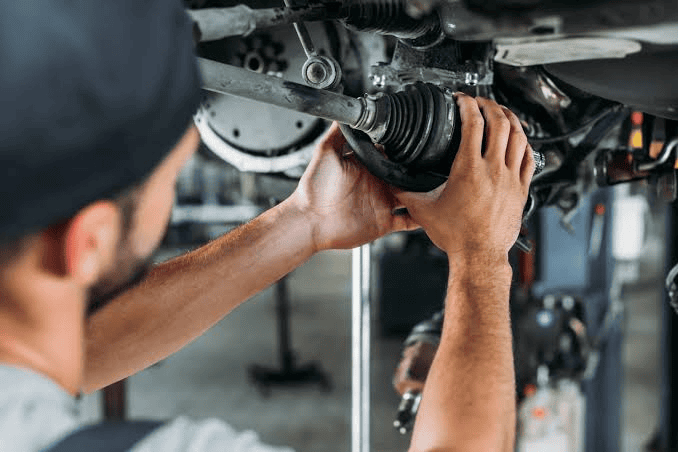
When a CV axle or joint develops a problem, the correct repair depends on the location and severity of the damage.
A professional inspection can determine whether the boot, joint, or complete axle assembly needs replacement.
Replacing a Damaged CV Boot
If the boot is torn but the joint has not suffered internal damage, replacing the boot may be a suitable repair.
The mechanic removes the affected components, cleans the joint where appropriate, installs fresh grease, and fits a new boot with the correct clamps.
This repair can be less expensive than replacing the complete axle.
However, a boot replacement is not a reliable solution if the joint has already become noisy, loose, or contaminated.
Replacing an Individual CV Joint
Some vehicle designs allow a damaged CV joint to be replaced separately.
This can be a useful option when the axle shaft and other joint remain in good condition.
The mechanic must confirm that the replacement joint matches the vehicle and axle assembly.
Not all vehicles offer practical individual-joint replacement, so the availability of parts and labor requirements may influence the repair decision.
Replacing the Complete CV Axle
In many cases, replacing the complete CV axle is a common and practical solution.
A complete replacement assembly normally includes the axle shaft and attached joints. This can save labor compared with rebuilding individual components.
The replacement axle must match the vehicle’s specifications, including its transmission, engine, drivetrain, and model year where applicable.
Drivers should choose quality parts from a reliable supplier rather than selecting a component based only on price.
What to Expect During CV Axle Replacement
The replacement process varies by vehicle, but it generally involves removing the wheel and disconnecting certain suspension or steering components to access the axle.
The mechanic may need to release the axle from the wheel hub and disconnect its inner end from the transmission or differential.
After removing the old axle, the replacement unit is installed and secured using the correct procedures. The technician should also inspect nearby seals, boots, fasteners, and suspension components.
Correct installation is important because an improperly fitted axle can create vibration, fluid leaks, or further mechanical problems.
After the repair, the vehicle should be tested to confirm that power transfers smoothly and that no unusual sounds or vibrations remain.
How Much Does CV Axle Replacement Cost?
The cost of CV axle replacement depends on several factors, including the vehicle’s make, model, drivetrain, replacement part quality, and labor rates.
Some vehicles have easily accessible axle assemblies, while others require more time and additional component removal.
The type of repair also affects the final price. Replacing a boot may cost less than installing a complete axle, but it is only appropriate when the joint itself remains in good condition.
Before approving a repair, drivers should ask the mechanic to explain the problem and provide separate estimates for parts and labor.
It is also useful to compare the quality and warranty of available replacement parts. A low-priced component may not always provide the same reliability as a properly matched, quality replacement.
How to Maintain CV Axles and Extend Their Lifespan
Good maintenance habits can help protect CV joints and reduce the chance of unexpected repairs.
Inspect CV boots regularly: Look for cracks, tears, loose clamps, and grease around the wheel or suspension area. A mechanic can check the boots during routine servicing.
Avoid aggressive acceleration during sharp turns: Smooth driving reduces unnecessary pressure on the outer CV joints.
Drive carefully over rough roads: Slow down before potholes and uneven surfaces to reduce impact on the axle and suspension.
Respond to unusual noises: Clicking, clunking, or vibration should be investigated instead of ignored.
Use suitable replacement parts: Always choose axles, joints, and boots designed for the vehicle.
Follow routine maintenance schedules: Regular inspections help identify damaged boots and other drivetrain problems before they become more expensive.
Address small problems early: Replacing a damaged boot before contamination reaches the joint may prevent the need for a complete axle replacement.
Conclusion
CV axles and joints are essential parts of a vehicle’s drivetrain. They transfer power from the transmission or differential to the wheels while allowing the suspension and steering systems to move freely. Their flexible design helps maintain smooth acceleration, comfortable driving, and reliable power delivery.
Clicking noises during turns, grease leaks, vibration, and clunking sounds can indicate that a CV joint or axle needs attention. Damaged protective boots should also be taken seriously because they can allow grease to escape and contaminants to enter.
Regular inspections, careful driving, and timely repairs can help extend the life of these components. When unusual symptoms appear, a professional diagnosis can prevent further damage and keep the vehicle operating smoothly and safely.
Frequently Asked Questions
Can I drive with a damaged CV axle?
Driving with a damaged CV axle is not recommended. A minor boot tear may not immediately affect driving, but a joint that is already worn or damaged can become worse. If there is severe clicking, vibration, clunking, or loss of power transfer, stop driving when it is safe and arrange a professional inspection or towing.
What does a bad CV joint sound like?
A worn outer CV joint often produces repeated clicking or popping noises during sharp turns. A damaged inner joint may cause vibration or shuddering during acceleration. Other drivetrain and suspension problems can produce similar symptoms, so proper diagnosis is important.
Are CV axles and CV joints the same thing?
No. A CV axle is the complete assembly that transfers power to the wheel. It usually includes an axle shaft and CV joints at both ends. The joints allow the axle to transfer power while accommodating steering and suspension movement.
Can a torn CV boot be repaired?
A torn boot can often be replaced if the joint has not suffered internal damage. The joint must be inspected for grease loss, dirt, moisture, and wear. If internal damage has already developed, replacing the joint or complete axle may be necessary.
Should both CV axles be replaced at the same time?
Not usually. If only one axle is damaged, replacing that axle may be sufficient. However, the other side should be inspected for boot damage, looseness, and unusual wear. The mechanic can recommend whether additional work is necessary.
Do all vehicles use CV axles?
No. Many front-wheel-drive, all-wheel-drive, and independent rear suspension vehicles use CV axles. Other drivetrain designs may use different arrangements, such as solid axles or driveshafts with universal joints.
