
A vehicle’s brake system is one of its most important safety systems. Every time we slow down at a traffic light, stop in an emergency, or park the vehicle, several components work together to convert the driver’s input into controlled stopping power.
Most modern vehicles use a hydraulic braking system, often with disc brakes on the front and either disc or drum brakes on the rear. While the basic idea sounds simple, the complete system includes many different parts, from the brake pedal and master cylinder to pads, rotors, calipers, brake lines, and electronic safety systems.
Understanding how these components work together can help us recognize common brake problems and appreciate why regular inspection and maintenance are so important.
The Brake Pedal
The brake pedal is where the braking process begins.
When we press the pedal, we are applying force that needs to be transferred to the brakes at each wheel.
In modern vehicles, the pedal is connected to a system that uses hydraulic pressure to transmit this force. The harder we press, the more braking force is generally applied, although the exact feel depends on the vehicle’s design and assistance systems.
A brake pedal that suddenly feels unusually soft, sinks toward the floor, or requires more effort than normal should not be ignored.
Brake Booster
Many vehicles use a brake booster to make braking easier for the driver.
The booster increases the force applied to the brake system when we press the pedal. This allows us to achieve strong braking without needing to push the pedal with excessive physical effort.
Depending on the vehicle, the booster may use engine vacuum or an electric system.
If the booster develops a problem, the brake pedal may become much harder to press.
A hard pedal does not always mean the brake pads are worn. It can indicate an issue with the booster, vacuum supply, or another part of the braking system.
Master Cylinder
The master cylinder converts the force from the brake pedal into hydraulic pressure.
It contains pistons that push brake fluid through the hydraulic system when the pedal is pressed.
Most modern vehicles use a dual-circuit master cylinder design. This provides an additional level of safety if one hydraulic circuit develops a problem.
A failing master cylinder may cause symptoms such as a sinking brake pedal or inconsistent braking performance.
Because these symptoms can also have other causes, proper diagnosis is important.
Brake Fluid
Brake fluid is essential to hydraulic braking systems.
When we press the brake pedal, the fluid carries hydraulic pressure through the brake lines to the components at the wheels.
Brake fluid needs to remain in good condition and at the correct level.
Over time, it can absorb moisture, which may affect its performance. For this reason, some manufacturers recommend replacing brake fluid at specific intervals.
The correct type of brake fluid depends on the vehicle.
Never assume that all brake fluids are interchangeable. Always follow the manufacturer’s specifications.
Brake Lines and Hoses
Brake lines carry fluid from the master cylinder toward the wheels.
Rigid metal lines are commonly used along the vehicle’s body, while flexible brake hoses allow movement between the vehicle’s suspension and wheels.
These components need to remain free from significant corrosion, leaks, and damage.
A hydraulic leak can reduce braking ability and should be treated as a serious safety issue.
If the brake fluid level keeps dropping without an obvious reason, the vehicle should be inspected promptly.
Calipers
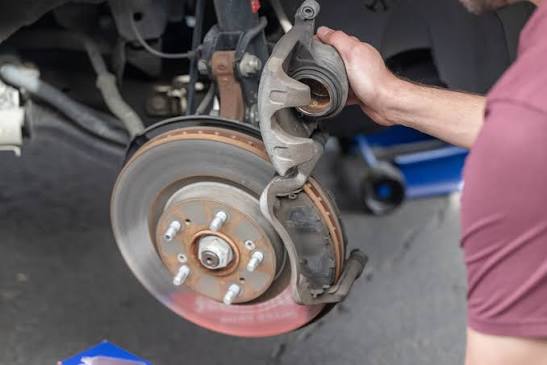
Brake calipers are a major component of disc brake systems.
They sit around the brake rotor and contain pistons that push the brake pads against the rotor when hydraulic pressure is applied.
The caliper’s job is to create the clamping force needed to slow the rotating wheel.
Calipers must move properly for the brake pads to contact the rotor evenly.
A sticking or damaged caliper can cause uneven pad wear, pulling to one side, overheating, or unusual noises.
Brake Pads
Brake pads are the friction components that press against the brake rotors.
When we press the brake pedal, hydraulic pressure causes the caliper pistons to move the pads toward the rotating rotor.
The friction between the pads and rotor converts the vehicle’s kinetic energy into heat, allowing the vehicle to slow down.
Because brake pads experience friction every time we stop, they gradually wear.
The rate of wear depends on factors such as:
- Driving habits
- Vehicle weight
- Traffic conditions
- Terrain
- Brake pad material
- Driving speed
City driving with frequent stops may wear pads differently than steady highway driving.
Brake Rotors
Brake rotors, sometimes called discs, are flat metal components that rotate with the wheel.
The brake pads clamp onto both sides of the rotor when the brakes are applied.
This friction slows the rotor and, therefore, slows the wheel.
Rotors are designed to handle significant heat, but they can become worn or damaged over time.
Possible problems include excessive wear, surface damage, corrosion, or distortion caused by extreme heat and other factors.
A damaged rotor may contribute to vibration or pulsation when braking.
How Pads and Rotors Work Together
The relationship between brake pads and rotors is at the center of disc braking.
The process works roughly like this:
- We press the brake pedal.
- The brake booster assists the pedal force.
- The master cylinder generates hydraulic pressure.
- Brake fluid carries pressure through the brake lines.
- The caliper pistons move the brake pads.
- The pads press against the spinning rotor.
- Friction slows the rotor.
- The wheel slows down.
- The vehicle loses speed.
This happens very quickly, often without us thinking about the individual steps.
Brake Shoes and Drums
Not every vehicle uses disc brakes at all four wheels.
Some vehicles use drum brakes on the rear axle.
Instead of pads and rotors, drum brakes use brake shoes that press outward against the inside surface of a rotating drum.
The basic principle remains similar: friction is used to slow the rotating wheel.
Drum brakes can be durable and effective, although their design and maintenance requirements differ from disc brakes.
Parking Brake
The parking brake, also known as the emergency brake or handbrake, helps keep a parked vehicle from moving.
Depending on the vehicle, it may be operated by a hand lever, foot pedal, or electronic switch.
Modern electronic parking brakes may use electric motors to apply the braking mechanism.
The parking brake is separate from the main braking function in many designs, although the exact arrangement varies between vehicles.
It should not be confused with the regular brake pedal system.
Anti-Lock Braking System
The anti-lock braking system, commonly called ABS, is designed to help prevent the wheels from locking during hard braking.
Wheel-speed sensors monitor how quickly individual wheels are rotating.
If the system detects that a wheel is about to lock, it can rapidly adjust brake pressure at that wheel.
This allows the driver to maintain better steering control during certain emergency braking situations.
ABS does not eliminate the need for safe driving, and it does not guarantee a shorter stopping distance in every condition.
Its primary purpose is to help maintain wheel rotation and steering control during hard braking.
Wheel Speed Sensors
Wheel-speed sensors provide information to the ABS system.
They monitor the rotation of individual wheels and send data to the vehicle’s electronic control systems.
A faulty sensor may trigger an ABS warning light or affect the operation of related systems.
Because modern vehicles often use wheel-speed information for multiple functions, including traction and stability systems, sensor problems can sometimes produce several warning lights at once.
Electronic Brake Control Systems
Modern vehicles often use electronic systems to improve braking performance and stability.
Depending on the vehicle, these may include:
- ABS
- Electronic stability control
- Traction control
- Electronic brake-force distribution
- Brake assist
These systems work with traditional mechanical and hydraulic components.
They use sensors and computer-controlled adjustments to help the vehicle respond more effectively in certain driving situations.
Electronic Stability Control
Electronic stability control can help reduce the risk of losing control during certain situations, such as when the vehicle begins to skid or deviate from the driver’s intended path.
The system monitors information from sensors around the vehicle.
If it detects a loss of stability, it can selectively apply braking force to individual wheels and may reduce engine power.
This system is particularly useful during sudden maneuvers or on slippery roads.
Brake Proportioning
Not every wheel carries the same amount of braking load.
During braking, the vehicle’s weight shifts forward.
The front brakes therefore typically handle a larger portion of the braking work.
Brake-force distribution systems help manage how braking force is applied between the front and rear wheels.
Modern vehicles may use electronic systems to adjust this distribution.
Brake Hardware
Brake pads and calipers rely on smaller hardware components to work correctly.
Depending on the design, these may include:
- Pad clips
- Shims
- Springs
- Caliper pins
- Mounting brackets
These parts may seem minor, but they can affect how the brake pads move and sit in the caliper.
Damaged or improperly installed hardware can contribute to noise, uneven wear, or other brake problems.
Brake Dust Shields
Some vehicles use protective shields behind the brake rotors.
These shields can help protect braking components from road debris and may also help manage water and contaminants.
They can become corroded over time, particularly in areas where roads are exposed to moisture and road salt.
Brake Warning Lights
Modern vehicles may have several dashboard warning lights related to braking.
A brake warning light can indicate different issues depending on the vehicle.
Possible causes include:
- Low brake fluid
- Parking brake engagement
- Hydraulic system problems
- Brake system faults
An ABS warning light may indicate a problem with the anti-lock braking system.
If a warning light appears, check the vehicle’s owner’s manual and have the system inspected when appropriate.
Signs of Brake Wear
Brakes often provide warning signs when something needs attention.
Common symptoms include:
- Squealing
- Grinding
- Scraping sounds
- Brake pedal vibration
- Pulling to one side
- A soft or spongy pedal
- Increased stopping distance
- A burning smell
- Uneven brake pad wear
Not every noise means the same thing.
For example, occasional brake squealing may have a different cause from a harsh grinding sound.
Grinding should generally be treated as an urgent warning because it can indicate that friction material has become severely worn.
Why Brake Maintenance Matters
Brake components experience significant heat, friction, and mechanical stress.
Routine inspections can identify problems before they become more serious.
During a brake inspection, a technician may examine:
- Pad thickness
- Rotor condition
- Caliper operation
- Brake fluid
- Hoses and lines
- Brake hardware
- Wheel-speed sensors
- Parking brake operation
The exact maintenance schedule depends on the vehicle and driving conditions.
Following the manufacturer’s recommendations is a good starting point.
Brake Pads and Rotors Don’t Always Wear at the Same Rate
It is common to assume that pads and rotors should always be replaced together.
That is not necessarily true.
Brake pads are designed to wear more quickly because they provide the friction material.
Rotors can often remain in service longer, provided they meet the manufacturer’s specifications for thickness and condition.
However, severely worn, damaged, or distorted rotors may need replacement.
A professional inspection can determine whether the existing rotors are suitable for continued use.
Driving Habits Affect Brake Life
The way we drive can influence how quickly brake components wear.
Frequent hard braking can generate more heat and increase wear.
Following too closely can also lead to unnecessary braking.
Maintaining a safe following distance gives us more time to slow down gradually.
In hilly areas, using appropriate lower gears when suitable can help control speed without relying entirely on the brakes.
However, drivers should always follow the vehicle manufacturer’s recommendations for using manual or automatic transmission modes.
What Happens During an Emergency Stop?
When we need to stop suddenly, the braking system has to work extremely quickly.
The driver presses the brake pedal firmly.
The hydraulic system sends pressure to the brakes.
The calipers clamp the pads against the rotors.
At the same time, ABS may rapidly adjust brake pressure if it detects potential wheel lock.
The tires then provide the actual contact with the road surface.
This is an important point: even the best brake system cannot overcome the limitations of worn tires, slippery roads, or excessive speed.
Braking performance depends on the entire combination of vehicle condition, tire grip, road conditions, and driver response.
The Importance of Tires
Although tires are not technically brake components, they play a critical role in stopping.
The brakes slow the wheels, but the tires must transfer that force to the road.
Worn or improperly inflated tires can negatively affect braking performance.
For this reason, maintaining proper tire pressure and replacing severely worn tires are just as important to overall stopping safety as maintaining the brake system itself.
Final Thoughts
A vehicle’s braking system is made up of many parts that must work together smoothly.
The brake pedal starts the process, while the booster helps increase pedal force. The master cylinder creates hydraulic pressure, and brake fluid transfers that pressure through lines and hoses. At the wheels, calipers push brake pads against rotors, creating the friction needed to slow the vehicle.
Other systems, including ABS, wheel-speed sensors, and electronic stability control, add another layer of control and safety.
Understanding these components helps us recognize why brake maintenance should never be ignored. Strange noises, changes in pedal feel, warning lights, vibrations, or reduced braking performance can all be reasons to have the vehicle inspected.
Ultimately, safe braking depends on more than just one component. Pads, rotors, calipers, hydraulic parts, electronics, tires, and the road itself all play a role. Keeping these systems in good condition gives us a better chance of stopping when we need to—and that makes brake care one of the most important parts of responsible vehicle ownership.
