
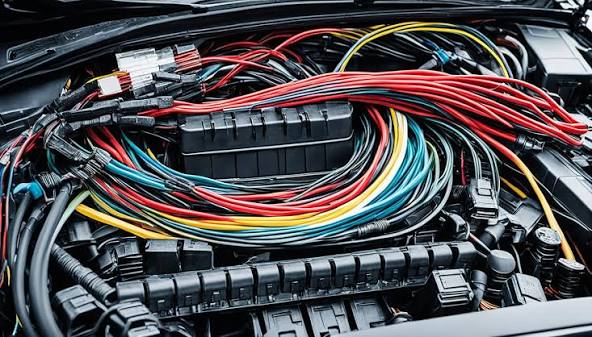
Modern vehicles depend on electrical systems to operate everything from headlights and power windows to engine sensors, safety features, entertainment systems, and advanced driver assistance technology. Behind these features is an important network of wires and connectors known as the car wiring harness.
A wiring harness connects different electrical components and allows them to communicate with the vehicle’s electronic control units. It carries electrical power and signals throughout the vehicle, helping different systems work together smoothly.
As automotive technology becomes more advanced, wiring harnesses have become increasingly complex. A modern vehicle may contain thousands of wires, multiple connectors, and several separate harness sections designed for specific functions.
When a wiring harness becomes damaged, electrical problems can appear in different areas of the vehicle. Lights may stop working, sensors may send incorrect signals, or the engine may experience performance issues.
Understanding how car wiring harnesses work, what causes them to fail, and how to maintain them can help vehicle owners recognize electrical problems and avoid unnecessary repairs.
What Is a Car Wiring Harness?
A car wiring harness is an organized group of electrical wires, connectors, terminals, protective coverings, and related components used to connect different parts of a vehicle.
Instead of running individual wires separately throughout the vehicle, manufacturers bundle them together into organized sections. This makes electrical connections easier to install, protect, inspect, and maintain.
Each wire carries electricity or an electrical signal between specific components. Some wires provide power to devices, while others transmit information between sensors, switches, and control modules.
For example, when a driver turns on the headlights, electrical signals and power travel through the appropriate circuits to activate the lighting system. Similarly, engine sensors send information through wiring connections to the engine control unit.
A properly designed wiring harness helps keep these connections organized and protected from heat, moisture, vibration, and physical damage.
Main Components of an Automotive Wiring Harness
A wiring harness contains several parts that work together to provide reliable electrical connections.
Electrical Wires
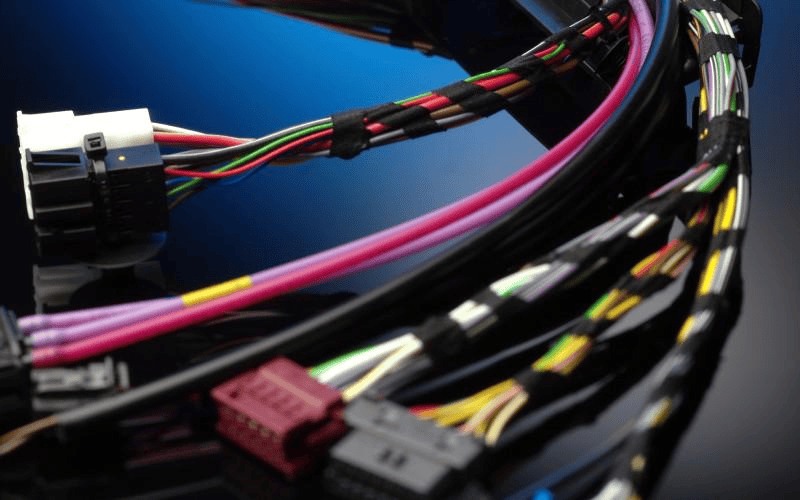
Electrical wires are the main elements of a wiring harness. They carry electrical current or signals between different vehicle components.
Most automotive wires contain copper conductors because copper offers good electrical conductivity and flexibility. The conductor is covered with insulation to prevent unwanted contact with other wires or metal surfaces.
Different wires have different thicknesses, depending on the amount of current they need to carry. Components that require more electrical power generally use thicker wires, while low-current signal circuits can use thinner wires.
Wire colors are often used to help technicians identify specific circuits, although color conventions vary between manufacturers.
Electrical Connectors
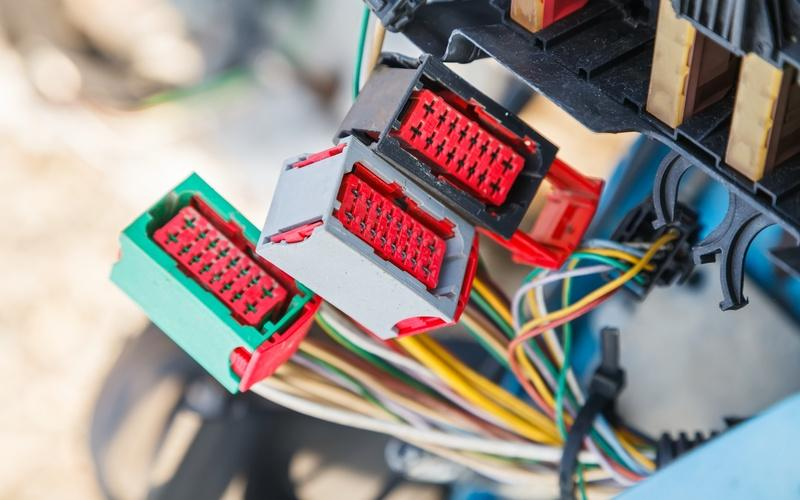
Connectors allow wiring harness sections to attach to sensors, switches, lights, control modules, and other electrical components.
They usually contain plastic housings and metal terminals that establish electrical contact when connected.
Some connectors include locking mechanisms to prevent accidental disconnection. Others use rubber seals to protect the terminals from moisture and dust.
A damaged, loose, or corroded connector can interrupt electrical flow and cause problems even when the wires themselves remain in good condition.
Terminals and Pins
Terminals are the metal contact points inside electrical connectors. They allow electricity or signals to pass between connected components.
Different terminal designs are used depending on the connector type and electrical requirements.
If a terminal becomes loose, bent, or corroded, the connection may become unreliable. This can lead to intermittent electrical faults that are sometimes difficult to diagnose.
Protective Sleeves and Insulation
Wiring harnesses need protection because vehicles operate in environments involving heat, vibration, moisture, and moving mechanical parts.
Protective materials may include electrical tape, plastic tubing, corrugated conduit, fabric wrapping, and heat-resistant sleeves.
These materials help prevent wires from rubbing against sharp edges, contacting hot surfaces, or becoming damaged by normal vehicle movement.
Fuses and Relays
Fuses and relays are important parts of vehicle electrical circuits, although they are not necessarily physical components of the wiring harness itself.
A fuse protects a circuit by interrupting electrical flow when current becomes excessive. A relay allows a relatively low-current control circuit to operate a higher-current electrical device.
Both depend on properly designed wiring and connections to function safely.
How a Car Wiring Harness Works
A wiring harness works by connecting the vehicle’s power sources, electrical devices, sensors, switches, and control modules.
The battery supplies electrical power to many vehicle circuits. The alternator generates electricity while the engine runs and helps maintain the battery’s charge.
From these sources, electrical power travels through wiring circuits to the components that need it.
For example, when a driver presses the power window switch, the electrical signal travels through the relevant circuit. Depending on the vehicle’s design, a control module may process the command and activate the window motor.
Engine management systems work in a similar way but involve more complex communication. Sensors measure conditions such as temperature, airflow, and crankshaft position. They send information through wiring connections to the engine control unit.
The control unit processes this information and adjusts engine operation accordingly.
In modern vehicles, some communication also takes place through data networks such as CAN bus systems. These networks allow electronic control units to exchange information through shared communication lines rather than requiring a separate signal wire for every function.
Different Types of Wiring Harnesses in Modern Vehicles
Vehicles contain multiple wiring harness sections. Each section serves a specific area or group of electrical systems.
Engine Wiring Harness
LAP3 Pro-Tuner Installation Guide | LAP3
The engine wiring harness connects the engine control unit to sensors, ignition components, fuel injectors, and other engine-related devices.
It carries important information needed for engine management.
Common connections include:
- Crankshaft position sensors.
- Camshaft position sensors.
- Oxygen sensors.
- Fuel injectors.
- Ignition coils.
- Coolant temperature sensors.
- Throttle position sensors.
Because the engine produces considerable heat and vibration, this harness requires suitable insulation and protective coverings.
Damage to engine wiring can cause rough idling, starting problems, misfires, warning lights, or reduced engine performance.
Body Wiring Harness
The body wiring harness connects electrical components installed throughout the vehicle’s interior and exterior.
It may support power windows, door locks, interior lights, dashboard controls, mirrors, and other convenience features.
Depending on the vehicle, separate sections may run through the doors, dashboard, roof, and rear body panels.
A problem in this harness can cause several comfort or convenience features to stop working.
Dashboard Wiring Harness
The dashboard wiring harness connects the instrument cluster, infotainment system, switches, climate controls, and other dashboard electronics.
It carries both electrical power and communication signals.
Modern dashboards may contain digital displays, touchscreens, navigation equipment, and multiple control modules. Their wiring systems must support a large number of electrical connections in a limited space.
Lighting Wiring Harness
The lighting harness supplies power and control signals to headlights, tail lights, brake lights, turn signals, fog lights, and interior lighting.
It helps ensure that lighting components operate when required.
A damaged lighting harness may cause flickering headlights, non-working indicators, or brake lights that fail to illuminate.
Transmission Wiring Harness
The transmission wiring harness connects sensors, solenoids, and control components associated with the transmission.
Automatic transmissions use electrical signals to help control gear changes and monitor operating conditions.
A damaged connection may cause shifting problems, warning lights, or transmission-related fault codes.
Battery and Charging System Wiring
This wiring connects the battery, alternator, starter motor, and related electrical components.
The starter motor requires a high-current electrical connection to turn the engine during starting. The alternator wiring carries charging current and communicates with the vehicle’s charging system.
Because these circuits can carry substantial current, damaged connections may generate heat and create serious electrical risks.
Safety System Wiring Harness
Modern vehicles use wiring to connect airbags, seatbelt pretensioners, crash sensors, and other safety-related components.
These circuits must operate reliably because they support systems designed to protect occupants during an accident.
Airbag wiring should only be inspected or repaired using the manufacturer’s safety procedures. Incorrect handling can create serious risks or cause safety systems to malfunction.
How Wiring Harnesses Support Modern Vehicle Technology
Automotive electrical systems have become more advanced as manufacturers introduce new comfort, safety, and performance features.
Wiring harnesses provide the connections needed to support these technologies.
Engine Management and Fuel Efficiency
Modern engines use multiple sensors to monitor operating conditions.
The wiring harness carries sensor information to the engine control unit, allowing it to adjust fuel delivery, ignition timing, and other functions.
Reliable electrical connections help the engine control system receive accurate information and operate efficiently.
Advanced Driver Assistance Systems
Many modern vehicles include driver assistance features such as parking sensors, lane departure warnings, automatic emergency braking, and adaptive cruise control.
These systems may use cameras, radar sensors, ultrasonic sensors, and electronic control modules.
Wiring harnesses connect these devices and allow them to exchange information with the vehicle’s other systems.
The exact wiring arrangement depends on the vehicle’s equipment and technology level.
Infotainment and Connectivity
Modern infotainment systems provide music, navigation, smartphone integration, Bluetooth connectivity, and other digital features.
Their operation depends on wiring that connects displays, speakers, microphones, antennas, USB ports, and control modules.
A faulty connection may cause sound interruptions, screen problems, or connectivity issues.
Electric and Hybrid Vehicle Systems
Electric and hybrid vehicles use more complex electrical systems than many traditional gasoline vehicles.
They contain high-voltage wiring for batteries, electric motors, inverters, and other powertrain components. They also use low-voltage wiring for lighting, control systems, and regular vehicle electronics.
High-voltage cables are often identified by distinctive orange insulation.
These circuits can be extremely dangerous even when the vehicle is switched off. High-voltage wiring should only be handled by trained technicians following the manufacturer’s safety procedures.
Common Signs of a Damaged Car Wiring Harness
Wiring harness problems can produce different symptoms depending on which circuit is affected.
Sometimes one feature stops working, while in other cases several electrical systems develop problems at the same time.
Electrical Components Stop Working
One of the most obvious signs is an electrical component that suddenly stops operating.
For example, power windows may fail, dashboard lights may disappear, or the radio may stop working.
If several components connected to the same circuit fail together, a wiring or connector problem may be responsible.
However, a blown fuse, faulty switch, or failed component can produce similar symptoms.
Flickering Lights
Headlights, interior lights, or dashboard displays that flicker may indicate an unstable electrical connection.
Loose terminals, damaged wires, poor grounding, or charging system problems can interrupt the electrical supply.
If lighting becomes unreliable, the system should be inspected promptly because poor visibility can increase driving risks.
Difficulty Starting the Vehicle
A damaged wiring connection can interrupt power to the starter motor, ignition system, or engine control unit.
Drivers may experience slow cranking, clicking sounds, or a complete failure to start.
Battery condition, starter motor problems, and charging system faults should also be checked before concluding that the wiring harness is damaged.
Blown Fuses
A fuse that repeatedly blows may indicate an electrical short circuit or another problem in the connected wiring.
Replacing the fuse without finding the cause may not solve the issue.
A technician should inspect the circuit and identify why excessive current is flowing.
Burning Smell or Melted Insulation
A burning plastic smell near the dashboard, engine bay, or fuse box can indicate overheating electrical wiring.
Damaged insulation, loose connections, and short circuits may generate excessive heat.
This symptom should be treated seriously. If smoke or a burning smell appears, stop the vehicle safely, switch off the engine, move away if necessary, and seek professional assistance.
Warning Lights and Electrical Fault Codes
Modern vehicles use control modules to monitor different systems.
If wiring damage interrupts communication or sensor signals, warning lights may appear on the dashboard.
A diagnostic scan can reveal fault codes related to sensors, communication networks, or electrical circuits.
The code identifies a detected problem, but further testing is needed to confirm whether the wiring harness is responsible.
What Causes Car Wiring Harnesses to Fail?
Automotive wiring harnesses are designed for demanding conditions, but they can still become damaged over time.
Several factors can affect their reliability.
Heat Exposure
Engine compartments contain components that produce high temperatures.
If wiring insulation is exposed to excessive heat, it may become brittle, crack, or melt.
Poor routing or missing protective covers can increase the risk of heat-related damage.
Vibration and Physical Movement
Vehicles experience continuous vibration while driving.
Over time, wires may rub against brackets, metal edges, or other components. This can wear away insulation and expose the conductors.
Loose harness clips can also allow wiring to move more than intended.
Moisture and Corrosion
Water entering electrical connectors can cause corrosion on metal terminals.
Corrosion increases electrical resistance and may create intermittent connections.
Vehicles exposed to heavy rain, flooding, road spray, or damaged seals may be more vulnerable to moisture-related electrical problems.
Rodent Damage
Rodents sometimes chew vehicle wiring, particularly when cars are parked for long periods.
Damaged wires can create open circuits, short circuits, or communication problems.
If a vehicle develops unexplained electrical faults after being parked, a technician may check the engine compartment and other accessible wiring areas for signs of animal activity.
Incorrect Previous Repairs
Poor-quality electrical repairs can cause long-term problems.
Twisted wires covered with unsuitable tape, incorrect connectors, and poorly secured cables may create weak connections.
Using the correct automotive repair methods and materials helps maintain electrical reliability.
Age and Material Deterioration
As vehicles become older, wiring insulation and connector seals may gradually deteriorate.
Repeated temperature changes, moisture exposure, and general use can affect the materials.
Older vehicles may therefore require more frequent inspection of electrical connections and protective coverings.
How to Diagnose Wiring Harness Problems
Diagnosing a wiring problem can be challenging because electrical symptoms sometimes appear in different areas of the vehicle.
A professional technician generally uses several inspection and testing methods.
Visual Inspection
The first step often involves checking accessible wiring for visible damage.
A technician may look for:
- Cracked or melted insulation.
- Broken or exposed wires.
- Loose connectors.
- Corroded terminals.
- Damaged protective sleeves.
- Missing clips or mounting points.
- Signs of rodent activity.
Visual inspection can identify obvious damage, but not every electrical fault is visible from the outside.
Using a Multimeter
A digital multimeter helps technicians measure voltage, resistance, and electrical continuity.
It can be used to check whether power reaches a component, whether a wire is broken, or whether an electrical connection has excessive resistance.
Correct testing procedures are important because improper measurements can lead to inaccurate results or damage sensitive electronic components.
Diagnostic Scanning
A professional diagnostic scanner can read fault codes stored in the vehicle’s electronic control modules.
These codes may point toward sensor problems, communication failures, or electrical circuit issues.
However, replacing a sensor simply because its code appears is not always the correct solution. The wiring and connector should also be checked.
Circuit Testing
Technicians may use wiring diagrams to identify the correct circuit and follow its path through the vehicle.
They can then test individual connections to locate open circuits, short circuits, and poor grounds.
This approach helps avoid replacing expensive parts when the actual problem is a damaged wire or connector.
Can a Damaged Wiring Harness Be Repaired?
Yes, many wiring harness problems can be repaired without replacing the complete assembly.
The correct solution depends on the location and extent of the damage.
Repairing Individual Wires
If only a small section of wire is damaged, a technician may be able to remove the affected area and install a suitable replacement section.
The repair should use the correct wire size, automotive-grade materials, and secure connections.
The repaired section must also be properly insulated and protected against vibration and moisture.
Replacing Damaged Connectors
A corroded, broken, or melted connector may need replacement.
The technician must select a connector that matches the original design and electrical requirements.
Damaged terminals should also be replaced rather than simply pushed back into place when they can no longer provide reliable contact.
Replacing a Complete Wiring Harness
If the harness has extensive damage, multiple failed sections, or serious heat-related deterioration, complete replacement may be the better option.
Replacement harnesses can be expensive, especially in modern vehicles with complex electrical systems.
The labor cost may also be significant because technicians sometimes need to remove dashboard panels, interior trim, or engine components to access the wiring.
Tips for Maintaining Your Vehicle’s Wiring Harness
Good maintenance practices can help protect electrical wiring and reduce the chance of unexpected failures.
Keep the engine compartment clean: Remove excessive dirt and debris carefully, but avoid spraying water directly into sensitive electrical connectors.
Inspect visible wiring: During routine maintenance, check accessible harness sections for cracked insulation, loose clips, and exposed wires.
Repair oil and coolant leaks: Fluids reaching electrical connectors and wiring can contribute to damage and connection problems.
Avoid incorrect electrical modifications: Poorly installed accessories, additional lights, and audio equipment can overload circuits or damage existing wiring.
Protect wiring from heat: Make sure protective sleeves and routing clips remain in their proper positions.
Address warning signs early: Flickering lights, repeated blown fuses, and unexplained electrical faults should be investigated.
Use qualified technicians: Modern electrical systems often require wiring diagrams, diagnostic equipment, and manufacturer-specific repair procedures.
Check for rodent damage: If a vehicle is parked for extended periods, occasional inspection of accessible wiring can help identify chewing damage early.
Frequently Asked Questions
How long does a car wiring harness last?
A wiring harness can last for many years, often throughout much of a vehicle’s life. Its lifespan depends on material quality, heat exposure, vibration, moisture, maintenance, and the vehicle’s operating conditions.
Can a damaged wiring harness stop a car from starting?
Yes. If the damage affects the battery connections, starter circuit, ignition system, fuel delivery, or engine control unit, the vehicle may fail to start.
Is it expensive to replace a car wiring harness?
The cost depends on the harness type, vehicle model, parts availability, and labor requirements. Replacing a small section may be relatively affordable, while replacing a complete engine or body harness can be expensive.
Can wiring harness problems cause a check engine light?
Yes. Damaged wires or connectors can interrupt sensor signals or communication with the engine control unit. This may trigger diagnostic trouble codes and illuminate the check engine light.
What is the difference between a wiring harness and an electrical circuit?
An electrical circuit is a complete path through which electricity flows. A wiring harness is an organized assembly of wires and connectors that contains and supports multiple electrical circuits.
Can I repair a car wiring harness myself?
Simple, non-safety-related wiring repairs may be possible for someone with suitable automotive electrical knowledge and tools. However, complex circuits, airbag wiring, and high-voltage electric vehicle systems should be handled by trained professionals.
Why do modern vehicles have so many wires?
Modern vehicles use numerous electronic systems for engine control, safety, entertainment, comfort, and driver assistance. Each system needs electrical power or communication connections, which increases wiring complexity.
Conclusion
Car wiring harnesses are essential to modern vehicle operation. They connect the battery, sensors, control modules, lighting, safety equipment, and other electrical components, allowing different systems to work together.
From starting the engine to operating power windows and advanced safety features, almost every modern vehicle function depends on reliable electrical connections. Even a small wiring fault can create problems that affect multiple systems.
Heat, moisture, vibration, corrosion, rodent damage, and incorrect repairs are common reasons wiring harnesses develop faults. Warning signs such as flickering lights, starting difficulties, blown fuses, burning smells, and dashboard alerts should never be ignored.
Regular inspections, proper electrical repairs, and quality replacement components can help protect the wiring system. As vehicles continue to become more technologically advanced, maintaining their electrical connections will remain an important part of keeping them reliable, efficient, and safe.
