
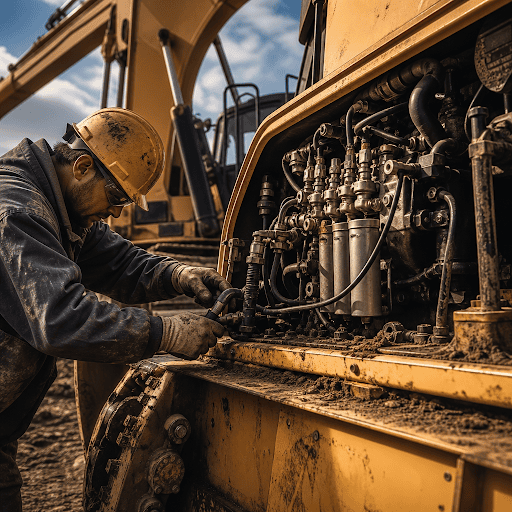
The construction industry relies on diesel-powered heavy machinery to execute projects ranging from infrastructure development to high-rise construction. At the heart of every excavator, bulldozer, and crane lies a diesel engine whose performance depends on the precise delivery of fuel under extreme pressure. While operators focus on productivity and project timelines, the microscopic events occurring thousands of times per minute inside fuel injection systems determine whether equipment runs efficiently or falters under load. Understanding these critical components reveals why maintenance decisions directly impact operational costs and project success.
The Architecture of Diesel Fuel Injection Systems
Diesel engines operate on compression ignition principles, requiring fuel delivery systems capable of generating pressures exceeding 30,000 psi in modern common rail systems. Unlike gasoline engines that mix fuel and air before combustion, diesel engines inject fuel directly into compressed air at the precise moment ignition should occur. This process demands components engineered to tolerances measured in microns, where even microscopic wear can compromise performance. The injection pump, high-pressure lines, and injectors work as an integrated system, but the delivery valve serves as the critical control element that regulates fuel flow and maintains system pressure between injection events.
Proper fuel atomization depends on maintaining consistent pressure profiles throughout the injection cycle. When diesel engine delivery valves wear or fail, the resulting pressure fluctuations cause incomplete combustion, increased emissions, and reduced power output. Construction equipment operating in dusty, vibration-heavy environments experiences accelerated component wear compared to on-highway applications. Fleet managers who understand this relationship can implement preventive maintenance strategies that address wear before it cascades into costly failures during critical project phases.
Engineering Advances in Fuel Delivery Technology
The evolution from mechanical injection systems to electronically controlled common rail technology has transformed diesel engine capabilities. Early mechanical systems relied on cam-driven injection pumps with limited control over injection timing and duration. Modern systems employ piezoelectric injectors capable of multiple injection events per combustion cycle, enabling pilot injections that reduce combustion noise and main injections optimized for power and efficiency. Advanced fuel injection designs continue pushing boundaries in emissions reduction while maintaining the torque characteristics construction applications demand.
Pressure Control and Valve Dynamics
Delivery valves function as one-way check valves with a critical secondary role: creating a rapid pressure drop after injection to prevent fuel dribble and secondary injections. The valve consists of a precision-ground barrel and piston assembly, with the piston featuring a relief collar that creates a defined retraction volume. When the injection pump plunger completes its delivery stroke, the delivery valve closes and the relief collar creates a sudden volume increase in the high-pressure line. This volume increase drops line pressure rapidly, causing the injector needle to snap closed rather than allowing fuel to dribble into the combustion chamber. This seemingly simple mechanical action prevents carbon buildup on injector tips and ensures complete combustion.
Material Science and Manufacturing Precision
Delivery valves endure millions of cycles under extreme conditions, requiring materials and manufacturing processes that ensure dimensional stability and wear resistance. Valve bodies and pistons are typically manufactured from case-hardened alloy steel, precision ground to tolerances of 2-3 microns. The sealing surfaces must maintain their geometry despite repeated high-pressure impacts and exposure to fuel contaminants. Surface finish quality directly affects sealing effectiveness and component longevity. Premium components undergo additional processes such as shot peening to improve fatigue resistance and specialized coatings to reduce friction and wear.
Operational Challenges in Construction Environments
Construction equipment faces operational demands that exceed typical automotive diesel applications. Machines frequently operate at high load factors for extended periods, generating sustained high injection pressures. Ambient conditions introduce dust and moisture that can contaminate fuel systems despite filtration. Equipment often sits idle between projects, allowing condensation to form in fuel tanks and introducing water into injection systems. These factors combine to accelerate wear on precision components, making component condition monitoring essential for preventing unexpected failures.
Diagnosing Delivery Valve Degradation
Identifying delivery valve wear before complete failure requires attention to subtle performance changes. Hard starting, particularly when engines are warm, often indicates delivery valves that no longer maintain proper residual pressure in injection lines. Rough idle or misfiring under load suggests inconsistent fuel delivery across cylinders. Black exhaust smoke indicates incomplete combustion often caused by poor fuel atomization resulting from pressure fluctuations. Fuel consumption increases as worn valves allow pressure bleed-down, requiring longer injection pump strokes to deliver equivalent fuel quantities. Technicians can perform cylinder contribution tests and injection pressure measurements to isolate failing components before they cause collateral damage.
Strategic Approaches to Component Sourcing
Fleet maintenance managers face decisions between new, remanufactured, and used components when addressing injection system wear. New original equipment manufacturer components offer maximum reliability but command premium prices that may not align with equipment remaining service life. Remanufactured components from reputable rebuilders provide cost savings while maintaining performance standards through replacement of all wear surfaces and precision testing. Used components harvested from low-hour engines offer the lowest initial cost but carry uncertainty regarding remaining service life. The optimal choice depends on equipment utilization patterns, project schedules, and overall fleet management strategy.
Construction companies expanding their operational scope must balance equipment acquisition costs against long-term maintenance expenses. Strategic engineering solutions that address equipment reliability directly impact market competitiveness by ensuring machines remain productive during critical project phases. Component sourcing decisions made during routine maintenance windows prevent emergency repairs that disrupt schedules and inflate costs.
Goldfarb Inc: Specialized Expertise in Fuel System Components
Since establishing operations, Goldfarb Inc has focused exclusively on diesel fuel injection components, developing deep expertise in the engineering and application of delivery valves, injection pumps, and related precision parts. The company maintains extensive inventory across multiple product conditions, allowing customers to select components that match their specific operational requirements and budget parameters. Technical staff provide application support to ensure correct component selection for diverse equipment makes and models. Quality control processes verify that remanufactured components meet or exceed original specifications before shipment.
The company’s specialization enables rapid fulfillment of both common and obsolete components, supporting equipment ranging from current production models to legacy machines still performing productive work. This breadth of coverage helps construction companies, agricultural operations, and industrial facilities maintain mixed-age fleets without resorting to premature equipment replacement. Technical documentation and installation support reduce downtime during component replacement, minimizing the operational impact of necessary maintenance.
Preventive Maintenance and System Longevity
Extending delivery valve service life requires systematic attention to fuel quality and filtration. Water separators should be drained regularly to prevent moisture from entering injection pumps. Fuel filters must be changed according to manufacturer specifications, with intervals shortened when operating in dusty environments or using fuel from questionable sources. Fuel additives that improve lubricity can reduce wear in systems experiencing premature component degradation. Engines stored for extended periods benefit from fuel stabilizers and periodic operation to prevent corrosion and keep seals supple.
Integration with Overall Fleet Management
Sophisticated fleet managers track component replacement patterns to identify systemic issues and optimize maintenance schedules. If multiple machines experience delivery valve failures at similar operating hours, fuel quality or filtration inadequacies may be the root cause rather than normal wear. Coordinating injection system overhauls with other major maintenance events reduces overall equipment downtime and labor costs. Maintaining detailed service records enables accurate cost tracking and supports data-driven decisions about equipment replacement timing. These practices transform maintenance from a reactive expense into a strategic operational advantage.
The precision components within diesel fuel injection systems represent the culmination of decades of engineering refinement, translating fuel chemistry into mechanical work with remarkable efficiency. For construction operations where equipment reliability directly determines project profitability, understanding these systems moves beyond technical curiosity to become essential business knowledge. Investment in quality components, proper maintenance procedures, and strategic sourcing relationships pays dividends through reduced downtime, lower operating costs, and the competitive advantage of equipment that performs when projects demand it most.
