
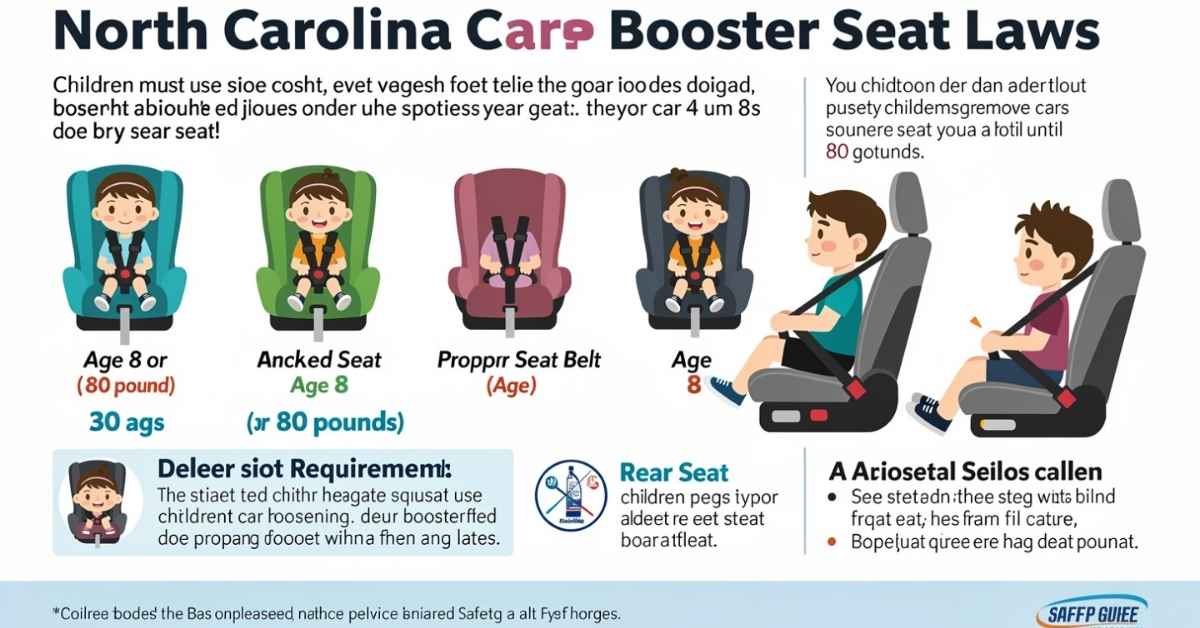
In North Carolina, children under 8 years old and weighing less than 80 pounds must be properly secured in a weight-appropriate car seat or booster seat. A new law (House Bill 368) passed through the NC House in April 2025 proposes replacing the weight threshold with a height requirement of 57 inches (4 feet, 9 inches), and would take effect December 1, 2025. Always keep children in the back seat when an active front airbag is present.
North Carolina parents hear it all the time: “Is my child old enough to be out of a booster seat?” It sounds like a simple question, but the answer involves more than just a birthday. The state’s child passenger safety laws are layered, and getting them wrong is not just a legal issue but a genuine safety risk. With new legislative updates moving through the General Assembly, 2025 is a year every parent in the Tar Heel State needs to pay close attention.
This guide breaks down everything you need to know about North Carolina booster seat laws, including the current statute, recent proposed changes, age and weight requirements, penalties, and how to make sure your child is as safe as possible every time you get behind the wheel.
What Does North Carolina Law Actually Say About Booster Seats?
The governing statute for child passenger safety in North Carolina is North Carolina General Statutes § 20-137.1, also known as the Child Passenger Protection Law. Originally passed in 1982 and amended multiple times since, this law applies to all vehicles required by federal standards to have seat belts, which includes all passenger cars manufactured after 1967 and vans, pickups, and SUVs manufactured after 1971.
Under current law, a child who is younger than 8 years of age and weighs less than 80 pounds must be properly secured in an appropriate child passenger restraint system. This means a car seat or booster seat used correctly according to the manufacturer’s instructions and meeting all federal safety standards in effect when the seat was manufactured.
The law does not specify exactly which type of restraint a child must use at any given age. What it does require is that whatever restraint is used fits properly and is used according to the manufacturer’s guidelines. This gives families some flexibility, but it also places the burden of knowing what is appropriate squarely on the driver.
NC Booster Seat Age and Weight Requirements at a Glance
Understanding where a booster seat fits into the broader child restraint system lifecycle is essential for parents making the right decision.
Rear-Facing Car Seat Stage (Infancy through approximately age 2)
While North Carolina law does not technically specify a rear-facing requirement, the American Academy of Pediatrics strongly recommends that infants remain rear-facing until they reach the maximum height or weight limit allowed by their car seat manufacturer. This position provides the best protection for a young child’s head, neck, and spine in a collision. The proposed House Bill 368 would make rear-facing seats a legal requirement for infants, bringing state law into alignment with pediatric medical guidance.
Forward-Facing Car Seat with Harness (Approximately ages 2 to 4, up to 40 pounds or manufacturer limits)
Once a child outgrows the rear-facing limits of their infant seat, they move to a forward-facing car seat equipped with an internal harness system and tether strap. Children should stay in this stage until they reach the top height or weight limit specified on their car seat’s label.
Booster Seat Stage (Ages 4 to 7, from 40 pounds up to 80 pounds or age 8)
When a child has maxed out the forward-facing harness seat, they transition to a booster seat. The booster seat’s primary function is to position the vehicle’s seat belt correctly across the child’s body. Without a booster, a standard shoulder belt will typically cut across a young child’s neck or face, and the lap belt will ride dangerously high across the abdomen rather than across the strong hip bones.
Booster seats can only be used with a combined lap and shoulder belt. They cannot legally or safely be used with a lap-only belt.
Seat Belt Only (Age 8 or 80 pounds, whichever comes first)
Once a child reaches either 8 years of age or 80 pounds, North Carolina law currently allows them to use the vehicle’s standard seat belt without a booster seat. However, parents should still confirm that the seat belt fits the child correctly before making this transition.
The 2025 Legislative Update: House Bill 368 and the Height Requirement
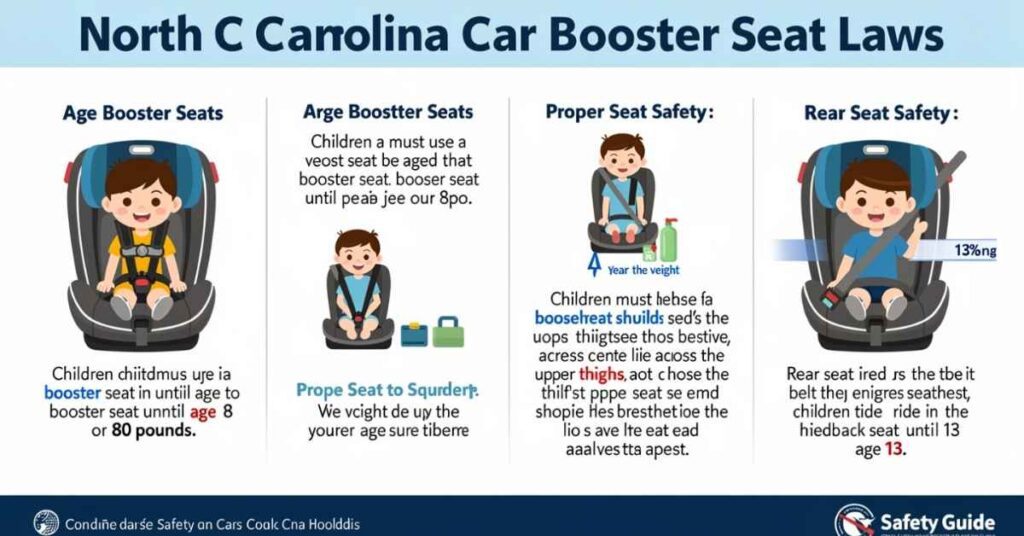
One of the most significant proposed changes to North Carolina child passenger safety law in recent memory came through House Bill 368, introduced by the NC Child Fatality Task Force in early 2025. The bill passed the state House in late April 2025 and was referred to the Senate Committee on Rules and Operations.
If signed into law, House Bill 368 would make two major changes:
First, it would replace the current 80-pound weight threshold with a height threshold of 57 inches (4 feet, 9 inches). Under the proposed law, a child must be at least 8 years old AND at least 57 inches tall before they can use a standard seat belt without a booster seat.
Second, it would make rear-facing car seats a legal requirement for infants, not just a recommendation.
The rationale behind the height change is rooted in biomechanics. As noted by safety advocates and the NC Child Fatality Task Force, the standard vehicle shoulder belt is designed to fit adults of average size. Height determines whether a shoulder belt sits safely across the collarbone and chest rather than cutting across the neck. Weight alone is not a reliable indicator of this fit, particularly as childhood obesity rates have increased and more children may weigh 80 pounds without yet being tall enough for a shoulder belt to fit safely.
The effective date of the proposed legislation, if passed by the Senate and signed by the governor, would be December 1, 2025.
Front Seat Rules: When Can a Child Ride Up Front?
This is one of the most commonly misunderstood areas of NC car seat law. The general rule is:
Children under 5 years old and weighing less than 40 pounds must ride in the rear seat of any vehicle equipped with an active passenger-side front airbag. This rule exists because front airbags deploy with extreme force and can cause fatal injuries to small children, particularly those in rear-facing seats.
There are limited exceptions:
The vehicle does not have a rear seat at all, such as certain pickup trucks or two-seat sports cars.
The child’s restraint system is specifically designed and certified for use with front airbags.
Outside of these exceptions, keeping young children in the back seat is not only the legal requirement but also the safest option, regardless of whether the child is in a rear-facing seat, forward-facing seat, or booster seat.
How a Booster Seat Works and Why It Matters
Many parents assume that once a child is big enough to squeeze into a seat belt, they no longer need a booster. This is one of the most dangerous misconceptions in child passenger safety.
A booster seat serves as a positioning device. It lifts the child upward and forward so that the vehicle’s lap and shoulder belt rests in the correct position across the body. Specifically, a properly fitted seat belt should:
Cross the child’s collarbone and the middle of the shoulder, not the neck or face.
Lie flat across the upper thighs and hip bones, not across the soft tissue of the abdomen.
Remain snug and close to the body, with no slack or twisting.
If any of these conditions are not met, the child is not safely restrained, even if they are technically buckled in. A seat belt that rides across the neck or abdomen can cause severe internal injuries in a crash, particularly in a child whose bones and organs are still developing.
The National Highway Traffic Safety Administration (NHTSA) has found that booster seats reduce the risk of serious injury in a crash by approximately 45 percent for older children compared to seat belts used without a booster.
Common Mistakes NC Parents Make With Booster Seats
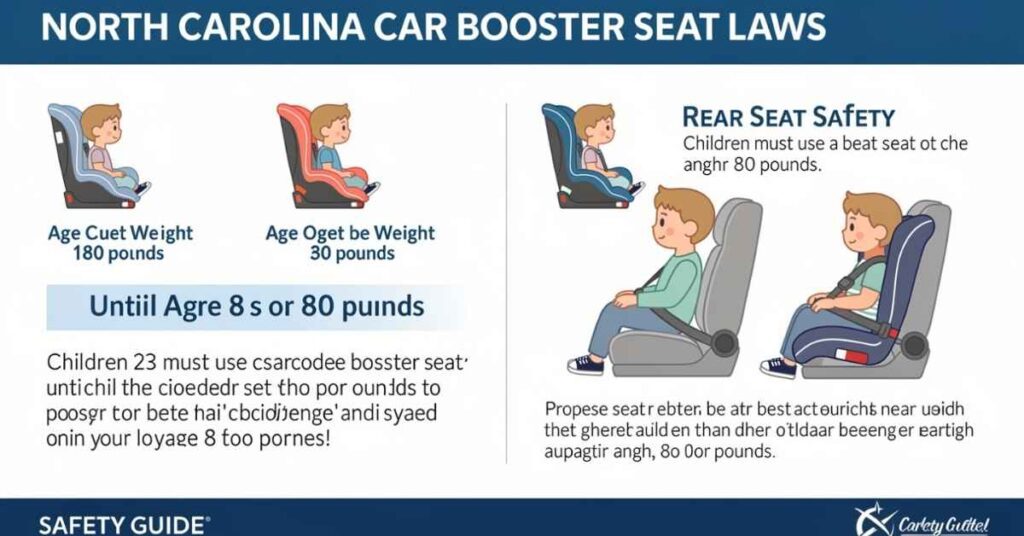
Even parents who genuinely try to follow child passenger safety law make errors that reduce the effectiveness of booster seats and car seats. Here are the most frequently observed mistakes:
Transitioning too early. Moving a child from a forward-facing harness seat to a booster seat, or from a booster to a regular seat belt, before they meet the appropriate size thresholds puts them at increased risk. Bigger seats do not always mean better protection for a small child.
Using a booster with a lap-only belt. North Carolina law is clear on this: booster seats can never be used with a lap-only belt. If a seating position in your vehicle only has a lap belt, the child should not be placed in a booster there. A forward-facing car seat with a harness may be used in a lap-only belt position if the manufacturer permits it.
Installing the seat too loosely. A properly installed car seat should not move more than one inch in any direction when tested at the base. If you can rock the seat side to side or front to back by more than that, it needs to be reinstalled or tightened.
Placing a rear-facing seat in front of an active airbag. This applies specifically to infants and young children in rear-facing seats and is one of the most serious safety errors a parent can make.
Keeping a car seat after a moderate or severe crash. Car seats that have been involved in a crash may have structural damage that is not visible to the naked eye. Most manufacturers and NHTSA recommend replacing a car seat after any moderate to severe collision, even if the seat appears undamaged.
Penalties for Violating NC Booster Seat and Car Seat Laws
North Carolina holds the driver of the vehicle responsible for ensuring that all passengers under the age of 16 are correctly restrained. This means that even if the child’s parent is not driving, the person behind the wheel can be cited.
Under current law, a violation of the child passenger safety statute carries:
A fine of up to $25.
Full court costs and additional fees.
Two points assessed to the driver’s license.
There is one important exception for first-time violations involving children under 8 years old. If the driver can present proof at trial that an appropriate car seat or booster seat has been purchased for the vehicle in which the child is normally transported, the conviction may be dismissed. This provision is designed to encourage compliance rather than simply penalize parents who may not have been aware of the requirements.
Seat Belt Rules for Older Children in NC
Once a child has graduated from a booster seat, the rules do not end. North Carolina law requires that drivers ensure all passengers under 16 years old wear a seat belt, regardless of where they are seated in the vehicle. This means rear seat passengers under 16 must be buckled up as well.
It is also illegal under state law to allow a child to place the shoulder strap behind their back or under their arm. A seat belt worn incorrectly provides dramatically reduced protection in a crash and can actually increase the risk of injury from the belt itself.
Children who weigh at least 40 pounds and are in a seating position with only a lap belt (no shoulder belt available) may legally be restrained using a properly fitted lap belt only. However, a combined lap and shoulder belt always provides greater protection and should be used whenever available.
How to Check If Your Child Is Ready to Move Out of a Booster
Before transitioning your child from a booster seat to a standard seat belt, conduct what child safety experts call the 5-Step Test:
Does the child sit all the way back against the vehicle seat without slouching? The back should be flat against the seat cushion.
Do the child’s knees bend comfortably over the front edge of the seat? If the child is too short to do this comfortably, they are not ready.
Does the lap belt lie flat across the upper thighs and hip bones? It should not rest across the soft tissue of the stomach.
Does the shoulder belt cross the collarbone and the center of the chest and shoulder? It should not touch the neck or face.
Can the child maintain this position comfortably for the entire trip without fidgeting or sliding forward?
If the answer to any of these questions is no, the child is not yet ready for a standard seat belt and should remain in a booster seat regardless of their age or weight.
Resources for NC Parents: Free Car Seat Checks and Inspections
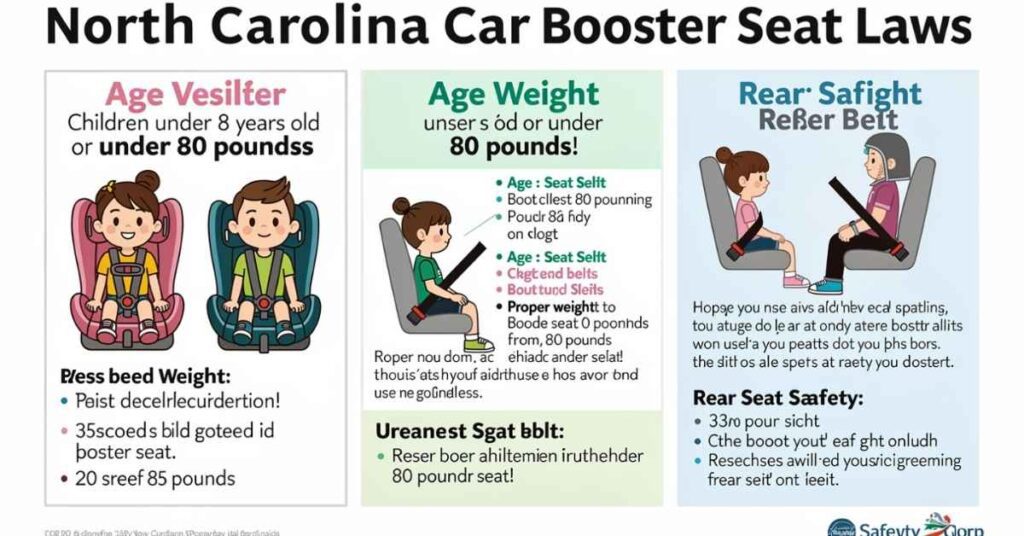
Many parents are not aware that free car seat inspection services are available throughout North Carolina. Certified child passenger safety technicians can inspect your installation, identify any errors, and provide hands-on guidance at no cost.
BuckleUpNC.org is operated by the University of North Carolina Highway Safety Research Center and serves as the primary state resource for child passenger safety information, including a database of inspection stations across the state.
Local fire departments in many NC cities, including Wilmington, Raleigh, Charlotte, and Greensboro, regularly host free car seat check events. These are staffed by certified technicians who will check your seat installation and answer questions.
WakeMed Health and Hospitals also provides car seat safety information and guidance for families in the Triangle region.
👉🏻Discover More About Unique Information[ Cosco Scenera Next Convertible Car Seat Explained ]
Frequently Asked Questions
At what age can a child stop using a booster seat in North Carolina?
Under current law, children can stop using a booster seat when they reach 8 years of age OR 80 pounds, whichever comes first. If House Bill 368 becomes law by December 1, 2025, the threshold will change to 8 years old AND 57 inches in height.
Can a child under 8 ride in the front seat in NC?
Generally, no. Children under 5 and under 40 pounds must ride in the rear seat in vehicles with active front passenger airbags. Even for older children, rear seat placement is strongly recommended as the safest option.
What is the fine for not having a child in a booster seat in NC?
The fine is a maximum of $25, plus court costs and fees, and two points on the driver’s license. For violations involving children under 8, first-time offenders may avoid conviction by showing proof that an appropriate restraint has since been purchased.
Does NC law require rear-facing car seats?
Under current law, rear-facing seats are recommended but not legally required. House Bill 368, if passed, would make rear-facing seats a legal requirement for infants.
Can a booster seat be used with a lap belt only?
No. North Carolina law explicitly states that booster seats can never be used with a lap-only belt. They must be used with a combined lap and shoulder belt system.
Conclusion
Understanding North Carolina booster seat laws helps parents keep children safe while following state car seat regulations. NC child passenger safety laws require kids to use the correct booster seat based on age, height, and weight limits. Using a belt-positioning booster with a lap and shoulder seat belt reduces injury risks and improves road safety. Parents should also check updated North Carolina DMV guidelines, rear seat recommendations, and proper car seat installation rules for maximum protection.
Following car booster seat laws in NC is not only about avoiding traffic fines but also about protecting children during every trip. Whether choosing a high-back booster seat or backless booster seat, families should focus on child safety standards, vehicle seat belt fit, and federal safety recommendations. Staying informed about North Carolina child restraint laws, booster seat requirements, and car safety tips helps ensure safer travel for infants, toddlers, and growing kids.

Michael is a car seat specialist with 4 years of experience in reviewing, testing, and guiding people on the best car seat choices. He creates clear, reliable content to help users make safe and confident decisions.