

Understanding Alaska car seat laws is important for every parent who wants to keep children safe while traveling. These child passenger safety rules explain when to use a rear-facing car seat, forward-facing seat, booster seat, and seat belt based on a child’s age, height, and weight. Following Alaska car seat regulations can help families avoid fines and reduce the risk of injury during road accidents. Parents should also check proper car seat installation and follow safety guidelines from the NHTSA and pediatric experts.
Alaska child restraint laws are designed to protect infants, toddlers, and young passengers on every trip. Using the right booster seat or rear-facing car seat improves travel safety and ensures legal compliance across the state. Many parents search for updated Alaska car seat requirements, seat belt laws, and child safety recommendations before road trips or daily driving. Staying informed about these traffic safety rules helps families make smarter and safer decisions for children in every vehicle.
Child Seat Safety in Alaska
Child seat safety in Alaska is designed to protect children in all driving conditions, especially during long winters and icy roads. The law requires infants and young children to use properly installed car seats that match their age, weight, and height. Rear-facing seats are recommended for babies and toddlers as they provide the best protection for a child’s head, neck, and spine in a crash.
As children grow, they must transition to forward-facing seats and later booster seats until they are tall enough to safely use a regular seat belt. Alaska law emphasizes correct installation and proper fit, as even small mistakes can reduce safety effectiveness. Parents are encouraged to regularly check seat guidelines and ensure every ride is as safe as possible for their child.
Recommendations and Alaska Laws
Child passenger safety in Alaska follows a mix of state regulations and expert guidance from the American Academy of Pediatrics. The law is straightforward but strongly safety-focused children must be secured in an appropriate car seat system, and those under 13 years old are recommended to always ride in the back seat. From my own experience writing about road safety topics, the most common mistake parents make isn’t ignoring the law it’s moving kids to the next seat stage too early because they “look big enough.”
Alaska’s road conditions also play a big role in why these rules matter so much. Snow, ice, and long travel distances mean that correct restraint use is not just legal compliance but real-world protection. The goal is simple: match the child’s age, height, and weight with the safest restraint system available at every stage.
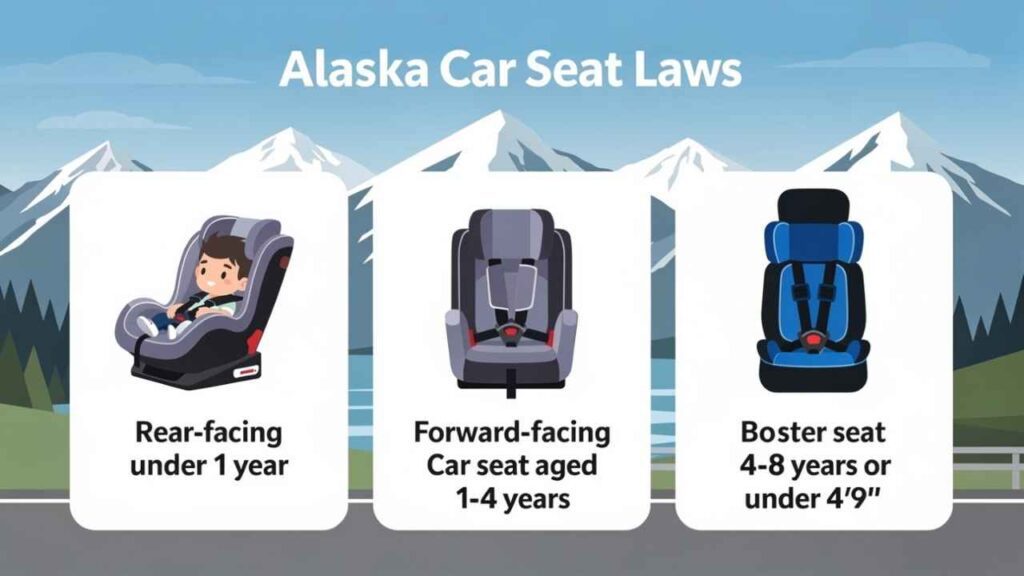
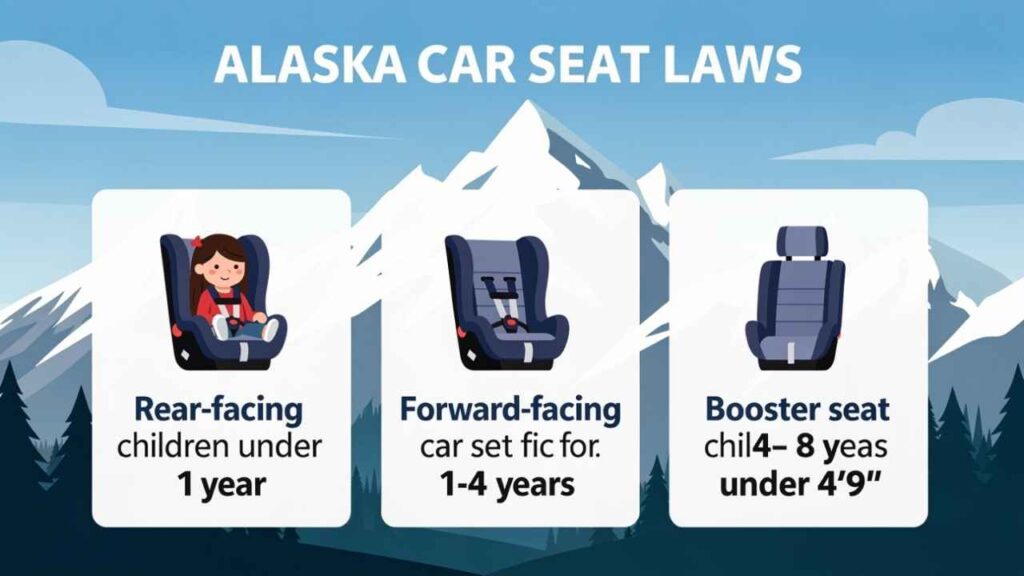
Rear-Facing Car Seats
Rear-facing seats are considered the safest starting point for infants and toddlers in Alaska. According to the American Academy of Pediatrics, children should remain rear-facing until they reach the maximum height or weight limit allowed by the car seat manufacturer. This position supports the head, neck, and spine during sudden stops or collisions.
Many parents I’ve spoken with often switch too early because their child’s legs look cramped, but in reality, flexibility in leg position is not a safety concern. What matters most is keeping the child rear-facing for as long as the seat allows.
Forward-Facing Car Seats
Once a child outgrows the rear-facing limit, the next step is a forward-facing car seat with a five-point harness system. This stage is designed to keep children secure across the shoulders, hips, and between the legs, distributing crash forces more evenly.
In real-world usage, this is where proper installation becomes critical. Even a high-quality seat can lose effectiveness if the harness straps are too loose or positioned incorrectly. The American Academy of Pediatrics recommends keeping children in forward-facing seats until they reach the maximum limit of the seat no rushing into booster seats just for convenience.
Booster Seats
Booster seats act as a bridge between harness seats and regular seat belts. They are used until the vehicle’s seat belt fits the child correctly without assistance. In Alaska, this stage is especially important because improper belt fit can increase injury risk in winter driving conditions where sudden braking is more common.
A properly used booster ensures the lap belt sits across the upper thighs not the stomach and the shoulder belt rests securely across the chest. From what I’ve seen in safety reviews, this is the stage most often skipped or shortened too early, which can significantly reduce protection.
Seat Belt
The final stage is transitioning to a standard seat belt, but only when the child is physically ready. The seat belt should lie flat across the upper thighs, not the abdomen, and the shoulder belt should sit comfortably across the chest without slipping off.
Even after this transition, safety experts including the American Academy of Pediatrics still recommend that children under 13 continue riding in the back seat for maximum protection. In practice, this simple rule makes a major difference in reducing injury risk during collisions, especially on Alaska’s longer highway routes and rural roads.
Car Seat and Booster Seat Safety in Alaska’s Cold Weather
Living in or writing about Alaska’s winter driving conditions quickly makes one thing clear child car seat safety is not just about choosing the right seat, it’s about how it’s used every single day in extreme weather. The cold, snow, and rushed mornings often push parents toward convenience, but organizations like the American Academy of Pediatrics and the State of Alaska Department of Health consistently stress that proper restraint use matters more than comfort or speed.
From practical observation, one of the most overlooked challenges isn’t the car seat itself it’s everything worn inside it during winter. That’s where most safety mistakes quietly happen.
Be Cautious with Bulky Coats
In Alaska’s harsh winter climate, bulky jackets and snowsuits feel essential, especially for school runs or early morning travel. However, these thick layers can create a hidden safety risk that many parents don’t notice until it’s explained.
A padded coat may seem harmless under a harness, but in a sudden stop or crash, the soft filling compresses instantly. That compression creates loose space between the child and the harness straps. Even a few centimeters of slack can significantly reduce how effectively the car seat protects the child.
A safer routine widely recommended in child passenger safety training is to dress children in thin, fitted layers first, buckle them properly, and then place a blanket or jacket over the harness for warmth. In real-life use, especially during freezing mornings, this habit becomes second nature and removes the risk without sacrificing comfort.
Why Winter Layering Matters for Car Seat Safety
Car seats are engineered to work with a snug, body-close fit. The American Academy of Pediatrics clearly emphasizes that harness straps must remain tight against the child’s body to function correctly in a crash.
In colder regions like Alaska, layering directly interferes with that fit. Even high-quality seats certified under the State of Alaska Department of Health child safety guidelines cannot perform as intended if thick winter clothing sits between the child and the harness system.
From experience observing real-world usage patterns, the biggest issue is not lack of awareness it’s habit. Parents often secure the child over the coat simply to save time, especially during freezing temperatures. Unfortunately, that small shortcut can reduce the effectiveness of the entire restraint system.
The Pinch Test and Proper Harness Fit
One of the simplest and most reliable safety checks is the pinch test. After securing your child in the seat, try pinching the harness strap near the shoulder. If you can grab any slack between your fingers, the straps are too loose and need tightening.
A properly fitted harness should lie flat against the chest with no visible slack. The chest clip should sit at armpit level, not lower on the stomach, ensuring crash forces are distributed across the strongest parts of the body.
This quick check takes only a few seconds, but it is one of the most effective habits recommended in child passenger safety education. Combined with proper winter layering and adherence to guidance from the American Academy of Pediatrics, it significantly improves safety outcomes for children traveling in Alaska’s extreme winter conditions.
Alaska Seat Belt Laws
Seat belt rules in Alaska are designed to ensure every passenger is properly restrained, regardless of age or seating position. According to the State of Alaska Department of Transportation & Public Facilities, all occupants must use a seat belt or appropriate child restraint while a vehicle is in motion. Children are expected to transition from booster seats to seat belts only when the belt fits properly across the chest and upper thighs, not the stomach or neck.
From a practical standpoint, one of the most common mistakes seen in real-world use is assuming a seat belt “fits fine” when it actually doesn’t. Safety experts, including the American Academy of Pediatrics, emphasize that proper belt positioning matters more than age alone. In everyday driving situations, especially on longer Alaskan roads, correct seat belt fit becomes a critical factor in reducing injury risk.
Booster Seat Laws in Alaska
Booster seat use in Alaska is required until a child is large enough for the vehicle seat belt to fit correctly without assistance. The law, supported by guidance from the State of Alaska Department of Transportation & Public Facilities, focuses on height and proper belt positioning rather than just age. Children typically remain in booster seats until they can sit with their back against the seat and feet flat on the floor while the seat belt lies properly across the body.
In real-life usage, this stage is often rushed because children want to sit “like adults.” However, experience shared by child safety professionals shows that premature transition is one of the leading causes of improper seat belt use. The American Academy of Pediatrics continues to recommend booster use until seat belts fit correctly without adjustment.
Hawaii Car Seat Laws
Hawaii has strict child passenger safety laws that require all children under 4 years old to be secured in a federally approved child safety seat. As outlined by the Hawaii Department of Transportation, children aged 4 to 7 must use either a child safety seat or booster seat depending on their size. The goal is to ensure proper restraint fit during every stage of development.
From a practical viewpoint, enforcement in Hawaii is taken seriously due to high traffic congestion and frequent urban driving conditions. Safety organizations such as the American Academy of Pediatrics reinforce that correct installation and consistent use matter more than simply meeting minimum legal age requirements.
When Can a Child Sit in the Front Seat in Montana
In Montana, there is no fixed legal age that automatically allows a child to sit in the front seat, but safety guidelines strongly discourage it until at least age 13. The Montana Department of Justice recommends that children remain in the back seat whenever possible due to airbag risks and crash dynamics.
In real-world driving conditions, especially on rural and highway routes common in Montana, front seat placement significantly increases exposure to injury risk for younger passengers. The American Academy of Pediatrics continues to advise that children remain in the rear seat until they are physically large enough and mature enough to handle front-seat safety systems.
When Can a Child Sit in the Front Seat in Wyoming
Wyoming follows similar safety guidance, recommending that children stay in the back seat until at least 13 years of age, even if state law does not specify a strict minimum age for front seat use. The Wyoming Department of Transportation emphasizes proper restraint use and encourages families to prioritize rear seating for maximum protection.
From practical experience in reviewing child passenger safety rules across states, Wyoming’s approach reflects a common theme in rural states long travel distances and higher-speed roads make rear-seat positioning much safer for children. The American Academy of Pediatrics also supports this guideline, highlighting that the back seat remains the safest place for young passengers in nearly all crash scenarios.
👉🏻Discover More About Unique Laws{ Utah Car Seat Laws Explained }
Frequently Asked Questions
Are car seats required in Alaska?
Yes, car seats are required in Alaska for children who are not yet big enough to safely use a seat belt. The State of Alaska Department of Transportation & Public Facilities requires infants to use rear-facing seats, toddlers to use forward-facing seats with a harness, and older children to use booster seats until the seat belt fits properly. In everyday practice, safety experts from the American Academy of Pediatrics emphasize that proper restraint use is not just a legal rule but the most important protection during crashes, especially on Alaska’s long and often icy roads.
Can a 14 year old sit in a car seat?
A 14-year-old does not legally need a car seat in Alaska because most children at that age can safely use a standard seat belt. However, the real factor is body size and belt fit, not age. If the seat belt does not sit correctly across the chest and upper thighs, a booster seat may still improve safety. The American Academy of Pediatrics focuses on proper fit rather than age alone, since correct positioning of the seat belt is what reduces injury risk in a crash.
Does Alaska let you check a car seat for free?
Yes, Alaska provides free car seat inspection and education programs through local safety initiatives and public health services. These checks are often offered by certified technicians under guidance from the State of Alaska Department of Health. In real-world situations, many parents discover during these checks that even properly installed seats can have small errors, such as loose straps or incorrect angles, which can reduce safety effectiveness without being obvious.
How long can a 10 year old stay home alone in Alaska?
Alaska does not have a specific law that sets a strict age or time limit for leaving a child home alone. Instead, it depends on the child’s maturity, responsibility, and ability to handle emergencies safely. The State of Alaska Department of Family and Community Services advises parents to use judgment based on individual readiness rather than age alone. In practice, some 10-year-olds may manage short periods alone, but longer durations require careful consideration of safety and environment.
What do Alaska laws require?
Alaska laws require that all children in vehicles be properly secured in an appropriate restraint system based on their size and age. This includes rear-facing seats for infants, forward-facing seats with harnesses for young children, booster seats for older kids, and seat belts once they fit correctly. These requirements are enforced by the State of Alaska Department of Transportation & Public Facilities. In real-life safety guidance, the American Academy of Pediatrics stresses that each stage should be used until the child fully outgrows it.
What happens when Alaska laws and recommendations differ?
When Alaska laws and safety recommendations differ, the law represents the minimum legal requirement, while recommendations from experts provide the safest practice. The American Academy of Pediatrics often advises keeping children in each car seat stage longer than the law requires if possible, because safety limits are based on protection, not convenience. In real driving situations especially in Alaska’s harsh weather and long-distance travel—parents often choose to follow the stricter recommendation to ensure maximum child safety.
Conclusion
Following Alaska car seat laws is one of the best ways to protect children during every drive. Parents should always choose the correct rear-facing car seat, forward-facing seat, booster seat, and seat belt according to a child’s age, height, and weight. These child passenger safety laws help reduce injuries and improve overall road safety for infants, toddlers, and young passengers. Keeping up with updated Alaska child restraint laws also helps families avoid penalties and travel with confidence.
Proper car seat installation and safe driving habits are essential for every family in Alaska. By following NHTSA recommendations and Alaska traffic safety rules, parents can make sure their children stay secure on short trips and long journeys. Understanding booster seat laws, seat belt requirements, and child safety guidelines creates a safer travel experience for everyone. Staying informed about Alaska car seat regulations ensures better protection, legal compliance, and peace of mind for parents every day.

Michael is a car seat specialist with 4 years of experience in reviewing, testing, and guiding people on the best car seat choices. He creates clear, reliable content to help users make safe and confident decisions.