
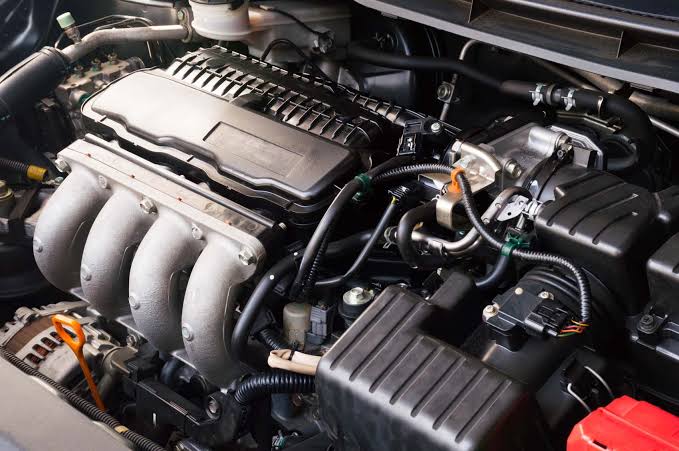
The engine is often described as the heart of a vehicle, and there is a good reason for that comparison. It is responsible for converting energy from fuel into the mechanical power that ultimately moves the vehicle down the road. But an engine is not one single machine. It is a collection of many components that must work together at the right time and under the right conditions.
From pistons moving inside cylinders to valves controlling airflow, every major engine component has a specific job. Some parts create power, while others control temperature, lubrication, fuel delivery, or exhaust gases.
Understanding these components can make it easier to recognize basic maintenance needs and understand what a mechanic is talking about when a repair is required. We do not need to become professional technicians to learn the fundamentals. A basic knowledge of engine parts can help us make better decisions about vehicle care.
The Engine Block
The engine block is the main structural foundation of most engines.
It contains the cylinders where combustion takes place and provides mounting points for many other components.
Inside the block are passages that allow engine oil and coolant to circulate. These fluids help lubricate moving parts and control operating temperatures.
The block is usually made from cast iron or aluminum, depending on the engine design.
Because so many critical components connect to it, damage to the engine block can be a serious mechanical problem.
Cylinders
Cylinders are the spaces in which the pistons move up and down.
The number of cylinders depends on the engine design. Some vehicles use four-cylinder engines, while others may have six or eight cylinders.
Generally speaking, cylinders are where the combustion process creates the pressure needed to move the pistons.
The arrangement of cylinders can also vary. They may be positioned in a straight line, arranged in a V shape, or placed in other configurations.
Pistons
Pistons are among the most important moving parts inside an engine.
They move up and down within the cylinders as the engine operates.
During the combustion process, expanding gases push the piston downward. The piston then transfers this movement to the connecting rod.
Pistons must withstand high temperatures and significant pressure.
They also need proper lubrication to move smoothly inside the cylinders.
A damaged piston can cause serious engine problems and may lead to symptoms such as unusual noises, reduced power, excessive oil consumption, or smoke.
Connecting Rods
Connecting rods link the pistons to the crankshaft.
Their job is to transfer the pistons’ up-and-down movement into the rotating motion of the crankshaft.
This is a demanding task because connecting rods experience significant forces while the engine is running.
Proper lubrication is essential for their operation.
A serious connecting rod problem can produce loud knocking sounds and may result in major engine damage.
Crankshaft
The crankshaft converts the pistons’ linear movement into rotational movement.
This rotating motion is then used to transfer power through the vehicle’s drivetrain.
The crankshaft is located in the lower section of the engine and is designed to withstand significant mechanical stress.
Because it is connected to multiple moving components, proper oil circulation is extremely important.
A crankshaft problem can be expensive to repair, particularly if the damage affects other engine components.
Camshaft
The camshaft controls the opening and closing of the engine’s valves.
It uses specially shaped lobes to operate the valves at specific points in the engine’s cycle.
Depending on the engine design, the camshaft may be located inside the engine block or in the cylinder head.
Modern engines often use sophisticated variable valve timing systems that adjust valve operation to improve efficiency, performance, or emissions.
Valves
Valves control the movement of gases into and out of the cylinders.
Intake valves allow the air or air-fuel mixture to enter the combustion chamber.
Exhaust valves allow burned gases to leave.
The valves must open and close at precisely the right times.
If valve timing is incorrect or a valve becomes damaged, engine performance can suffer significantly.
Cylinder Head
The cylinder head sits on top of the engine block.
It contains important components such as valves, camshafts in many designs, spark plugs in gasoline engines, and passages for coolant and oil.
The cylinder head forms part of the combustion chamber.
A gasket sits between the cylinder head and engine block to create a proper seal.
Problems with the cylinder head or its gasket can cause serious issues, including coolant leaks, oil contamination, or overheating.
Head Gasket
The head gasket creates a seal between the engine block and cylinder head.
It separates the combustion chambers from oil and coolant passages.
Because it operates under extreme temperatures and pressure, it must maintain a reliable seal.
A failed head gasket can cause symptoms such as overheating, coolant loss, white exhaust smoke, or oil that appears unusually milky.
Head gasket problems should be addressed quickly because continued driving may result in additional engine damage.
Spark Plugs
Gasoline engines generally use spark plugs to ignite the air-fuel mixture inside the combustion chamber.
The spark produced at the correct moment starts the combustion process that generates power.
Over time, spark plugs can become worn or contaminated.
Depending on the vehicle and engine, worn spark plugs may contribute to rough running, poor acceleration, reduced fuel economy, or difficulty starting.
Replacement intervals vary, so it is best to follow the vehicle manufacturer’s recommendations.
Fuel Injectors
Fuel injectors deliver fuel into the engine at precisely controlled times.
Modern engines generally use electronic fuel injection systems rather than older carburetor designs.
Clean and properly functioning injectors help maintain the correct fuel mixture.
A faulty injector may cause rough idling, reduced performance, poor fuel economy, or starting problems.
Fuel system issues can have several causes, so professional diagnosis may be necessary.
Air Intake System
An engine needs air for combustion.
The air intake system brings air into the engine and helps control how much enters.
The system commonly includes an air filter, intake tubing, sensors, and a throttle body.
The air filter helps prevent dust and debris from entering the engine.
A clogged air filter can restrict airflow and potentially affect engine performance.
Air Filter
The air filter is a relatively simple part, but it performs an important job.
It removes dust, dirt, and other particles from the air before it enters the engine.
Over time, filters can become clogged.
Replacement intervals vary depending on the vehicle, driving conditions, and manufacturer recommendations.
If you regularly drive in dusty environments, the filter may require more frequent attention.
Throttle Body
The throttle body controls how much air enters the engine in response to accelerator input.
In many modern vehicles, electronic throttle systems use sensors and an electronic motor rather than a traditional mechanical cable.
A dirty or malfunctioning throttle body can sometimes contribute to rough idling or inconsistent acceleration.
Engine Control Unit
The engine control unit, often called the ECU, is essentially the computer that manages many aspects of engine operation.
It receives information from various sensors and uses that data to control systems such as fuel injection and ignition timing.
Modern engine management is highly computerized.
When a sensor detects a problem, the ECU may store a diagnostic trouble code and trigger the check engine light.
A diagnostic scanner can help technicians identify the stored code, although the code itself does not always identify the exact failed component.
Sensors
Modern engines rely on numerous sensors.
Depending on the vehicle, these may monitor:
- Engine temperature
- Airflow
- Air pressure
- Oxygen levels
- Crankshaft position
- Camshaft position
- Throttle position
The ECU uses this information to adjust engine operation.
A faulty sensor can affect performance, fuel economy, emissions, or starting.
Timing Belt or Timing Chain
The timing system keeps the camshaft and crankshaft synchronized.
Some engines use a timing belt, while others use a timing chain.
This synchronization ensures that valves open and close at the correct time relative to piston movement.
Timing belts generally have scheduled replacement intervals, while timing chains are often designed for longer service life, although they can still wear or develop problems.
A timing system failure can cause serious engine damage in some engines.
Following the manufacturer’s maintenance recommendations is therefore extremely important.
Engine Oil
Engine oil is not technically a mechanical part, but it is essential to engine operation.
It reduces friction between moving components, helps carry heat away from certain areas, and helps keep internal surfaces clean.
Over time, oil becomes contaminated and loses some of its protective properties.
Regular oil changes using the correct oil specification are among the most important routine maintenance tasks for many vehicles.
Always follow the vehicle manufacturer’s recommendations regarding oil type and change intervals.
Oil Pump
The oil pump circulates engine oil through passages to lubricate critical components.
Without adequate oil pressure and circulation, moving parts can experience excessive friction and wear.
If the oil pressure warning light appears while driving, it should not be ignored.
Continuing to operate an engine with inadequate oil pressure can result in severe damage.
Oil Filter
The oil filter removes contaminants from engine oil.
As oil circulates through the engine, it can collect tiny particles and debris.
The filter helps prevent these contaminants from repeatedly circulating through sensitive components.
Oil filters are typically replaced during oil changes.
Cooling System
Combustion creates a significant amount of heat.
The cooling system helps prevent the engine from becoming excessively hot.
Major components can include:
- Radiator
- Water pump
- Thermostat
- Coolant
- Hoses
- Cooling fans
Each component contributes to maintaining an appropriate operating temperature.
An overheating engine should be treated seriously.
Radiator
The radiator helps transfer heat from the engine coolant to the surrounding air.
Coolant flows through the radiator, where heat is released before the fluid returns to the engine.
A damaged radiator, blocked passage, leaking hose, or faulty cooling fan can contribute to overheating.
Water Pump
The water pump circulates coolant through the engine and cooling system.
Depending on the vehicle, it may be driven by a belt or powered through another mechanism.
A failing water pump can cause overheating and may produce leaks or unusual noises.
Thermostat
The thermostat helps regulate engine temperature.
When the engine is cold, the thermostat restricts coolant flow to help the engine reach its normal operating temperature.
Once the appropriate temperature is reached, it opens to allow greater coolant circulation.
A thermostat that becomes stuck open or closed can cause different temperature-related problems.
Exhaust System
After combustion, the engine produces exhaust gases that must be safely directed away from the vehicle.
The exhaust system may include:
- Exhaust manifold
- Catalytic converter
- Oxygen sensors
- Muffler
- Exhaust pipes
The system also plays an important role in reducing harmful emissions and controlling noise.
Catalytic Converter
The catalytic converter helps reduce certain harmful pollutants in exhaust gases.
It uses chemical reactions to convert specific emissions into less harmful substances.
Because catalytic converters are part of the emissions system, problems can affect engine performance and may trigger warning lights.
Turbocharger
Not every engine has a turbocharger, but many modern vehicles do.
A turbocharger uses exhaust gases to spin a turbine, which drives a compressor that forces more air into the engine.
More air allows the engine to burn more fuel and potentially produce more power from a smaller engine.
Turbocharged engines require proper lubrication and cooling.
Regular maintenance is particularly important because turbochargers operate at high speeds and temperatures.
Battery and Starter
The battery and starter motor are not internal engine components, but they are essential to starting the vehicle.
The battery supplies electrical power needed to operate the starter.
The starter motor then turns the engine over so the combustion process can begin.
A weak battery or faulty starter can prevent the engine from starting even if the engine itself is mechanically healthy.
Alternator
Once the engine is running, the alternator generates electrical power and helps recharge the battery.
It supplies electricity to various vehicle systems while the engine operates.
A failing alternator may cause dim lights, electrical problems, warning lights, or eventually a vehicle that will not start.
How All These Parts Work Together
The engine operates through a coordinated sequence.
In a typical four-stroke gasoline engine, the process involves four main stages:
Intake
The intake valve opens while the piston moves downward.
Air and fuel enter the cylinder.
Compression
The valves close and the piston moves upward.
The air-fuel mixture is compressed.
Power
The spark plug ignites the compressed mixture.
The resulting combustion pushes the piston downward.
Exhaust
The exhaust valve opens as the piston moves upward again.
Burned gases leave the cylinder.
This process repeats rapidly across the engine’s cylinders.
The pistons move the connecting rods, which rotate the crankshaft. The crankshaft ultimately provides the rotational power needed to move the vehicle through the drivetrain.
At the same time, the cooling, lubrication, fuel, air intake, ignition, and exhaust systems work together to keep the process operating efficiently.
Why Regular Maintenance Matters
Even the best-designed engine needs maintenance.
Regular oil changes, appropriate filter replacements, coolant checks, and scheduled timing belt services can help prevent avoidable problems.
We should also pay attention to warning signs.
These might include:
- Unusual engine noises
- Excessive smoke
- Overheating
- Loss of power
- Rough idling
- Poor fuel economy
- Difficulty starting
- Warning lights
Ignoring these symptoms can sometimes allow a small problem to become a much more expensive repair.
Final Thoughts
An engine is a complex collection of components, but understanding the basics does not have to be difficult.
The engine block provides the foundation, while pistons, connecting rods, and the crankshaft work together to produce usable mechanical power. The camshaft and valves control the flow of air and exhaust gases, while the fuel and ignition systems support combustion.
At the same time, oil keeps moving parts lubricated, the cooling system controls temperature, and the exhaust system manages gases produced during combustion.
Every component has a role, and the engine depends on all of them working together.
Knowing what these parts do can help us understand our vehicles better and recognize why routine maintenance matters. Whether we drive a compact car, a pickup truck, an SUV, or another type of vehicle, taking care of the engine is one of the best ways to support reliable performance and keep the vehicle running smoothly for years to come.
