
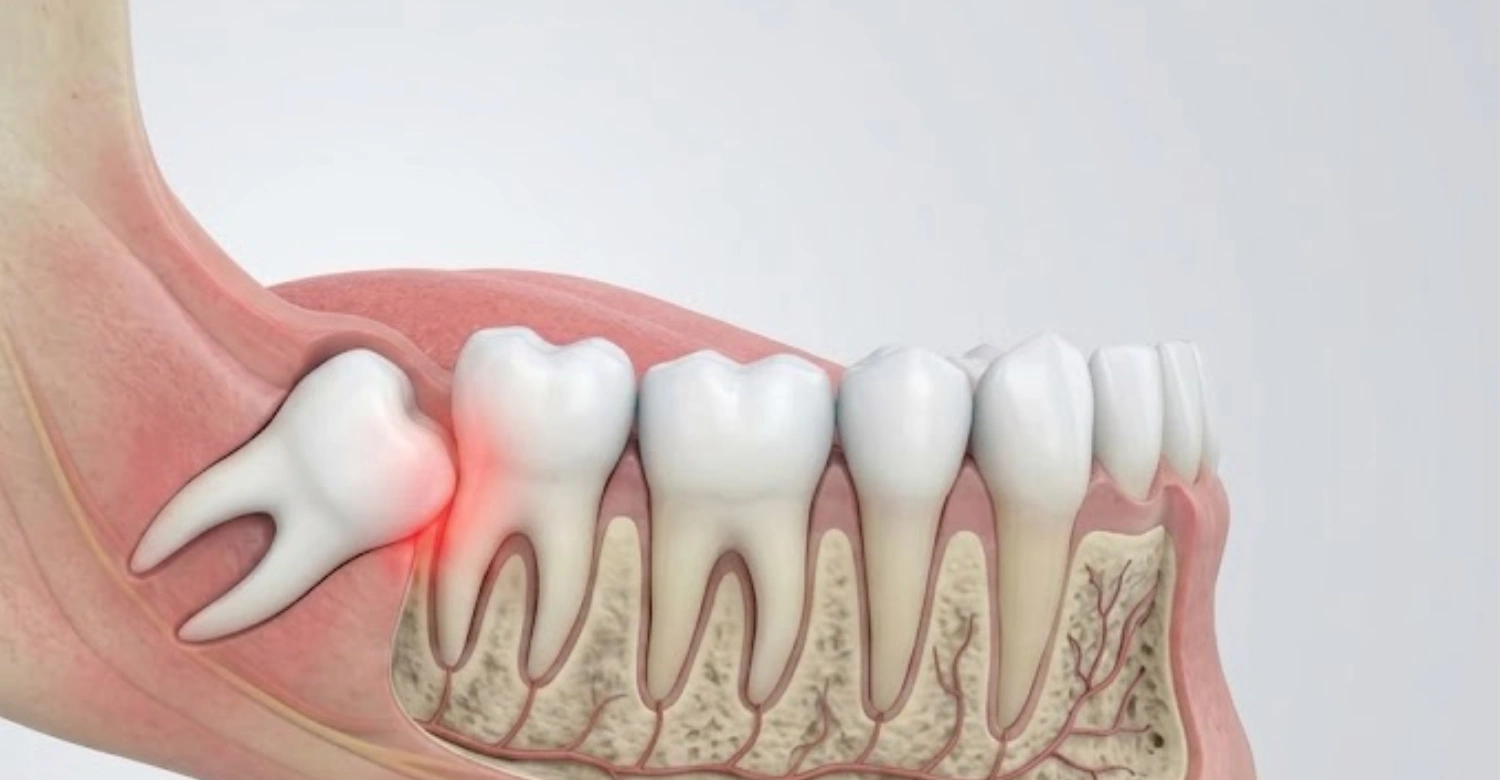
Waking up with a swollen, tender patch of gum at the back of your mouth can be alarming, especially when there was no obvious warning sign the day before. Sudden swelling around a wisdom tooth is fairly common, but it should not simply be ignored. In many cases, it is linked to gum inflammation, trapped bacteria, or a partially erupted tooth that is difficult to keep clean.
For some people, the problem settles after professional cleaning and improved oral hygiene. For others, repeated inflammation or infection may lead a dentist to consider wisdom tooth removal as a longer-term solution.
Wisdom teeth are the last teeth to come through, usually appearing in the late teens or early twenties. By this stage, there may not be enough room in the jaw for them to erupt normally. This can leave the tooth partially covered by gum tissue or trapped beneath the gum, making the area more vulnerable to irritation, food build-up, and infection.
Common Causes of Sudden Wisdom Tooth Swelling
There are several reasons why the gum tissue around a wisdom tooth can suddenly become swollen or painful.
- Partially erupted wisdom teeth: When a wisdom tooth only comes through the gum partway, a flap of tissue may remain over part of the tooth. Food particles, plaque, and bacteria can collect beneath this flap and irritate the surrounding tissue.
- Trapped food and plaque: Wisdom teeth sit at the very back of the mouth, making them harder to brush and floss effectively. Food and plaque can remain around the tooth and gum, increasing the likelihood of inflammation.
- Pericoronitis: This is inflammation of the soft tissue surrounding a partially erupted tooth. It commonly occurs around wisdom teeth and may cause tenderness, swelling, discomfort when chewing, and an unpleasant taste.
- Impacted wisdom teeth: A wisdom tooth may become impacted when there is not enough space for it to emerge normally or when it grows at an unfavourable angle. Impacted or partially impacted wisdom teeth can be difficult to clean and may contribute to repeated inflammation.
- Bacterial infection: Bacteria trapped around the tooth can sometimes cause a local infection. Symptoms may include increasing pain, swelling, pus or discharge, bad breath or an unpleasant taste in the mouth.
Repeated problems around an impacted or partially erupted tooth are one reason a dentist may discuss whether wisdom tooth removal is appropriate.
Signs to Watch For
Sudden swelling around a wisdom tooth may occur alongside several other symptoms.
These can include:
- Pain around the back of the mouth
- Red or tender gum tissue
- Discomfort when biting or chewing
- An unpleasant taste or persistent bad breath
- Difficulty opening the mouth fully
- Jaw stiffness
- Swelling of the cheek or jaw
- Pus or discharge from around the gum
Mild irritation does not necessarily mean the tooth needs to be removed. However, recurring swelling or increasingly severe symptoms suggest that the underlying cause should be professionally assessed.
Fever, significant facial swelling, difficulty swallowing or substantial difficulty opening the mouth can indicate a more serious infection and should receive prompt professional attention.
Why Wisdom Tooth Swelling Shouldn’t Be Ignored
It can be tempting to wait and see whether swelling disappears on its own. Mild irritation may occasionally improve when the area is cleaned thoroughly and kept free from trapped food. However, if the wisdom tooth is partially erupted, impacted or positioned in a way that makes cleaning consistently difficult, the problem may return.
Recurring inflammation can affect the gum surrounding the tooth and may make eating, brushing and opening the mouth uncomfortable. If infection develops, the swelling and pain may become more significant.
Ignoring repeated episodes can also mean treating the same problem several times without addressing its underlying cause.
This does not mean every swollen wisdom tooth requires extraction. A dentist will normally assess the position of the tooth, the condition of the surrounding gum and whether the problem has happened before when deciding whether ongoing monitoring, cleaning or wisdom tooth removal is the most suitable approach.
When Is Wisdom Tooth Removal Considered?
Wisdom tooth removal is not automatically recommended simply because a wisdom tooth has erupted or because the gum has become irritated once.
A dentist may be more likely to consider removal when the tooth is causing repeated or ongoing problems, such as recurrent inflammation, infection, damage to nearby teeth, or difficulty maintaining adequate oral hygiene around the area.
If you are experiencing ongoing symptoms, a dentist in Darlington can examine the wisdom tooth and surrounding tissues to determine what is causing the swelling. Dental imaging may also be recommended when the position of the tooth and its roots need to be assessed more closely.
Depending on the findings, treatment may involve:
- Cleaning or irrigating the area around the wisdom tooth
- Removing trapped food, plaque and debris
- Providing advice about cleaning around a partially erupted tooth
- Treating infection when clinically appropriate
- Monitoring the tooth if it is healthy and likely to remain manageable
- Recommending wisdom tooth removal when recurring or structural problems make extraction a more suitable long-term option
The appropriate treatment depends on the individual tooth rather than swelling alone.
What Happens Before a Wisdom Tooth Is Removed?
Before recommending extraction, a dentist will usually examine the tooth, surrounding gums and neighbouring teeth. They may also use an X-ray to assess the position of the wisdom tooth, its roots and nearby structures.
This assessment helps determine whether the tooth can remain safely in place or whether removal may reduce the likelihood of future problems.
If wisdom tooth removal is recommended, the dentist can also explain the procedure, the type of anaesthesia or pain relief that may be appropriate, expected recovery, and aftercare instructions.
The decision should be based on the condition and position of the tooth rather than the assumption that all wisdom teeth eventually need to come out.
Can Swelling Be Prevented?
Not every episode of wisdom tooth swelling can be prevented, particularly when the tooth is impacted or only partially erupted. However, keeping the area as clean as possible can help reduce plaque and food build-up.
Carefully brushing around the back teeth, following professional oral hygiene advice, and attending dental check-ups can make it easier to identify problems before they become more uncomfortable.
If swelling repeatedly returns despite good oral hygiene, it may indicate that the position of the tooth is making the area consistently difficult to maintain. This is when a dentist may need to discuss longer-term management options.
Conclusion
Sudden swelling around a wisdom tooth can result from trapped food, plaque, inflammation, a partially erupted tooth or infection. While mild irritation may occasionally settle with careful cleaning, persistent or recurring swelling should be professionally assessed.
Not every problem requires extraction, but repeated inflammation, infection or difficulties caused by an impacted tooth may make wisdom tooth removal an appropriate option. Having the tooth assessed early can help identify the cause of the swelling and determine whether cleaning, monitoring or removal offers the most suitable way forward.
Frequently Asked Questions
1. Does swollen gum around a wisdom tooth mean it needs to be removed?
Not necessarily. A single episode of mild inflammation may be managed with cleaning and appropriate dental care. Removal is more likely to be considered when swelling or infection repeatedly returns, or the position of the tooth is causing ongoing problems.
2. Can I reduce wisdom tooth swelling at home?
Gentle warm salt water rinses and careful cleaning may help ease mild irritation. However, home care will not correct an impacted tooth or reliably treat a significant infection. Persistent or worsening symptoms should be assessed by a dentist.
3. How do I know if the wisdom tooth is infected?
Possible signs include worsening pain, swelling, pus or discharge, bad breath, an unpleasant taste, fever, facial swelling and difficulty opening the mouth. Seek professional dental advice if these symptoms develop.
4. When is wisdom tooth removal usually recommended?
It may be recommended when a wisdom tooth repeatedly causes infection or inflammation, damages neighbouring structures, cannot be adequately cleaned, or creates other ongoing dental problems.
5. Do all impacted wisdom teeth need removal?
No. An impacted wisdom tooth that is healthy and not causing problems may sometimes be monitored. The decision depends on the tooth’s position, symptoms, and potential risks.
6. When should wisdom tooth swelling be treated urgently?
Seek prompt dental care for severe or worsening pain, facial or jaw swelling, fever, difficulty swallowing or significant difficulty opening the mouth. Rapidly worsening swelling or breathing difficulty requires urgent medical attention.
