
Most people who plan an engine upgrade spend weeks researching the headline part and almost no time on everything that surrounds it. The exciting component gets the attention, while fuel delivery, ignition, tuning, and the condition of the engine underneath are treated as afterthoughts.
That is backwards. Power upgrades succeed or fail on the details around the main part. This guide walks through what a careful owner should check before adding airflow or boost to a daily driver, so the result is both quick and reliable.
Why Stock Engines Have a Margin, but Not an Unlimited One
Manufacturers build engines with some safety margin. Fuel injectors are sized with headroom, pistons and rods are strong enough to survive normal abuse, and the engine computer is calibrated conservatively for fuel quality and climate. This margin is why mild modifications often work without trouble.
But the margin is finite. Every increase in airflow asks more of the fuel system, the ignition, the cooling, and the internal parts. Plan for what the engine will become, not for what it is today.
Start With a Health Check
Adding power to a tired engine only exposes its weaknesses faster. Before spending anything on parts, confirm the engine is genuinely healthy:
- Check for vacuum leaks, oil leaks, and worn belts or hoses
- Run a compression test or leak-down test to see how well the cylinders seal
- Confirm the cooling system holds pressure and the thermostat works
- Change the oil and filter, and consider an oil analysis if the car has high mileage
- Scan for stored fault codes and fix any existing issues first
If the baseline is poor, fix it first. A healthy engine tolerates modifications far better than one already running on borrowed time.
The Fuel System
More air needs more fuel. If the engine receives extra airflow without extra fuel, the mixture runs lean, which raises combustion temperatures and can damage pistons and valves.
Stock injectors often have enough capacity for modest gains, but larger increases usually call for higher-flow injectors. The fuel pump, pressure regulation, and fuel lines should also be checked to confirm they can keep up at full load. Many tuners also recommend using quality fuel with the correct octane rating, because poor fuel causes knock when cylinder pressures rise.
Ignition and Spark Plugs
Higher cylinder pressures make the spark harder to maintain. Standard spark plugs may misfire under heavier load, so many builders switch to plugs with a colder heat range and a tighter gap, matched to the specific engine and power level.
Ignition coils and plug wires also deserve a look. They are inexpensive compared with the engine they protect, and weak ignition is one of the most common causes of misfires after an upgrade.
Tuning: The Step You Cannot Skip
The engine computer controls fuel delivery, ignition timing, and many other parameters. It was calibrated for the airflow the engine had when it left the factory. Change that airflow and the calibration no longer matches.
A proper tune recalibrates the computer for the new conditions. Without it, the engine may run too lean, too rich, or with timing that invites knock. The tune is not an optional extra. It is part of the upgrade itself.
Tuning options include working with a local tuner on a dynamometer, or using a remote tuner who adjusts the calibration based on data logs you send from the car. Remote tuning has become common and works well when you follow the process carefully and log data under the right conditions.
Cooling, Drivetrain, and Brakes
Extra power produces extra heat and extra stress. Consider the whole chain from engine to road:
- Cooling: a healthy radiator, correct coolant, and good airflow become more important, and cooler intake air generally means better power and safer operation
- Clutch and transmission: manual clutches and automatic transmissions both see higher loads, so fresh fluid and sound condition are essential
- Brakes: if the car accelerates faster, it needs to stop faster, so pads, rotors, and fluid should be in excellent shape
- Tires: grip is the final limit on usable power, so worn tires waste the entire effort
DIY or Professional Installation?
Many owners are capable of installing performance parts themselves, and complete bolt-on setups are designed with that audience in mind. Even so, the job demands patience, proper tools, and careful attention to torque specifications.
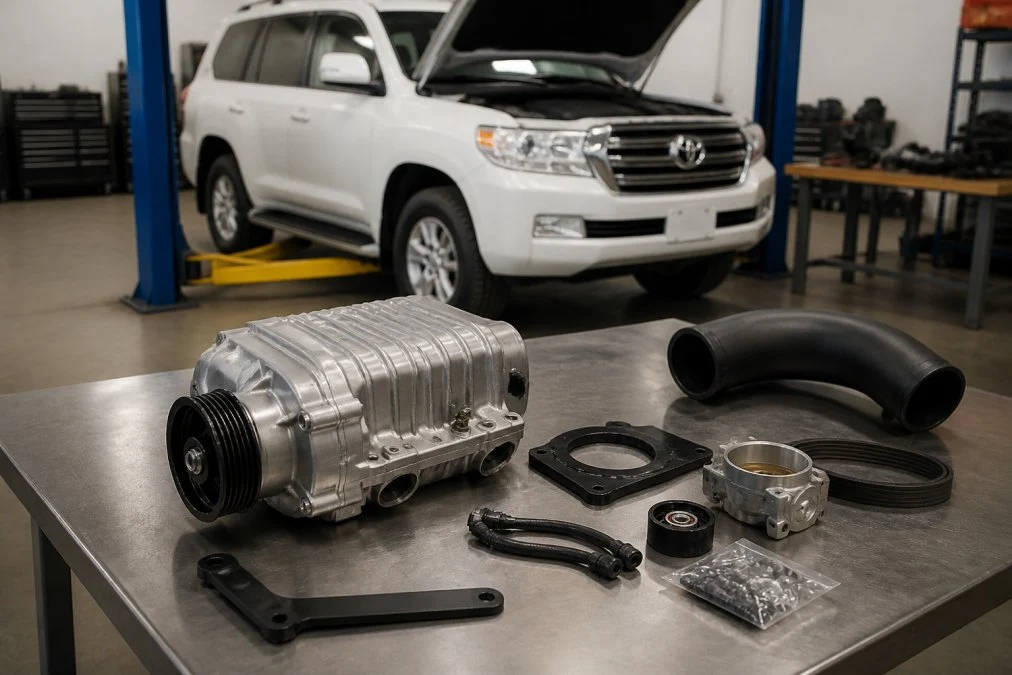
Complete packages such as an anrot VT supercharger kit are a good example of the realistic picture. According to the supplier, these kits are designed for DIY installation and ship with detailed manuals, with phone support available. The supplier also states that a professional installation typically takes 8 to 12 hours, and it recommends high-flow injectors, upgraded spark plugs, and an ECU tune for best results. The kits themselves do not include the tune, since it is specific to each engine, model, and set of parts.
That honesty about what a package includes is worth looking for in any upgrade. Always confirm what is in the box, what is not, and what you will need to buy separately.
Budgeting Honestly
The price of the main component is rarely the full cost. A realistic budget includes the part, the supporting items such as injectors and spark plugs, tuning, installation labor if you are not doing it yourself, and a reserve for the unexpected. Owners who budget only for the headline part often stall halfway through and end up with a car that runs poorly.
A Pre-Upgrade Checklist
- Fix any existing faults and confirm engine health
- Decide on a power target that suits how you actually drive
- Verify the fuel system can support it
- Choose ignition components matched to the new load
- Book a tuner before you buy the parts
- Check brakes, tires, and cooling
- Confirm local emissions and insurance requirements
Final Thoughts
A power upgrade is a project, not a purchase. The best results come from owners who treat the engine as a system, check the foundation, and respect the supporting work around the main part.
Do the groundwork, buy the right supporting items, and put the tune on the schedule from day one. The reward is a car that feels strong, runs smoothly, and stays dependable long after the excitement of the first drive has faded.
