
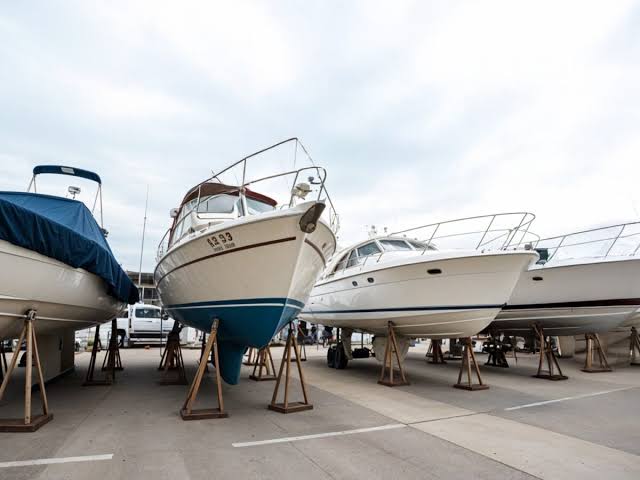
Proper boat maintenance during storage helps prevent accelerated wear on critical parts like the upholstery, electrical systems, and engine, so the vessel stays ready for future use. Before using boat storage facilities, thoroughly clean and dry your vessel to remove salt residue and organic deposits. This first maintenance step can help protect your boat against corrosion, mold growth, and staining during storage. Here are a few tips for maintaining your boat in storage units:
Safeguard Upholstery and Electronics
A boat’s upholstery, carpets, and soft furnishings may absorb moisture. When moisture remains inside the boat during storage, mildew is able to spread through fabric and foam, especially in enclosed boat storage facilities. Removing that moisture before storage helps prevent mold colonization, musty odors, and fabric degradation. Make sure to inspect, clean, and fully dry interior surfaces such as:
- Hidden compartments
- Cushions
- Vinyl seats
- Carpets
If removable, make sure to disconnect and take out electronics, such as GPS units, radios, and fish finders. Then store them in waterproof containers; this helps shield them against temperature extremes and humidity. This maintenance tip is also key to minimizing the amount of restoration work needed when the boat leaves storage.
Stabilize Fuel and Service Engine
Servicing the engine can help prevent varnish on different components, like filters. Some storage facilities recommend adding a fuel stabilizer to the boat’s tank; this allows the fuel to stay usable while the vessel is in storage. Add a fuel stabilizer formulated for marine engines to a nearly full tank according to the manufacturer’s instructions. Running the engine briefly after adding the stabilizer helps circulate the treated fuel through the fuel injection system. Make sure to change the engine oil and replace the oil filter before storage. Used oil may contain acids and contaminants that can corrode your boat’s internal engine components over time.
Use Boat Covers
Boat covers help protect the vessel from dust and precipitation during storage. Make sure to use a cover designed for your boat’s hull shape, windshield configuration, and installed equipment. You could install a cover-support pole or frame to form a peak above the cockpit. This shape helps direct water off the cover; it also leaves open space between the fabric and the boat for air circulation.
You can secure the cover with straps or tie-downs; this helps prevent wind from lifting it and exposing the boat to debris. When storing your boat in an indoor or enclosed facility, do not close every compartment airtight. Leaving some lockers and under-seat areas open helps trapped air escape. This means moisture doesn’t remain trapped long after the exterior appears dry.
Choose Boat Storage Facilities
Maintaining your boat during storage limits deterioration of systems or features, and this extends how long the vessel remains operational. Through frequent inspections, you are able to detect issues such as cover damage, pest intrusion, or even corrosion before they compromise the vessel. Contact a trusted self-storage property management team to explore facilities that provide adequate protection for your boat and other watercraft.
