
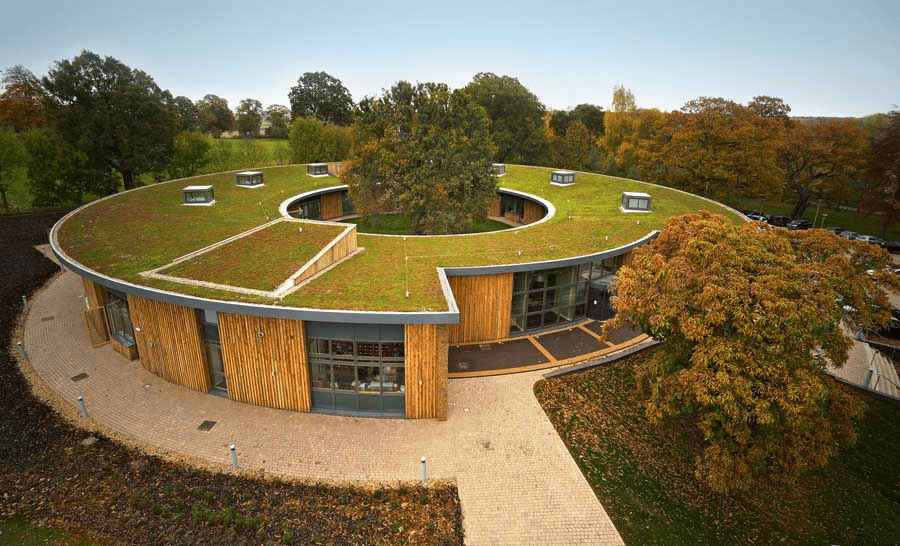
A green roof can cool your home, calm stormwater runoff, and turn a plain flat roof into a living garden. It can also become heavy, soggy, and damaging if water has nowhere sensible to go. The difference is rarely the plants you see. It is the drainage layer you do not see, working quietly between the growing medium and the waterproof membrane below.
Good drainage design does two jobs at once. It holds enough rain for roots to use during dry spells, and it moves excess water away quickly so weight, leaks, and root problems never build up. This guide explains how that balance works, which materials suit different homes, and what to check before, during, and after installation, with realistic costs so you can plan with confidence.
How Green Roof Drainage Works
Rain lands on the planting first. Foliage slows it down, then water filters into the growing medium, usually 80 to 150 millimetres of lightweight, free-draining substrate for an extensive sedum roof, or 200 millimetres or more for deeper intensive planting with shrubs and small trees. The medium stores some moisture like a sponge, and plants draw it back up over the following days.
Water the medium cannot hold passes through a filter fleece. This thin fabric stops fine particles washing down and clogging the layers below, which is one of the most common causes of slow drainage in older roofs. Below the fleece sits the drainage layer itself. It creates a network of channels and small reservoirs that guide water sideways toward roof outlets while keeping a little in reserve.
Underneath everything lies a protection layer and the waterproof membrane. A root barrier stops roots seeking out joints and laps, and the membrane keeps the building dry. Finally, water exits through roof drains, gutters, or scuppers. If any link in this chain is missing, undersized, or blocked, water ponds, weight rises sharply, and a saturated extensive roof can weigh 120 to 150 kilograms per square metre. That is why structural checks and drainage design always belong together.
Drainage Layer Types and Materials
There is no single best material. The right choice depends on roof size, slope, planting depth, access, and how much weight your structure can safely carry.
Moulded Cup and Dimple Sheets
These rigid plastic sheets, usually high-density polyethylene, are covered in cups that store small pockets of water while the gaps between them channel the excess away. A typical 25-millimetre sheet holds about 3 to 5 litres per square metre and suits most extensive roofs. Expect to pay around $4 to $9 per square metre for the sheet alone. They are light, quick to lay in rolls, and a sensible default for garage, extension, and home office roofs.
Gravel and Lightweight Aggregate
A 30 to 50-millimetre layer of washed gravel, expanded clay, or crushed brick is the traditional option. It drains reliably and costs roughly $3 to $7 per square metre, but it is heavy and harder to keep even on a slope. Expanded clay is lighter than gravel and also stores a little moisture. Use aggregate where the structure is strong, the roof is nearly flat, and a simple, low-tech build matters more than saving weight.
Drainage Mats and Modular Trays
- Geocomposite mats: thin, roll-out sheets with a dimpled core and fleece bonded to both sides, ideal for shallow builds and retrofits where every millimetre of height counts.
- Modular tray systems: interlocking planted trays, typically $45 to $90 per square metre supplied and planted, that lift out individually so you can inspect the membrane without digging up the whole roof.
- Foam and mineral boards: lightweight drainage boards that add insulation value, useful on cold decks, though they cost more and need careful detailing at edges.
Whichever system you choose, confirm it is rated for green roof use, resists compression under saturated soil, and will not degrade underground. Cheap landscape fabric or general-purpose dimple board sold for walls often collapses or rots in this job.
Slope and Water Flow Design
Green roofs are rarely dead flat, and they should not be. A fall of 1:60 to 1:40, roughly 1 to 2.5 percent, keeps water moving without washing substrate downhill. Many successful extensive roofs work at just 2 percent. Below that, ponding becomes likely unless the drainage layer is specifically designed for zero-fall use.
Plan the flow path before anything is laid. Water should travel the shortest practical route to an outlet, with no high spots, folds in the membrane, or gravel dams in the way. Keep a vegetation-free zone of 300 to 500 millimetres of gravel or paving around every outlet, parapet edge, and roof light. This border stops roots and soil reaching the drain and makes inspection far easier.
- Place outlets at the true low points, confirmed with a level during the build, not just from the drawings.
- Add tapered insulation or a screed to create falls on a flat deck rather than hoping the drainage layer will cope.
- On slopes above about 10 degrees, fit anti-slip battens, mesh, or stepped trays so the whole build-up cannot creep downhill when saturated.
- Keep downpipes sized for heavy rain, not average rain, and avoid sharp bends just below the outlet where debris collects.
Retention Versus Drainage: Finding the Right Balance
Retention means keeping water on the roof for a while. Drainage means letting it go. A good roof does both, in the right order. Retaining the first 20 to 35 millimetres of a storm in the medium, cups, and any extra retention board reduces pressure on street drains, which is why many cities encourage green roofs. One 40-square-metre extension roof can hold 800 to 1,400 litres in a single storm instead of sending it straight to the gutter.
Too much retention, however, suffocates roots, encourages moss and weeds, and adds dangerous weight in a wet winter. Too little retention leaves plants baking in summer and wastes the stormwater benefit. Match the balance to your planting and climate. Sedums in a rainy region need modest storage and fast drainage. Wildflowers or a deeper roof garden in a dry region benefit from larger cups, a retention board holding an extra 10 to 20 litres per square metre, or a shallow blue-green roof reservoir controlled by a flow restrictor at the outlet.
Ask your installer one direct question: how many litres per square metre does this build-up hold when full, and how quickly does it empty after heavy rain? If they cannot answer, the design is guesswork.
Protecting the Roof Membrane
The membrane is the most expensive layer to replace, because everything above it must come off first. A full strip and re-roof on a typical extension can cost $8,000 to $18,000, so protecting it during design is money well spent.
- Fit a certified root barrier over the membrane unless the membrane itself is certified root-resistant, and lap and seal every joint.
- Lay a protection fleece of at least 300 grams per square metre over the barrier so sharp aggregate and foot traffic cannot puncture it.
- Keep drainage materials clean, because a single trapped stone worked into the surface under load can start a slow leak.
- Flood-test or electronically test the membrane before covering it, and photograph every detail for your records.
Also think about temperature and ultraviolet light. A green roof actually protects a membrane well once built, shielding it from sun and thermal shock, which is why membranes under green roofs often outlast exposed ones. That benefit only arrives if the drainage stays clear, because permanently standing water finds pinholes that occasional rain never would. Avoid mixing incompatible materials, too. Some plasticised membranes react with certain foams and adhesives, so keep the whole build-up within one manufacturer’s tested system where possible.
Overflow and Inspection Access
Every green roof needs a second way out for water. If the main outlet blocks during a storm, an overflow set slightly above the normal water level, often through the parapet or into a visible external spout, releases water safely instead of letting it deepen until it reaches door thresholds or laps. Make the overflow obvious from the ground, so discharging water acts as your warning sign.
Inspection chambers are equally important. A simple perforated box or chamber, costing about $35 to $90 each, sits over each outlet and keeps soil and plants back while letting you lift a lid and look inside. Without one, checking a drain means digging, and in practice nobody digs, so problems go unseen for years.
- Fit one chamber per outlet, with a removable lid you can reach without walking across delicate planting.
- Keep chambers, overflows, and edge borders on your maintenance list, not buried under later planting or decking.
- Photograph outlet positions before covering them, and mark them on a simple roof plan kept with your house documents.
Maintenance for Long-Term Drainage Performance
A well-designed roof needs little care, but not none. Twice a year, ideally in spring and autumn, lift each inspection lid, clear leaves and sediment, and pour a bucket of water through to confirm it runs freely. After major storms, a quick look from a window or ladder at the overflow and borders takes five minutes and catches most issues early.
- Clear gutters, outlets, and vegetation-free borders of leaves, moss, and wind-blown soil twice a year.
- Top up or rake back substrate that has migrated downhill, and replant bare patches so roots keep the medium stable.
- Watch for warning signs: ponding 48 hours after rain, unusually lush weeds near an outlet, damp ceilings, or an overflow that drips often.
- Feed sedum lightly once a year if growth looks thin, because healthy cover protects the medium from erosion and clogging fines.
Budget roughly $150 to $400 a year for a professional visit on a larger or hard-to-reach roof, or handle a small, safely accessible roof yourself. Keep a short written log of dates, photos, and actions. If you ever sell the house or make a warranty claim, that log proves the roof was cared for as designed.
Final Thoughts
Treat drainage as the design, not an accessory. Choose a layer matched to your slope, structure, and planting, give water a clear path and a backup exit, and protect the membrane as if you never want to see it again, because you do not. Do that, and your green roof will hold the rain your plants need, release the rest safely, and quietly protect the roof beneath it for decades.
Frequently Asked Questions
How deep should a green roof drainage layer be?
For most extensive sedum roofs, 20 to 40 millimetres is enough, including cup sheets around 25 millimetres. Deeper intensive roofs may use 40 to 60 millimetres or a combined drainage and retention board. Depth matters less than keeping the layer continuous, uncompressed, and connected to the outlets.
Can I add a green roof to an existing flat roof?
Often yes, if the structure can carry the saturated weight and the membrane is sound or renewed first. A surveyor or structural engineer should confirm loading, which typically costs $300 to $700. Shallow tray or mat systems suit retrofits best because they add the least height and weight.
Why is water still ponding on my green roof?
Common causes are a blocked outlet, a clogged filter fleece, insufficient fall, or substrate that has slumped into the flow path. Check the inspection chamber first, then the borders and downpipe. Ponding that remains 48 hours after rain needs investigating, not ignoring.
How much does a green roof drainage layer cost?
Materials alone usually run $4 to $12 per square metre for sheets or aggregate, plus fleece, chambers, and edge trims. As part of a full installed extensive roof at $120 to $250 per square metre, drainage is a small share, but it influences the lifespan of everything else.
Will holding water on the roof harm my plants?
Only if water sits around roots for long periods. Sedums and most green roof plants like stored moisture in the cups below the medium, but they dislike permanently saturated soil. A correctly draining layer keeps reserves available underneath while the growing zone itself stays aerated.
