
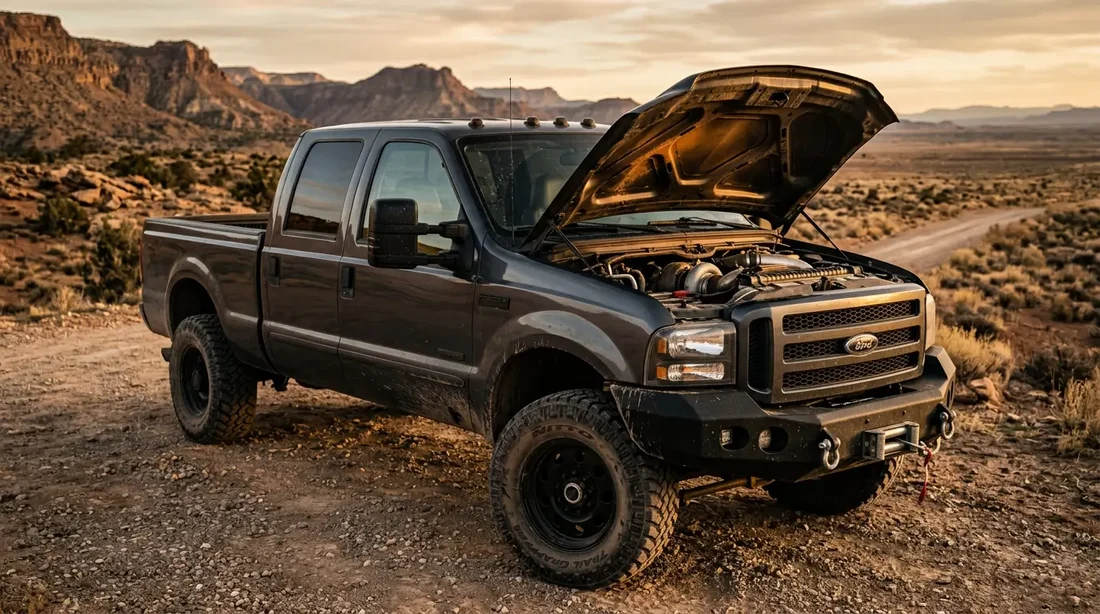
Quick Answer: Both Cummins and Powerstroke diesel engines can develop EGR-related problems, but the failure pattern depends heavily on the engine generation. Cummins owners commonly deal with soot buildup, sticking EGR valves, and cooler-related issues, while Powerstroke problems vary significantly between the 6.0L, 6.4L, and 6.7L generations. Coolant loss, white exhaust smoke, EGR flow codes, rough running, and sluggish throttle response can all point toward the EGR system—but they can also come from other engine, turbo, cooling, or emissions-system problems.
If your diesel truck keeps losing coolant, throws recurring EGR flow codes, feels sluggish under load, or seems to spend more time dealing with emissions-related repairs than towing, you are not alone. The exhaust gas recirculation system operates in one of the harshest environments on a diesel engine: hot exhaust, soot, moisture, oil vapor, and constant temperature cycling.
That does not mean every Cummins or Powerstroke has the same EGR problems. A 6.0L Powerstroke, a 2010 Ram 6.7L Cummins, and a newer 6.7L Powerstroke use different emissions strategies and have different failure patterns. Before replacing parts—or assuming the EGR system is responsible—it helps to identify the engine generation, symptoms, and related systems first.
What the EGR System Does on a Diesel Truck
Exhaust gas recirculation, or EGR, routes a controlled amount of exhaust gas back into the intake side of the engine. Recirculating exhaust lowers peak combustion temperatures and helps reduce nitrogen oxide, or NOx, emissions.
Depending on the truck and model year, the system may include:
- An EGR valve that controls exhaust flow
- One or more EGR coolers
- Temperature, pressure, and position sensors
- Coolant passages and hoses
- Intake throttle components
- Engine-control strategies tied to the DPF and other emissions equipment
The basic idea is simple. The operating environment is not. Diesel exhaust contains soot, while the intake tract can also contain oil vapor from the crankcase ventilation system. When those materials combine, deposits can form inside the EGR valve, intake manifold, runners, and related passages.
Start With the Engine Generation
One of the biggest mistakes when researching diesel EGR problems is treating “Cummins” or “Powerstroke” as one engine. The model year and engine generation matter because the emissions hardware changed considerably over time.
| Truck / Engine | General EGR Context | What Owners Commonly Investigate |
| 2007.5–2012 Ram 6.7L Cummins | Early emissions-era 6.7L Cummins with EGR and DPF systems | Soot buildup, EGR valve operation, cooler condition, intake contamination, and DPF-related operating issues |
| 2013+ Ram 6.7L Cummins | EGR operates as part of a more integrated emissions system that also includes DPF and SCR/DEF components | EGR flow faults, deposits, sensors, cooling-system concerns, and overlapping emissions-system faults |
| 2003–2007 Ford 6.0L Powerstroke | EGR cooler performance is closely connected to cooling-system condition | Coolant loss, white exhaust, EGR cooler problems, EGR valve deposits, and other cooling-system faults |
| 2008–2010 Ford 6.4L Powerstroke | More complex factory emissions system with EGR and DPF integration | EGR cooler condition, valve deposits, heat-related issues, regeneration-related symptoms, and intake contamination |
| 2011+ Ford 6.7L Powerstroke | Later-generation emissions system using EGR, DPF, and SCR/DEF strategies | EGR flow faults, valve or cooler issues, sensor faults, and symptoms that overlap with other emissions components |
This is why a search for “Powerstroke EGR problems” does not have one universal answer. The symptoms may look similar, but the likely causes and diagnostic process can be very different.
Common EGR Problems on 6.7L Cummins Trucks
On emissions-era Ram trucks, the 6.7L Cummins EGR system works alongside the intake, turbocharger, DPF, sensors, and other emissions hardware. For off-road or competition-only builds, an egr delete kit cummins setup can be part of a more streamlined EGR configuration focused on airflow, component simplicity, and application-specific performance.
1. Carbon and Soot Buildup
Soot buildup is one of the first things many Cummins owners think about when EGR problems come up. Exhaust is intentionally routed back toward the intake, and over time soot can combine with oil vapor and form deposits.
Common areas to inspect include:
- EGR valve passages
- Intake manifold
- Intake runners
- Throttle-related components
- EGR crossover passages
Possible symptoms include slower throttle response, reduced airflow, rough operation, EGR-related trouble codes, or a gradual loss of performance.
However, a dirty intake should not automatically be blamed for every low-power complaint. Boost leaks, turbocharger problems, fuel delivery issues, dirty sensors, and exhaust restrictions can produce similar symptoms.
2. EGR Valve Sticking or Flow Problems
The EGR valve must accurately control exhaust flow. Heavy deposits can restrict movement or interfere with the amount of exhaust the engine control module expects to see.
A truck may show symptoms such as:
- Check-engine light
- EGR flow-related diagnostic trouble codes
- Rough or inconsistent idle
- Hesitation
- Reduced engine response
Before replacing the valve, a proper diagnosis should determine whether the problem comes from the valve itself, deposits in the passages, a sensor, wiring, or another component affecting measured airflow.
3. EGR Cooler and Cooling-System Problems
The EGR cooler uses engine coolant to reduce the temperature of exhaust gas before it reaches the intake system. A cooler problem can therefore appear as both an emissions issue and a cooling-system issue.
Warning signs worth investigating include:
- Unexplained coolant loss
- White exhaust vapor or smoke
- Cooling-system pressure changes
- Overheating
- Repeated coolant top-offs with no obvious external leak
Those symptoms do not prove the EGR cooler has failed. Other internal or external coolant leaks can cause similar problems, so pressure testing and proper diagnosis should come before replacing parts.
Common EGR Problems on Powerstroke Engines
Powerstroke EGR problems need to be discussed by generation because Ford’s diesel emissions systems changed substantially from the 6.0L to the 6.4L and later 6.7L engines. For off-road or competition-only builds, powerstroke egr delete hardware should be matched to the specific engine generation so the components, coolant routing, and EGR layout fit the application correctly.
6.0L Powerstroke: EGR Cooler and Cooling-System Concerns
On a 6.0L Powerstroke, EGR cooler complaints are often discussed together with the rest of the engine’s cooling system. Restricted coolant flow, excessive temperature, or a compromised cooler can create symptoms that should not be ignored.
Owners may notice:
- Coolant loss
- White exhaust smoke or vapor
- Cooling-system pressure
- Temperature changes under load
- EGR-related trouble codes
The important point is that coolant loss by itself does not identify the failed component. A technician should rule out other cooling-system and engine problems before concluding that the EGR cooler is responsible.
6.4L Powerstroke: More Emissions-System Complexity
The 6.4L Powerstroke added another layer of emissions-system complexity. The EGR system operates alongside the DPF and regeneration strategy, which means one drivability complaint can involve several systems at once.
Problems owners may investigate include:
- EGR cooler performance
- EGR valve deposits
- Intake soot accumulation
- High exhaust temperatures
- Regeneration-related drivability complaints
- Sensor or airflow faults
This is another reason not to diagnose a truck from one symptom alone. Low power or poor fuel economy, for example, could involve the EGR system, DPF loading, turbocharger operation, fueling, or multiple issues at the same time.
6.7L Powerstroke: Integrated EGR, DPF, and SCR Diagnostics
The 6.7L Powerstroke uses a more modern emissions strategy. EGR operation is closely integrated with engine management, the DPF system, exhaust sensors, and SCR/DEF emissions equipment.
Owners may encounter EGR flow codes, valve-related issues, cooler concerns, or sensor faults, but a scan tool and complete fault-code history are especially useful on these trucks because several systems can influence the same drivability symptoms.
Cummins vs. Powerstroke EGR Problems: What Is Actually Different?
The better question is not simply, “Which engine has more EGR problems?” A more useful comparison is how the problems tend to show up and what needs to be checked.
| Issue | Cummins | Powerstroke |
| Carbon buildup | Common area of concern on emissions-era 6.7L trucks, especially in EGR and intake passages | Also possible across several generations, particularly around EGR valves and intake passages |
| EGR cooler problems | Possible source of coolant-related complaints and EGR performance problems | Especially important to investigate on certain Powerstroke generations, including older 6.0L and 6.4L applications |
| EGR valve issues | Deposits can interfere with valve movement and expected EGR flow | Valve deposits and flow faults can also occur depending on generation and operating conditions |
| Overlapping emissions faults | Later trucks can have EGR symptoms that overlap with DPF, SCR, sensor, and turbo issues | Later 6.7L trucks also require system-level diagnosis rather than treating every code independently |
| Best first step | Identify codes, inspect intake and cooling conditions, and rule out related systems | Identify the exact Powerstroke generation before deciding what component is most likely involved |
There is no meaningful way to say that every Cummins is better or worse than every Powerstroke in this area. Model year, engine generation, maintenance history, idle time, towing use, previous repairs, and overall emissions-system condition matter far more than the badge on the grille.
EGR Symptoms: What Should You Check First?
A good diagnosis starts with the symptom, not the part you expect to replace.
| Symptom | Possible EGR-Related Cause | Other Problems to Rule Out |
| Coolant loss | EGR cooler leak or related coolant connection | External leaks, radiator, hoses, water pump, head gasket, or other internal coolant leaks |
| White exhaust smoke or vapor | Possible coolant entering the exhaust through a failed cooler | Other coolant-entry problems, fuel-related smoke, or condensation depending on conditions |
| Rough idle | Sticking EGR valve or incorrect EGR flow | Injector problems, fueling, sensors, air leaks, or engine mechanical issues |
| Sluggish acceleration | EGR or intake restriction caused by deposits | Turbocharger problems, boost leaks, fuel delivery issues, exhaust restriction, or sensors |
| EGR flow code | EGR valve, passage restriction, cooler, or related sensor issue | Wiring faults, airflow measurement problems, or another system affecting expected EGR flow |
| Poor fuel economy | Incorrect EGR operation may contribute | Frequent regeneration, tire pressure, towing load, fueling, thermostat, turbo, sensors, or driving conditions |
Does Short-Trip Driving Make EGR Problems Worse?
Repeated short trips, extended idling, and long periods of low-load operation can contribute to unfavorable conditions in modern diesel emissions systems. The engine may spend less time fully warmed up, while soot accumulation and DPF regeneration behavior can also be affected.
That does not mean taking the truck on the highway will magically clean a heavily restricted EGR valve or intake manifold.
Highway operation may help the engine and aftertreatment system reach normal operating conditions, particularly when the DPF needs appropriate conditions for regeneration. Existing heavy carbon deposits, failed valves, leaking coolers, or damaged sensors still require diagnosis and repair.
Should You Clean or Replace an EGR Valve?
That depends on why the valve is malfunctioning.
Cleaning may make sense when:
- The valve is mechanically functional but contaminated with removable deposits
- The passages are restricted but the component itself is not damaged
- Diagnostic testing confirms deposits are the primary issue
Replacement may be more appropriate when:
- The actuator or position mechanism has failed
- The valve repeatedly sticks after cleaning
- The component is physically damaged
- Diagnostic testing shows the valve cannot respond correctly
Cleaning a component without finding the underlying cause can turn into a temporary repair, so it is worth looking at the rest of the intake and emissions system at the same time.
Why Some Diesel Owners Look Beyond Repeated EGR Repairs
After several rounds of EGR-related repairs, some owners start comparing different long-term approaches. The motivation is usually straightforward: repeated cooler failures, sticking valves, intake deposits, or the cost of replacing emissions components can make owners question whether repairing the same system again is the best fit for how the truck is used.
For a street-driven truck, factory-system diagnosis and repair should still be the starting point. Removing, disabling, or defeating factory emissions equipment may violate federal, state, provincial, or local emissions requirements, affect inspection eligibility, change warranty coverage, and require calibration changes.
Hardware marketed for off-road, competition, or export-only applications should only be used where the application and local law permit it. An “off-road” label by itself does not make an emissions modification legal for public-road use.
Common EGR Diagnosis Mistakes Diesel Owners Make
Replacing Parts Based on One Trouble Code
A diagnostic trouble code tells you what the engine control module detected. It does not always identify the failed part.
An EGR flow code could involve the valve, restricted passages, wiring, a sensor, airflow measurement, or another condition affecting expected EGR operation.
Assuming White Smoke Automatically Means an EGR Cooler
Coolant loss and white exhaust are reasons to inspect the EGR cooler, but they are not proof of cooler failure. Cooling-system pressure testing and other diagnostic checks can help separate an EGR cooler problem from other internal leaks.
Assuming Every Low-Power Problem Is Caused by EGR
Low power on a diesel truck can also come from:
- Boost leaks
- Turbocharger problems
- Fuel-system problems
- Dirty or failed sensors
- DPF restriction
- Intake restrictions
- Transmission or drivetrain problems
Guessing gets expensive quickly. A scan tool, visual inspection, boost testing, cooling-system testing, and model-specific diagnostic procedures can save a lot of unnecessary parts replacement.
Ignoring Small Coolant Loss
If the coolant level repeatedly drops, there is a reason. Waiting until the truck overheats or begins producing obvious smoke can turn a smaller cooling-system problem into a much larger repair.
How to Reduce the Risk of EGR-Related Problems
Keep the Cooling System Healthy
The EGR cooler depends on proper coolant flow. Check coolant level regularly, investigate unexplained loss, use the correct coolant specification, and repair leaks before they become larger problems.
Follow the Correct Maintenance Schedule
Oil condition, fuel filters, air filters, coolant service, and other basic maintenance all affect how well a modern diesel truck operates. Neglected maintenance can make drivability and emissions problems harder to diagnose.
Pay Attention to Operating Conditions
A work truck that regularly reaches normal operating temperature behaves differently from a diesel that spends most of its life idling or making very short trips. If your driving pattern is unusually light-duty, pay closer attention to regeneration behavior, warning lights, and recurring emissions-system codes.
Diagnose Problems Early
A small coolant loss, intermittent EGR code, or gradual decrease in throttle response is easier to deal with before it develops into overheating, severe restriction, or repeated derate conditions.
FAQ
What are the most common signs of a Cummins EGR problem?
Possible signs include EGR flow codes, rough idle, reduced throttle response, soot buildup, poor performance, and in some cases coolant-related symptoms. Because these symptoms overlap with turbo, fueling, DPF, sensor, and cooling-system problems, diagnosis should come before replacing parts.
What are the most common Powerstroke EGR problems?
It depends on the engine generation. Older 6.0L and 6.4L engines are often investigated for EGR cooler, valve, and cooling-related concerns, while later 6.7L trucks use a more integrated emissions system where EGR faults may overlap with sensor, DPF, SCR, or airflow problems.
Can a bad EGR cooler cause coolant loss?
Yes, a compromised EGR cooler can be one possible source of coolant loss. However, other internal and external leaks can produce the same symptom, so coolant loss alone should not be treated as proof of EGR cooler failure.
Can a dirty EGR valve cause low power?
It can. A sticking valve or restricted EGR passage may affect airflow and engine response. Low power can also come from boost leaks, turbocharger faults, fuel delivery problems, sensors, intake restrictions, or exhaust aftertreatment problems.
Does highway driving clean the EGR system?
Not in the way many owners assume. Reaching normal operating temperature can be beneficial for the overall emissions system and may support normal DPF regeneration conditions, but a highway drive will not repair a failed EGR valve, leaking cooler, damaged sensor, or heavily restricted intake.
Which has fewer EGR problems, Cummins or Powerstroke?
There is no useful answer without identifying the engine generation and model year. Both engine families have used several different EGR and emissions-system designs. Maintenance history, operating conditions, previous repairs, mileage, and exact engine generation are more useful than comparing the two brand names alone.
Should I clean or replace my EGR valve?
Cleaning may help when removable deposits are preventing an otherwise functional valve from operating correctly. Replacement may be necessary when the actuator, position mechanism, electronics, or valve itself is damaged. Diagnostic testing should determine which approach makes sense.
Is an EGR delete legal on a street-driven diesel truck?
Emissions-tampering rules vary by jurisdiction, and disabling factory emissions equipment can create legal, inspection, registration, and warranty problems. Owners should verify the rules that apply to their specific vehicle and location before making any emissions-related modification.
Final Thoughts
Cummins and Powerstroke engines are both capable diesel platforms, but neither is immune to EGR-related maintenance. The most useful approach is not asking which brand has the “better” EGR system. Start with the exact engine generation, identify the symptoms, read the diagnostic codes, and rule out other cooling, turbo, fueling, intake, and aftertreatment problems before replacing parts.
For Cummins owners, soot accumulation, EGR valve operation, cooler condition, and the interaction between the EGR and the rest of the emissions system deserve attention. For Powerstroke owners, the engine generation matters even more because the 6.0L, 6.4L, and 6.7L use significantly different systems and can develop different failure patterns.
Whether you are maintaining a stock work truck or researching hardware for a specialized application, understanding what is actually causing the problem will usually save more time and money than guessing from one warning light or one symptom.
