
A modern car engine needs the correct amount of air and fuel to produce power efficiently. If the engine receives too much or too little fuel compared with the available air, performance can suffer, fuel consumption may increase, and harmful emissions can rise. To help maintain the right balance, many vehicles use a component called a mass airflow sensor.
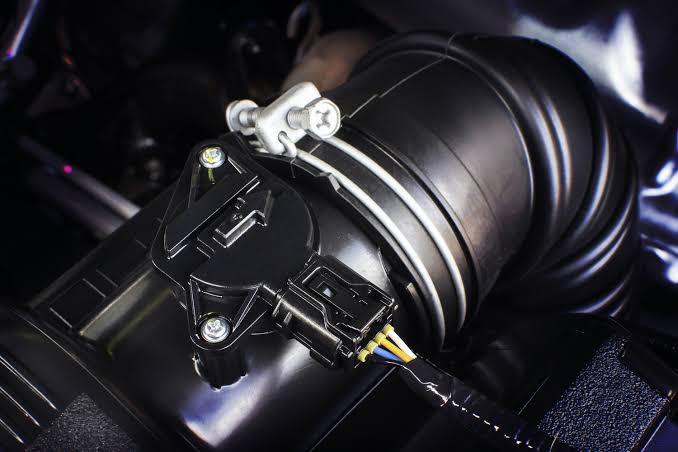
The mass airflow sensor, commonly known as the MAF sensor, measures the amount of air entering the engine. It sends this information to the engine control module, which uses the readings to calculate how much fuel should be delivered through the fuel injectors.
Although the MAF sensor is a relatively small component, it has an important influence on engine performance, acceleration, fuel economy, and emissions. When it becomes dirty, damaged, or inaccurate, drivers may notice rough idling, hesitation, poor acceleration, or an illuminated check engine light.
How this sensor works and recognizing its common problems can help vehicle owners maintain reliable engine operation and avoid unnecessary repair expenses.
What Is a Mass Airflow Sensor?
A mass airflow sensor is an electronic device installed in the engine’s air intake system. Its primary job is to measure the mass of air entering the engine so the engine management system can adjust fuel delivery accordingly.
Air is an essential part of combustion. Every time an engine operates, it draws air into its cylinders, where it mixes with fuel before being ignited. The amount of air entering the engine changes depending on engine speed, throttle position, temperature, and driving conditions.
The MAF sensor helps the engine computer understand these changes. Instead of estimating airflow using only basic operating information, the computer receives direct measurements from the sensor.
Most MAF sensors are positioned between the air filter housing and the engine’s intake system. This location allows them to measure incoming air before it reaches the throttle body and intake manifold.
Different vehicles use different sensor designs, but their main purpose remains the same: providing accurate airflow information for engine management.
How Does a Mass Airflow Sensor Work?
A mass airflow sensor measures the amount of air passing through the intake system. The engine control module uses this information to determine the appropriate fuel delivery for current operating conditions.
One of the most common MAF sensor designs is the hot-wire type.
Hot-Wire Technology
A hot-wire MAF sensor contains a thin electrically heated wire or element placed in the path of incoming air.
As air flows over the heated element, it removes some of its heat. The sensor’s electronic circuit responds by adjusting the electrical current needed to maintain the element at its intended temperature.
The amount of electrical current required changes according to the mass of air passing through the sensor. The sensor converts this information into an electrical signal that the engine control module can understand.
When more air enters the engine, the cooling effect on the heated element increases. The sensor responds by producing a signal that represents the higher airflow.
When less air enters, the cooling effect decreases, and the signal changes accordingly.
Film-Type Sensors
Some vehicles use hot-film MAF sensors instead of traditional hot-wire designs.
A hot-film sensor uses a heated film element rather than a thin wire. It works on a similar principle by detecting changes in heat transfer as air moves through the intake system.
These sensors can provide accurate airflow measurements and are designed for use in modern engine management systems.
Sending Data to the Engine Computer
Once the sensor measures incoming air, it sends an electrical signal to the engine control module.
The computer combines this information with readings from other components, including the oxygen sensors, throttle position sensor, engine temperature sensor, and crankshaft position sensor.
Using this information, the engine management system calculates the amount of fuel needed for combustion.
This process happens continuously while the engine is running, allowing the fuel system to respond to changing driving conditions.
Why Is Accurate Airflow Measurement Important?
An engine cannot operate efficiently without a suitable balance of air and fuel. Accurate airflow measurement helps the engine computer deliver the correct amount of fuel for different operating conditions.
Several important engine functions depend on this information.
Maintaining the Air-Fuel Mixture
The air-fuel mixture affects how efficiently fuel burns inside the cylinders.
If the engine receives too much fuel compared with available air, the mixture becomes rich. If it receives too much air compared with fuel, the mixture becomes lean.
The MAF sensor helps the engine computer calculate fuel requirements based on incoming air mass.
This supports more controlled combustion and helps the engine operate within its intended performance range.
Supporting Fuel Economy
Fuel efficiency depends on several factors, including engine condition, driving habits, vehicle weight, and fuel system performance.
An accurate MAF sensor helps prevent unnecessary fuel delivery by providing reliable airflow information.
If the sensor reports incorrect readings, the engine computer may calculate the wrong fuel quantity. In some cases, this can result in excessive fuel consumption.
A properly functioning sensor therefore contributes to efficient fuel management.
Improving Engine Response
The amount of air entering the engine changes when the driver presses or releases the accelerator.
The MAF sensor detects these changes and helps the engine computer respond by adjusting fuel delivery.
This supports smoother acceleration and more consistent engine response.
Helping Control Emissions
Incorrect fuel delivery can affect the amount of harmful substances produced during combustion.
The MAF sensor supports accurate fuel control, helping the engine and emissions systems operate as intended.
Although it does not directly clean exhaust gases, its measurements contribute to the overall emissions control process.
Where Is the Mass Airflow Sensor Located?
In most vehicles, the MAF sensor is installed in the air intake duct between the air filter housing and the throttle body.
Its position allows it to measure the air entering the engine after it passes through the air filter.
The exact location can vary depending on the vehicle’s design. Some engines have complicated intake arrangements, and certain performance or modified vehicles may use different airflow measurement systems.
The sensor usually has an electrical connector attached to it. It may also be installed inside a plastic or metal housing that forms part of the intake assembly.
Drivers should avoid removing or touching the sensing element without proper knowledge. These components can be delicate, and incorrect handling may cause damage.
Common Symptoms of a Faulty Mass Airflow Sensor
A damaged or contaminated MAF sensor can send inaccurate information to the engine control module. As a result, the computer may struggle to calculate the correct fuel quantity.
The symptoms can vary depending on the vehicle and the type of sensor problem.
Check Engine Light
An illuminated check engine light is one of the most common signs of a possible MAF sensor issue.
The engine control module monitors airflow readings and compares them with expected operating conditions. If the signal is too high, too low, or inconsistent, the computer may store a diagnostic trouble code.
Some commonly associated codes include:
- P0100: Mass or volume airflow circuit malfunction.
- P0101: Mass or volume airflow circuit range or performance problem.
- P0102: Mass or volume airflow circuit low input.
- P0103: Mass or volume airflow circuit high input.
- P0104: Mass or volume airflow circuit intermittent problem.
These codes help technicians identify the area requiring investigation, but they do not automatically prove that the MAF sensor itself is defective.
Rough Engine Idling
A faulty MAF sensor may cause the engine to receive an unsuitable fuel mixture, especially when operating at low speed.
Drivers may notice engine vibration, uneven RPM, or occasional changes in engine speed while the vehicle is stationary.
Vacuum leaks, dirty throttle bodies, fuel system faults, and ignition problems can create similar symptoms.
Poor Acceleration
If the MAF sensor provides inaccurate airflow readings, the engine computer may not deliver the correct amount of fuel when the driver accelerates.
This can lead to hesitation, delayed throttle response, or reduced engine power.
The problem may become more noticeable when entering a highway, climbing a hill, or accelerating quickly.
Increased Fuel Consumption
Incorrect airflow information can cause unsuitable fuel adjustments.
If the computer believes more air is entering the engine than is actually present, it may supply too much fuel under certain conditions.
Drivers may notice that their vehicle uses more fuel than usual even when their daily driving routine has not changed.
However, increased fuel consumption can also be caused by low tire pressure, worn spark plugs, fuel injector problems, or other mechanical issues.
Engine Stalling
In some cases, incorrect airflow readings can make it difficult for the engine to maintain stable operation.
The vehicle may stall while idling, slowing down, or coming to a stop.
This symptom should be investigated promptly because stalling can create unsafe driving conditions, particularly in traffic.
Difficult Starting
A faulty MAF sensor can sometimes affect the fuel mixture during startup.
The engine may take longer to start or require repeated attempts before running properly.
A weak battery, fuel pressure problem, damaged ignition components, or other sensor faults may produce similar starting difficulties.
What Causes a Mass Airflow Sensor to Become Faulty?
MAF sensors operate in an environment where air, dust, temperature changes, and engine vapors can affect their performance.
Several issues can reduce sensor accuracy or cause complete failure.
Dirt and dust: Fine particles that pass through a damaged or poorly fitted air filter can collect on the sensing element.
Oil contamination: Some reusable air filters use oil during maintenance. If too much oil is applied, it may travel through the intake and contaminate the MAF sensor.
Damaged air filters: A damaged, incorrectly installed, or unsuitable air filter may allow contaminants to enter the intake system.
Moisture exposure: Water entering the intake system or reaching electrical connections can interfere with sensor operation.
Electrical problems: Damaged wiring, loose connectors, corrosion, or power supply issues can prevent the sensor from sending reliable readings.
Normal wear: Repeated exposure to heat and vibration can eventually affect internal electronic components.
Intake air leaks: Cracks or loose connections in the intake duct can allow unmetered air to enter the engine. This may create symptoms similar to a faulty MAF sensor even when the sensor itself is working correctly.
Identifying the original cause is important. Replacing the sensor without fixing an intake leak or contamination problem may not solve the issue.
How Mechanics Diagnose MAF Sensor Problems
A proper diagnosis involves checking the sensor, its electrical connections, and the surrounding intake system.
Simply replacing the MAF sensor whenever the check engine light appears can lead to unnecessary expenses.
Scanning the Engine Control Module
A mechanic can connect a diagnostic scanner to the vehicle’s onboard diagnostic system.
The scanner retrieves stored trouble codes and may display information about airflow readings.
These results help identify whether the engine computer is detecting an abnormal sensor signal or another related problem.
Checking Live Airflow Data
Live data allows a technician to monitor the MAF sensor’s readings while the engine is operating.
The mechanic can observe how the airflow measurement changes with engine speed and load.
If readings are unusually low, high, or inconsistent with the engine’s operating conditions, further testing may be required.
The expected values depend on engine size, design, and operating conditions, so readings should be compared with manufacturer information.
Inspecting the Intake System
A technician will often inspect the air filter, intake duct, clamps, and sensor housing.
Cracks, loose connections, or damaged hoses can allow air to enter the engine without passing through the MAF sensor.
This creates an airflow measurement problem even when the sensor itself is functioning properly.
Checking Electrical Connections
The MAF sensor depends on proper electrical power and communication with the engine computer.
A mechanic may inspect the wiring harness, connector pins, power supply, ground connection, and signal circuit.
Electrical testing can help identify problems that a simple visual inspection may not reveal.
Can a Dirty Mass Airflow Sensor Be Cleaned?
In some cases, cleaning a contaminated MAF sensor can restore its normal operation. However, this depends on the type of contamination and whether the sensing element has suffered permanent damage.
If cleaning is appropriate, a dedicated mass airflow sensor cleaner should be used.
These products are designed to remove certain contaminants without leaving residue on delicate sensing components.
A few precautions are important:
- Switch off the engine before removing or inspecting the sensor.
- Follow the vehicle manufacturer’s instructions for removal.
- Use only a cleaner specifically designed for MAF sensors.
- Do not touch the hot-wire or hot-film sensing element.
- Never scrub the sensor with a brush or cloth.
- Allow the sensor to dry completely before reinstalling it.
- Avoid spraying other chemicals or general-purpose cleaners onto the sensing element.
A damaged sensor cannot always be repaired through cleaning. If testing confirms an internal failure, replacement is usually necessary.
When Should You Replace a Mass Airflow Sensor?
There is no universal replacement mileage for every MAF sensor.
Some sensors remain functional for many years, while others may develop problems earlier because of contamination, harsh conditions, or electrical faults.
Replacement is generally recommended when diagnostic testing confirms that the sensor is damaged, produces inaccurate readings, or no longer responds correctly.
Before installing a new sensor, mechanics should also check the air filter, intake connections, wiring, and any source of contamination.
This helps prevent the replacement part from developing the same problem.
Choosing the Right Replacement MAF Sensor
Not every mass airflow sensor is suitable for every vehicle. Selecting the correct component is important for accurate engine management.
Consider these factors before purchasing a replacement.
Vehicle compatibility: Confirm the vehicle’s make, model, year, engine size, and engine configuration.
Correct part number: Compare the original sensor’s part number with the replacement information provided by the manufacturer.
Sensor design: Make sure the replacement uses the correct sensing technology and housing arrangement.
Electrical connector: The plug, wiring configuration, and electrical specifications must match the vehicle.
Product quality: Choose a reliable sensor that meets the manufacturer’s requirements. Poor-quality parts may provide inconsistent readings or fail prematurely.
Complete assembly requirements: Some vehicles require replacement of the entire sensor and housing, while others allow the sensing unit to be replaced separately.
Checking compatibility before ordering can help avoid installation problems and unnecessary returns.
How to Maintain a Mass Airflow Sensor
Proper intake system maintenance can help keep the MAF sensor clean and operating accurately.
A few simple habits can reduce the risk of contamination and related problems.
- Replace the air filter on schedule: Follow the maintenance interval recommended for the vehicle.
- Use the correct air filter: A properly fitting filter helps prevent unfiltered air from entering the intake.
- Inspect intake hoses: Check for cracks, loose clamps, and damaged connections.
- Maintain reusable filters carefully: Avoid applying excessive oil to filters that require lubrication.
- Keep electrical connections secure: Damaged or loose connectors should be inspected and repaired.
- Address engine problems early: Excessive oil consumption and other mechanical faults can contribute to intake contamination.
- Avoid unnecessary handling: The sensing element is delicate and should not be touched during routine inspection.
These practices support reliable airflow measurement and help protect other engine components.
MAF Sensor vs. MAP Sensor
The mass airflow sensor and manifold absolute pressure sensor both provide information about engine air intake, but they measure different things.
| Feature | MAF Sensor | MAP Sensor |
| Main function | Measures incoming air mass | Measures intake manifold pressure |
| Typical location | Intake duct before throttle body | Intake manifold or nearby passage |
| Measurement | Air mass or related airflow signal | Absolute pressure |
| Engine management | Helps calculate fuel delivery | Helps estimate engine load and air quantity |
| Usage | Common in many modern engines | Used in speed-density systems and other engine designs |
Some vehicles use a MAF sensor, while others rely on a MAP-based system to estimate airflow. Certain engines use both sensors to improve engine monitoring and control.
Neither design is automatically better for every vehicle. Manufacturers choose the arrangement that suits the engine and its management system.
Final Thoughts
The mass airflow sensor is an important part of modern engine management. By measuring the amount of air entering the engine, it gives the engine control module the information needed to manage fuel delivery and maintain efficient combustion.
When the sensor becomes dirty or faulty, drivers may experience rough idling, poor acceleration, increased fuel consumption, stalling, or a check engine warning. However, these symptoms can also come from damaged intake hoses, electrical faults, and other engine problems.
Regular air filter replacement, proper intake maintenance, and timely diagnosis can help keep the MAF sensor working correctly. Although it is a small component, accurate airflow measurement makes a major difference to engine performance, fuel economy, and emissions control.
