
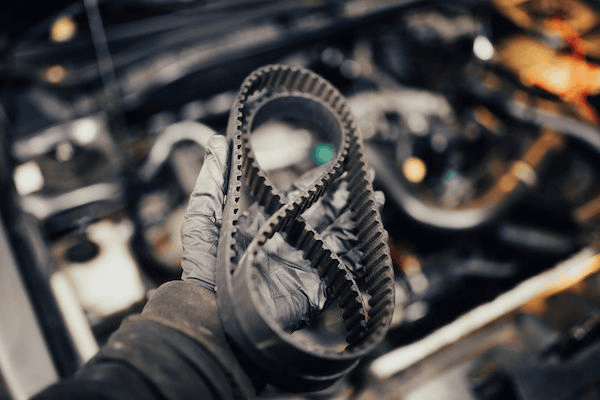
A vehicle’s engine contains several moving parts that must work together at exactly the right time. The pistons move up and down, while the camshaft controls when the intake and exhaust valves open and close. To keep these movements properly synchronized, engines use either a timing belt or a timing chain.
Although both components perform the same basic job, they are made from different materials and have different maintenance requirements. Timing belts are generally made from reinforced rubber, while timing chains are made from metal links designed to handle continuous mechanical movement.
A problem with either component can affect engine performance and, in some vehicles, cause serious internal damage. That is why understanding their differences, warning signs, and maintenance needs is important for every vehicle owner.
This article explains how timing belts and timing chains work, how they differ, what causes them to fail, and when they should be inspected or replaced.
What Is an Engine Timing System?
An engine timing system keeps the crankshaft and camshaft synchronized. These two components control important stages of the engine’s operation.
The crankshaft converts the pistons’ up-and-down movement into rotational motion. The camshaft operates the engine valves, allowing air and fuel to enter the cylinders and exhaust gases to leave.
For an engine to work correctly, the valves must open and close at the correct moments in relation to piston movement.
The timing belt or chain connects the crankshaft to the camshaft and maintains this relationship.
If the timing becomes incorrect, the engine may run poorly, lose power, or stop working. In interference engines, incorrect timing can allow pistons and valves to collide, potentially causing extensive internal damage.
Some engines also use timing systems to drive additional components, depending on their design.
What Is a Timing Belt?
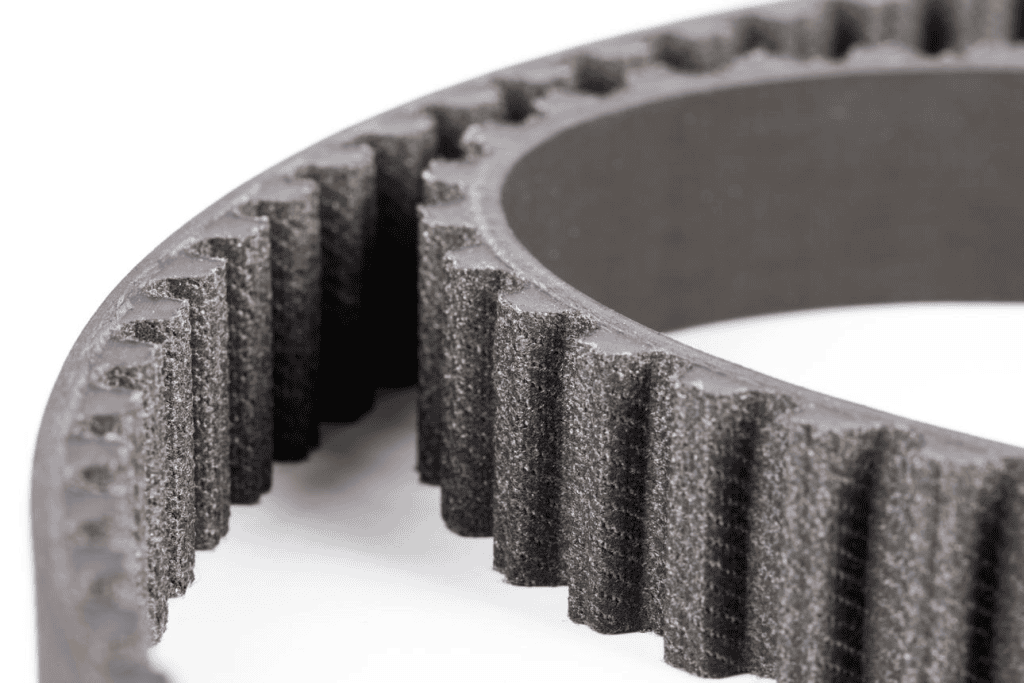
A timing belt is a reinforced rubber belt with teeth along its inner surface. These teeth fit into matching gears or sprockets connected to the crankshaft and camshaft.
The belt keeps both shafts synchronized as the engine operates.
Timing belts are usually made from durable rubber compounds reinforced with materials such as fiberglass or synthetic fibers. This construction provides flexibility and strength while allowing the belt to operate quietly.
Unlike an accessory belt, which may be visible when opening the hood, a timing belt is normally protected behind engine covers. It needs protection from oil, dirt, and other contaminants that could damage its material.
How a Timing Belt Works
When the engine runs, the crankshaft rotates and moves the timing belt. The belt transfers this movement to the camshaft, ensuring that the valves operate at the correct time.
The belt’s teeth prevent it from slipping during normal operation.
Some engines also use timing belt tensioners and idler pulleys to maintain the correct belt tension and guide its movement.
Because timing belts are made from rubber-based materials, they gradually wear out. Heat, age, mileage, and contamination can weaken their structure.
Advantages of Timing Belts
Timing belts offer several benefits:
- Quieter operation: Rubber construction generally produces less mechanical noise than metal timing chains.
- Lower weight: Belts are usually lighter than chains.
- Reduced friction: Their design can help reduce mechanical losses.
- Simpler construction: Timing belt systems can be relatively straightforward in certain engine designs.
- Lower replacement part cost: The belt itself may cost less than a complete timing chain assembly.
However, these benefits come with a need for scheduled replacement.
What Is a Timing Chain?
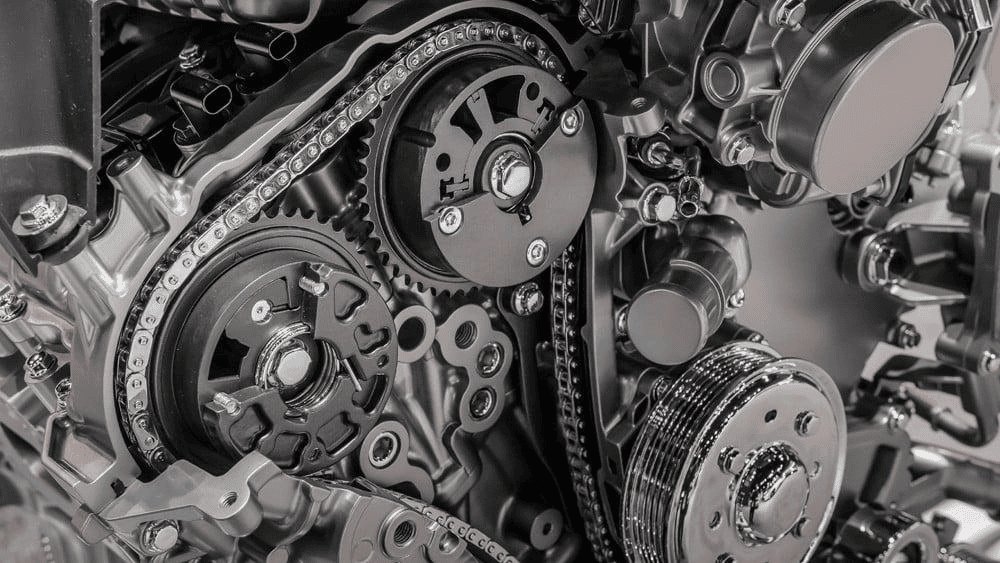
A timing chain is a metal chain that connects the crankshaft and camshaft. It performs the same synchronization job as a timing belt but uses linked metal components instead of reinforced rubber.
Timing chains are usually installed inside the engine and receive lubrication from engine oil.
Depending on the design, a timing chain system may include guides, tensioners, and sprockets. These parts help control chain movement and maintain proper tension.
Timing chains are generally designed for long service life, but they are not guaranteed to last forever. Poor lubrication, oil contamination, worn tensioners, and normal mechanical wear can eventually cause problems.
How a Timing Chain Works
As the crankshaft rotates, it moves the timing chain through its connected sprockets. The chain transfers this rotation to the camshaft, keeping the engine valves synchronized with piston movement.
The chain tensioner helps prevent excessive slack. Guides keep the chain moving along the correct path and reduce unwanted movement.
Because the system operates inside the engine, it depends heavily on proper lubrication and suitable engine oil.
If the chain stretches or its tensioner fails, the timing may become inaccurate.
Advantages of Timing Chains
Timing chains offer several important benefits:
- Long service life: They are generally designed to last longer than timing belts.
- Metal construction: Their links can handle repeated mechanical loads.
- No routine belt replacement interval: Many chain systems do not have a scheduled replacement interval under normal conditions.
- Suitable for demanding engine designs: Chains are commonly used in many modern engines with complex valve timing systems.
Despite these advantages, timing chains can become expensive to repair because they are installed inside the engine and may require significant labor to access.
Timing Belt vs. Timing Chain: Key Differences
Although timing belts and timing chains perform the same basic function, their construction, operation, and maintenance requirements are different.
| Feature | Timing Belt | Timing Chain |
| Material | Reinforced rubber | Metal links |
| Operating noise | Usually quieter | Can produce more mechanical noise |
| Lubrication | Normally operates without engine oil | Requires engine oil lubrication |
| Maintenance | Scheduled replacement is usually required | Inspection and condition-based replacement |
| Service life | Limited by age and mileage | Generally longer-lasting |
| Replacement cost | Often lower for the part itself | Can involve higher parts and labor costs |
| Common problems | Cracks, worn teeth, stretching, contamination | Chain wear, tensioner failure, guide damage |
| Location | Usually behind protective covers | Usually inside the engine |
The best option depends on the engine’s design. A timing chain is not automatically better in every situation, and a timing belt is not necessarily less reliable when maintained correctly.
Common Warning Signs of a Failing Timing Belt
Timing belts do not always produce obvious symptoms before failure. In some cases, a belt can break without giving the driver much warning.
However, several signs may indicate that the timing belt or related components need inspection.
Visible Cracks or Wear
If a timing belt becomes accessible during an inspection, cracks, damaged teeth, fraying, or unusual surface wear may indicate deterioration.
Rubber can weaken over time because of heat and repeated movement. Even if the belt looks acceptable from the outside, its internal reinforcement may have deteriorated.
A qualified mechanic should inspect it according to the manufacturer’s maintenance procedure.
Engine Misfires
A worn or damaged timing belt may affect the relationship between the crankshaft and camshaft.
If the belt slips or its teeth become damaged, the engine timing can become incorrect. This may cause rough running, misfires, or reduced performance.
Misfires can also result from faulty spark plugs, ignition coils, fuel delivery problems, or other engine faults.
Difficulty Starting the Engine
Incorrect valve timing can make it difficult for the engine to start.
In some cases, the engine may crank without starting because the timing belt has slipped or broken.
A vehicle that suddenly refuses to start should be diagnosed rather than repeatedly cranked without understanding the cause.
Unusual Engine Noise
A worn timing belt or damaged tensioner may produce squealing, rubbing, or other unusual sounds.
However, noises from the engine area can also come from accessory belts, pulleys, bearings, or other components.
A professional inspection is needed to identify the source.
Engine Stalling or Loss of Power
If the timing belt loses its correct position, the engine may run poorly, lose power, or stall.
These symptoms can indicate a serious timing problem, especially when they appear together with unusual engine noise or starting difficulties.
Common Warning Signs of a Failing Timing Chain
Timing chains are made from metal, but their components can still wear down. Problems often involve chain stretch, tensioner failure, or damaged guides.
Rattling Noise During Engine Startup
A rattling sound from the engine, especially during a cold start, may indicate a timing chain tensioner problem or excessive chain slack.
Some tensioners depend on engine oil pressure. If oil pressure takes time to build, the chain may briefly become loose and create noise.
A short rattle does not always confirm timing chain failure, but repeated or persistent noise should be investigated.
Persistent Metallic Noise
A stretched chain or damaged guide may produce a continuous rattling or metallic sound.
The noise may become more noticeable as engine speed changes.
Ignoring persistent timing chain noise can allow the problem to become worse and may increase the risk of timing failure.
Check Engine Light
The engine control unit monitors crankshaft and camshaft positions in modern vehicles.
If the timing chain stretches or the system develops a problem, the relationship between these signals may become incorrect.
This can trigger a check engine light and store diagnostic trouble codes related to camshaft or crankshaft timing.
A diagnostic scan can provide useful information, but the mechanic may still need to inspect the timing system physically.
Rough Idling and Reduced Performance
A timing chain problem can affect valve timing and engine operation.
Drivers may notice rough idling, hesitation, reduced acceleration, or poor fuel economy.
These symptoms are not exclusive to timing chain problems. Ignition, fuel, air intake, and sensor faults can produce similar behavior.
Metal Particles in Engine Oil
Severe wear in a timing chain system may produce metal particles that enter the engine oil.
If metal contamination is found during an oil inspection, it should be investigated promptly.
However, metal particles can come from several internal engine components, so they do not automatically prove that the timing chain is failing.
What Causes Timing Belts and Timing Chains to Fail?
Both systems experience continuous movement and mechanical stress. Their specific causes of failure are different, but several maintenance and operating conditions can affect their lifespan.
Age and Normal Wear
Timing belts gradually lose flexibility and strength as they age.
Even vehicles that are not driven frequently may need timing belt replacement because rubber materials deteriorate over time.
Timing chains experience wear across their links and connected components. Repeated movement and pressure can gradually increase chain length and reduce timing accuracy.
Poor Engine Oil Maintenance
This is particularly important for timing chain systems.
Old, contaminated, or unsuitable engine oil may not provide proper lubrication. This can increase friction and wear on the chain, tensioner, sprockets, and guides.
Following the manufacturer’s oil and filter replacement recommendations helps protect these components.
Some engines also use oil pressure to operate variable valve timing systems and chain tensioners, making proper lubrication especially important.
Oil or Coolant Leaks
Oil contamination can damage certain timing belt materials, depending on the belt design and construction.
A leak near the timing belt cover may allow engine oil or coolant to reach the belt and reduce its service life.
Leaks should be repaired before installing a new timing belt.
Worn Tensioners and Guides
Timing systems rely on tensioners to maintain proper belt or chain tension.
A worn tensioner may allow excessive movement, while damaged guides can affect how the chain travels.
Replacing only the belt or chain without checking related components may lead to repeated problems.
Incorrect Installation
Timing belt and chain replacement requires precise alignment.
If the crankshaft and camshaft are not positioned correctly during installation, the engine may develop incorrect valve timing.
Incorrect tension, unsuitable parts, or improper installation procedures can also lead to premature failure.
For this reason, timing system repairs should be completed by a technician familiar with the specific engine.
When Should a Timing Belt Be Replaced?
Timing belt replacement intervals vary significantly between manufacturers and engine models.
Some vehicles require replacement at a particular mileage, while others also specify a maximum age in years.
Drivers should check the vehicle owner’s manual or official maintenance schedule instead of relying on a general mileage estimate.
When a timing belt is replaced, mechanics often recommend inspecting or replacing related components, such as:
- Timing belt tensioner.
- Idler pulleys.
- Water pump, if driven by the timing belt.
- Relevant seals and gaskets.
- Other components included in the manufacturer’s replacement kit.
Replacing suitable related parts during the same repair can help avoid paying for similar labor again later.
Do Timing Chains Need Replacement?
Timing chains usually do not have the same scheduled replacement interval as timing belts.
Many are designed to last for a large part of the engine’s service life. However, their condition still depends on lubrication, driving conditions, and the quality of related components.
A chain should be inspected when warning signs appear, such as persistent rattling, timing-related diagnostic codes, or rough engine operation.
If the chain has stretched beyond the manufacturer’s limits, or if its guides and tensioner are damaged, replacement may be necessary.
It is important not to assume that a vehicle has a lifetime timing chain that will never need attention.
What Happens If a Timing Belt or Chain Breaks?
A timing belt or chain failure can have serious consequences because it interrupts the synchronization between the crankshaft and camshaft.
The result depends on the engine design.
Interference Engines
In an interference engine, the pistons and valves occupy overlapping space inside the cylinders at different points in their movement.
Correct timing prevents them from reaching the same position at the same time.
If the timing belt or chain breaks, the valves may remain open while the pistons continue moving. This can cause the pistons to strike the valves.
The resulting damage may include bent valves, damaged pistons, broken valve components, or cylinder head damage.
Repairs can be expensive and may sometimes require major engine work.
Non-Interference Engines
In a non-interference engine, the piston and valve movements are designed so that they do not collide if timing is lost.
A broken belt or chain can still stop the engine, but the risk of severe internal collision damage is generally lower.
However, the engine will still need repair before it can operate again.
Drivers should never assume their engine is non-interference without checking the exact engine specifications.
Timing Belt and Timing Chain Replacement Costs
Repair costs depend on the vehicle’s engine design, parts availability, and labor requirements.
Timing belt replacement may require removing several covers and accessories to reach the belt. The repair can become more expensive if the water pump, tensioner, or pulleys are also replaced.
Timing chain replacement can involve even more labor because the chain is installed inside the engine. The mechanic may need to remove covers, related components, and other parts to access it.
The cost also depends on whether the repair includes new guides, tensioners, sprockets, seals, and other necessary components.
Before approving the work, ask for a clear estimate that separates parts and labor. Confirm which components are included and whether the replacement parts meet the manufacturer’s specifications.
How to Maintain Your Engine Timing System
Proper maintenance can help reduce wear and protect the engine from unexpected timing problems.
Follow the manufacturer’s maintenance schedule: Check the recommended timing belt replacement interval and any inspection requirements for the timing chain.
Change engine oil regularly: Use the recommended oil type and viscosity, and replace the oil filter according to the service schedule.
Repair oil and coolant leaks: Leaks near timing components can create additional problems, especially for belt-driven systems.
Listen for unusual engine noises: Persistent rattling, squealing, or other new sounds should be checked.
Use quality replacement parts: Timing belts, chains, tensioners, and guides should match the engine’s specifications.
Choose experienced technicians: Timing system repairs require accurate alignment and correct installation procedures.
Keep maintenance records: Record the date and mileage of timing belt replacement so future servicing can be planned properly.
Frequently Asked Questions
Is a timing belt better than a timing chain?
Neither system is automatically better for every vehicle. Timing belts are generally quieter and lighter but require scheduled replacement. Timing chains usually last longer but depend on proper engine lubrication and can be expensive to repair.
How often should a timing belt be changed?
The replacement interval depends on the vehicle manufacturer and engine design. Some vehicles specify mileage limits, while others also include an age limit. Always check the owner’s manual or official maintenance schedule.
Can a timing chain stretch?
Yes. Timing chains can gradually wear and develop increased length over time. This may affect valve timing and produce rattling noises, rough engine operation, or diagnostic trouble codes.
Does a timing chain need engine oil?
Yes. Most timing chains operate inside the engine and rely on engine oil for lubrication. Regular oil and filter changes help protect the chain, guides, and tensioner.
Can a broken timing belt damage the engine?
Yes. In an interference engine, a broken timing belt can cause pistons and valves to collide, resulting in serious internal damage. In a non-interference engine, this type of collision damage is generally less likely.
Can I drive with a noisy timing chain?
Driving with a persistent timing chain rattle is not recommended. The noise may indicate a worn chain, failing tensioner, or damaged guide. Arrange an inspection promptly, and stop driving if the engine develops severe noise or runs abnormally.
Do all cars use timing belts or timing chains?
Most modern internal combustion engines use either a timing belt or timing chain to synchronize the crankshaft and camshaft. The specific system depends on the engine design.
Conclusion
Timing belts and timing chains perform one of the most important jobs inside an engine. Both keep the crankshaft and camshaft synchronized so that the pistons and valves operate at the correct moments.
Timing belts use reinforced rubber construction and normally require replacement according to the manufacturer’s schedule. Timing chains use metal links and are generally designed for longer service life, but they still depend on proper lubrication and healthy tensioners and guides.
Warning signs such as unusual rattling, rough idling, engine misfires, starting difficulties, and timing-related check engine codes should never be ignored. A failure can stop the engine and, depending on its design, cause serious internal damage.
Regular oil changes, timely inspections, quality replacement parts, and correct maintenance can help protect the timing system. Understanding whether your vehicle uses a belt or chain is a simple but valuable step toward preventing expensive engine repairs and keeping your vehicle reliable.
