
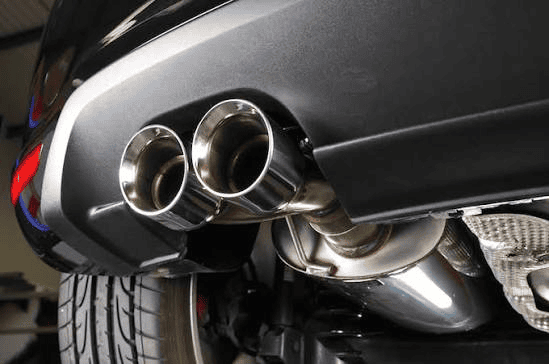
A car’s exhaust system plays an important role in engine performance, noise control, and environmental protection. Although many drivers only notice the exhaust when they hear a loud sound from the rear of the vehicle, the system does much more than release gases. It collects harmful gases produced during combustion, reduces engine noise, controls emissions, and safely directs exhaust away from the passenger cabin.
The exhaust system contains several connected components, including exhaust manifolds, oxygen sensors, catalytic converters, pipes, resonators, and mufflers. Each part performs a specific job, and all components must work together to support smooth engine operation.
When one part becomes damaged, the vehicle may develop unusual noises, reduced fuel efficiency, poor performance, or an illuminated check engine light. Understanding how these parts work can help drivers recognize problems early and make better maintenance decisions.
What Is a Car Exhaust System?
A car exhaust system is a collection of components designed to carry combustion gases away from the engine and release them safely into the atmosphere.
When fuel burns inside the engine cylinders, it produces energy that moves the pistons. This process also creates exhaust gases containing substances such as carbon dioxide, water vapor, nitrogen oxides, and carbon monoxide. Depending on engine operation, the gases may also contain unburned hydrocarbons and other pollutants.
The exhaust system collects these gases and directs them through different components before releasing them through the tailpipe.
Its main responsibilities include:
- Carrying exhaust gases away from the engine.
- Reducing harmful emissions.
- Controlling engine noise.
- Managing exhaust flow and pressure.
- Helping the engine operate efficiently.
- Reducing the risk of exhaust gases entering the passenger cabin.
A properly functioning exhaust system supports both vehicle performance and passenger safety.
How the Exhaust System Works
The exhaust system begins near the engine and usually extends underneath the vehicle toward the rear.
When combustion takes place, exhaust gases leave the engine cylinders through exhaust valves. They enter the exhaust manifold, which collects gases from multiple cylinders and directs them into the exhaust pipe.
The gases then travel through different sections of the system. Depending on the vehicle, they may pass through oxygen sensors, a catalytic converter, a resonator, and a muffler.
The catalytic converter reduces certain harmful pollutants through chemical reactions. The muffler and resonator help reduce noise before the remaining gases leave through the tailpipe.
Although the exact arrangement varies between vehicles, the basic purpose remains the same: safely remove exhaust gases while controlling emissions and sound.
Main Parts of a Car Exhaust System
Every exhaust component has a specific function. Understanding these parts makes it easier to identify possible problems and understand why regular inspections matter.
Exhaust Manifold
The exhaust manifold is connected directly to the engine’s cylinder head. Its job is to collect exhaust gases from individual cylinders and guide them into a common exhaust passage.
Most exhaust manifolds are made from cast iron or stainless steel because they must handle extremely high temperatures.
A well-designed manifold helps direct gases away from the engine efficiently. However, repeated heating and cooling can eventually create cracks or damage the connecting gasket.
A damaged manifold may cause ticking or hissing noises, especially when the engine is cold. Exhaust leaks near the engine can also affect sensor readings and allow harmful gases to escape into the engine compartment.
Exhaust Pipes
Exhaust pipes connect the different components of the exhaust system. They provide a passage for gases to travel from the engine toward the rear of the vehicle.
These pipes are commonly made from steel or stainless steel. They must withstand heat, vibration, moisture, and exposure to road debris.
The shape and diameter of the pipes are designed according to the vehicle’s engine and exhaust requirements.
A damaged pipe can create an exhaust leak, increase noise, and allow gases to escape before reaching the tailpipe.
Rust is a common reason for exhaust pipe damage, particularly in vehicles exposed to moisture, road salt, or poor road conditions.
Catalytic Converter
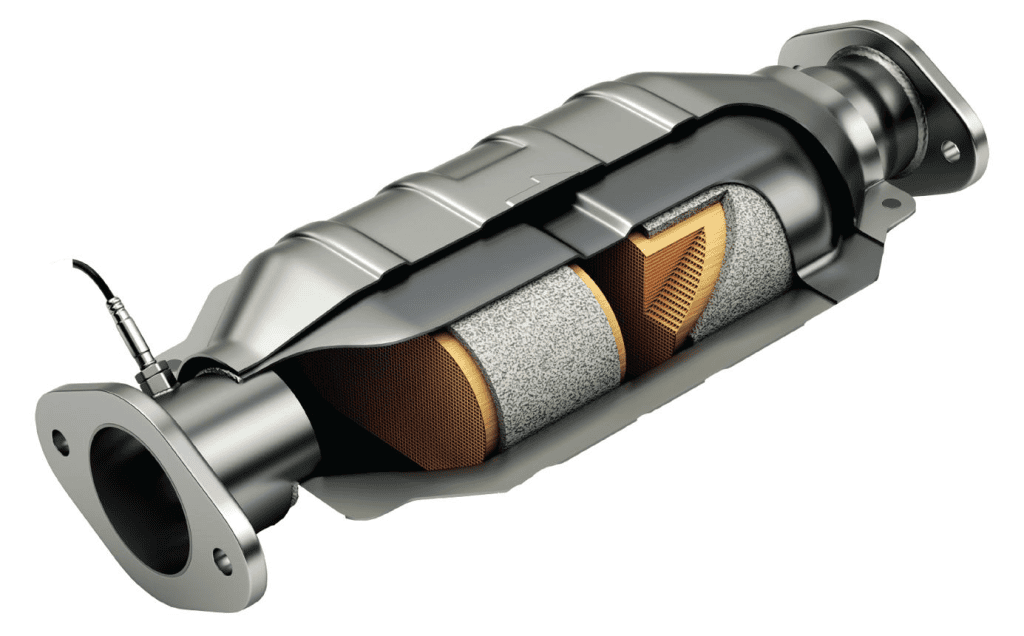
The catalytic converter is one of the most important parts of a modern vehicle’s exhaust system. Its main purpose is to reduce harmful pollutants before exhaust gases leave the vehicle.
Inside the converter is a structure containing many small passages, often called a honeycomb. This structure is coated with catalytic materials that help chemical reactions take place.
In a typical three-way catalytic converter, the reactions help:
- Convert carbon monoxide into carbon dioxide.
- Convert unburned hydrocarbons into carbon dioxide and water.
- Reduce nitrogen oxides into nitrogen and oxygen.
These reactions reduce the amount of certain harmful pollutants released into the atmosphere.
Catalytic converters normally operate at high temperatures. They need suitable exhaust flow and operating conditions to work properly.
A damaged or clogged converter can restrict exhaust flow and reduce engine performance. A failing converter may also cause a check engine light, unusual smells, or increased emissions.
Muffler
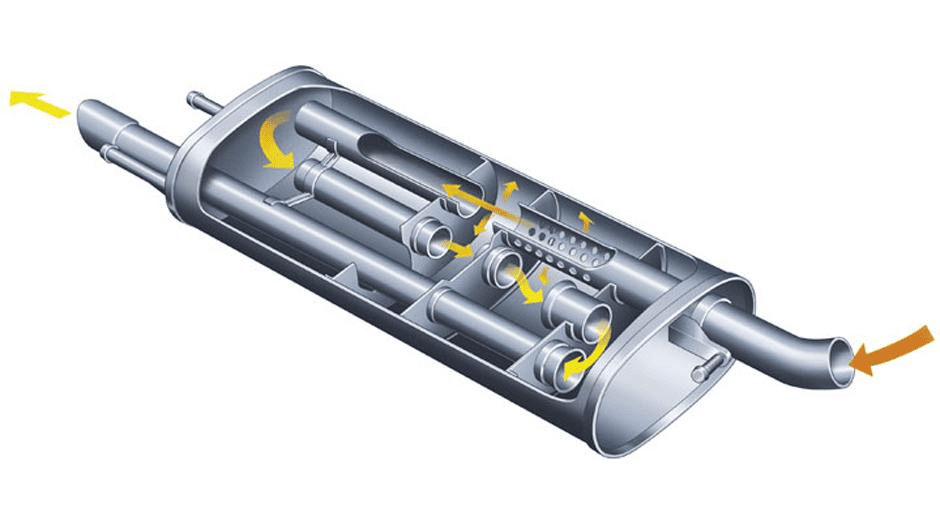
The muffler is designed mainly to reduce the noise produced by the engine’s exhaust pulses.
Without a muffler, exhaust gases leaving the engine would create much louder and more noticeable sounds.
Inside a muffler, gases pass through chambers, tubes, and sometimes sound-absorbing materials. These structures help reduce sound waves before the gases reach the tailpipe.
Different muffler designs produce different sound characteristics. Some are designed for quiet everyday driving, while performance mufflers may allow a louder exhaust note.
A damaged muffler can create a deep rumbling sound, rattling, or excessive exhaust noise.
Rust, internal corrosion, loose connections, and physical damage are common causes of muffler problems.
Resonator
A resonator is another exhaust component used to control sound. It is often installed before the muffler, although its location depends on the vehicle.
While the muffler reduces overall exhaust noise, the resonator is designed to reduce certain sound frequencies that may create unwanted vibration or droning inside the cabin.
Some vehicles use resonators to make the exhaust sound smoother and more comfortable during highway driving.
A damaged resonator may cause unusual exhaust noise, but it does not always create the same symptoms as a failing muffler.
Oxygen Sensors
Oxygen sensors measure the amount of oxygen in the exhaust gases and send information to the engine control unit.
Many modern vehicles use more than one oxygen sensor. One is commonly positioned before the catalytic converter, while another is installed after it.
The upstream sensor helps the engine control system adjust the air-fuel mixture. The downstream sensor helps monitor catalytic converter performance.
When an oxygen sensor becomes faulty, the vehicle may experience poor fuel economy, rough engine operation, increased emissions, or a check engine light.
However, these symptoms can also be caused by other engine problems.
Tailpipe
The tailpipe is the final section of the exhaust system. It directs treated exhaust gases away from the vehicle and releases them into the atmosphere.
Tailpipes are commonly positioned at the rear of the vehicle, although some designs use different outlet locations.
A damaged, blocked, or badly corroded tailpipe can affect exhaust flow and create unusual noises.
Drivers should also make sure the tailpipe is not covered by mud, snow, or other materials that could prevent exhaust gases from escaping properly.
How a Catalytic Converter Differs From a Muffler
Drivers sometimes confuse catalytic converters and mufflers because both are installed in the exhaust system. However, they perform very different functions.
| Component | Main Purpose | How It Works |
| Catalytic converter | Reduces harmful emissions | Uses chemical reactions to convert pollutants |
| Muffler | Reduces exhaust noise | Uses chambers and sound-control structures |
| Resonator | Controls selected sound frequencies | Reduces unwanted exhaust tones |
| Exhaust pipes | Carry gases between components | Provide a sealed passage for exhaust flow |
A catalytic converter is primarily an emissions-control component, while a muffler is designed to make the vehicle quieter.
A vehicle may have a muffler that is working properly but a catalytic converter that is no longer reducing emissions effectively. The opposite situation is also possible.
Common Signs of Exhaust System Problems
Exhaust problems can develop slowly or appear suddenly after a component becomes damaged. Recognizing the warning signs can help drivers arrange repairs before the condition becomes more serious.
Loud Exhaust Noise
An unusually loud exhaust sound may indicate a damaged muffler, broken pipe, loose connection, or leaking exhaust manifold.
Some leaks produce a deep rumbling sound, while smaller leaks may create ticking or hissing noises.
If the vehicle suddenly becomes much louder than normal, the exhaust system should be inspected.
Reduced Engine Performance
A restricted exhaust system can affect how efficiently gases leave the engine.
For example, a severely clogged catalytic converter may increase exhaust backpressure and make the engine feel weak during acceleration.
Drivers may notice slow acceleration, reduced power at higher speeds, or difficulty maintaining normal performance.
Other engine problems can produce similar symptoms, so testing is important before replacing exhaust components.
Check Engine Light
A check engine light may appear when the engine control unit detects an issue involving oxygen sensors, emissions performance, or other engine-related systems.
A faulty catalytic converter or oxygen sensor can trigger diagnostic trouble codes.
A diagnostic scan can help identify the stored codes, but further testing may be needed to confirm the cause.
Drivers should not assume that every check engine warning means the catalytic converter needs replacement.
Unusual Exhaust Smell
A strong exhaust smell around the vehicle may indicate a leak or an emissions-control problem.
A rotten-egg smell can sometimes be associated with catalytic converter or fuel-system issues. A strong smell of exhaust inside the cabin is especially concerning because it may indicate that gases are entering the passenger area.
Carbon monoxide is an odorless and potentially deadly gas. If exhaust fumes enter the cabin, stop driving, move to fresh air, and arrange professional assistance.
Visible Rust or Exhaust Leaks
Rust can weaken exhaust pipes, mufflers, and connecting sections.
During an inspection, a mechanic may notice holes, damaged joints, loose hangers, or black soot around a leaking connection.
Visible corrosion should be checked before the affected component becomes completely damaged.
Poor Fuel Economy
Exhaust-related problems can sometimes affect fuel efficiency.
A faulty oxygen sensor may send incorrect information to the engine control unit, causing the air-fuel mixture to become less efficient.
A restricted catalytic converter can also affect engine operation.
However, poor fuel economy may result from tire pressure, driving habits, ignition problems, or other engine faults. A proper diagnosis is necessary.
What Causes Exhaust System Parts to Wear Out?
Exhaust systems operate in a demanding environment. Their components experience high temperatures, vibration, moisture, and exposure to road conditions.
Several factors contribute to wear and damage.
Heat and Temperature Changes
Exhaust components become extremely hot during engine operation and cool down after the vehicle is switched off.
Repeated heating and cooling can place stress on metal parts. Over time, this may cause cracks, weakened connections, or gasket failure.
Rust and Corrosion
Moisture can collect inside and outside exhaust components. In some areas, road salt and other chemicals speed up corrosion.
Older steel pipes and mufflers may develop rust holes that allow exhaust gases to escape.
Stainless steel components generally offer better corrosion resistance, although they are not completely immune to damage.
Road Impacts
Driving over potholes, speed bumps, rocks, and uneven surfaces can damage exhaust pipes or mounting brackets.
A strong impact may bend a pipe, crack a connection, or cause a component to hang lower than normal.
Drivers should avoid unnecessary contact between the underside of the vehicle and road obstacles.
Engine Problems
Some engine faults can damage exhaust components.
For example, incorrect fuel mixtures or ignition problems may allow unburned fuel to enter the catalytic converter. This can cause excessive heat and damage its internal structure.
Misfires should be diagnosed and repaired promptly rather than ignored.
Loose Mounting Brackets
Exhaust systems are supported by brackets and rubber hangers that help keep components in the correct position.
When these supports become worn or broken, pipes and mufflers may move excessively.
This can cause rattling, knocking, or additional stress on exhaust connections.
How to Maintain Your Car’s Exhaust System
Regular inspections can help identify exhaust problems before they affect performance or passenger safety.
Check for unusual sounds: Pay attention to new rattling, hissing, ticking, or rumbling noises, especially when starting the engine or accelerating.
Inspect visible exhaust components: Look for rust, loose hangers, damaged pipes, and visible leaks during routine vehicle servicing.
Repair engine problems promptly: Misfires and fuel-system faults can damage the catalytic converter if left untreated.
Avoid rough contact with road surfaces: Drive carefully over speed bumps and potholes to protect pipes and mounting brackets.
Check warning lights: If the check engine light appears, have the vehicle scanned and diagnosed rather than replacing parts without testing.
Use suitable replacement parts: Choose exhaust components that match the vehicle’s specifications and comply with applicable emissions regulations.
Arrange professional inspections: A qualified mechanic can check exhaust leaks, sensor operation, mounting points, and emissions-related problems.
Can You Drive With a Damaged Exhaust System?
The answer depends on the type and severity of the damage.
A small leak near the rear of the exhaust system may initially seem like a noise problem. However, even a minor leak should be inspected because the damage can spread and exhaust gases may escape in an unsafe location.
A leak near the engine or underneath the passenger cabin is more concerning. Exhaust gases can enter the vehicle, exposing occupants to harmful substances, including carbon monoxide.
A severely damaged or restricted exhaust system can also affect engine performance and create excessive heat.
If you smell exhaust inside the cabin, feel unwell while driving, or suspect a major leak, stop the vehicle safely and move to fresh air. Do not continue driving until the problem has been inspected.
When Should Exhaust System Parts Be Replaced?
There is no single replacement schedule for every exhaust component. Some parts can last for many years, while others may require earlier attention because of corrosion, impact damage, or engine problems.
A muffler should be replaced when it has significant corrosion, holes, or internal damage that cannot be repaired reliably.
A catalytic converter may need replacement if testing confirms that it has failed, become damaged, or is severely restricted. However, the underlying cause should also be repaired to protect the new converter.
Exhaust pipes can sometimes be repaired if the damage is limited to a small section and the surrounding metal remains strong. Extensive corrosion usually makes replacement a better option.
Oxygen sensors have their own service lives and should be tested when the vehicle shows emissions or engine-management problems.
A mechanic can recommend the most suitable repair after checking the condition of the entire system.
Understanding Exhaust System Replacement Costs
Exhaust repair costs depend on the vehicle, component type, parts quality, and labor requirements.
Replacing a small pipe section or mounting hanger is usually less expensive than installing a new catalytic converter. Muffler replacement costs also vary depending on whether the vehicle uses a standard or specialized exhaust design.
Catalytic converters can be particularly expensive because they contain valuable catalytic materials and must meet the vehicle’s emissions requirements.
Before approving a repair, ask the mechanic to explain which component has failed and why replacement is necessary. Request a separate estimate for parts and labor, and confirm that the selected component is suitable for the vehicle.
It is also important to avoid removing emissions-control equipment or installing unsuitable parts. Such changes may violate local regulations, increase pollution, and create problems during vehicle inspections.
Conclusion
The car exhaust system is much more than a collection of pipes at the rear of a vehicle. Its components work together to remove combustion gases, reduce harmful emissions, control noise, and support proper engine operation.
The exhaust manifold collects gases from the engine, pipes carry them through the system, the catalytic converter reduces certain pollutants, and the muffler controls sound before gases leave through the tailpipe. Oxygen sensors also help monitor exhaust conditions and support efficient engine management.
Unusual noises, exhaust smells, rust, reduced performance, and warning lights can indicate that something is wrong. Regular inspections and timely repairs help prevent more serious damage and maintain a safer driving environment.
By understanding how exhaust system parts work, drivers can make better maintenance decisions, recognize potential problems early, and keep their vehicles running smoothly.
