
A car that struggles to start or suddenly displays a check engine light can leave its owner wondering what went wrong. Sometimes the problem comes from a weak battery, while in other cases it may involve an engine sensor, an electrical connection, or another vehicle system. Finding the cause early can help drivers make better repair decisions and avoid replacing parts without understanding the problem.
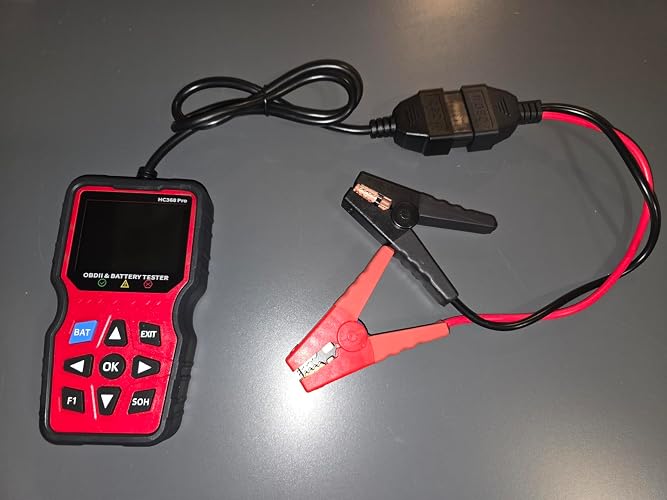
An OBD2 scanner and battery tester combines several useful diagnostic functions in one handheld device. The 3-in-1 Car Code Reader with Cranking Test is designed for drivers who want to check engine fault codes, examine battery condition, and investigate starting or charging problems. Instead of purchasing separate tools for every basic check, users may be able to perform several initial tests with one device.
For home mechanics, used-car buyers, and people who prefer to understand a vehicle’s condition before visiting a repair shop, this type of scanner can be useful. However, compatibility and available functions vary between models. Understanding what the tool can and cannot do is important before making a purchase.
Why an OBD2 Scanner with a Battery Tester Is Useful
Modern vehicles use electronic control units to monitor different engine and emissions-related functions. When the system detects a problem, it may store a diagnostic trouble code. An OBD2 scanner communicates with the vehicle’s diagnostic system to retrieve supported codes and display information that can help identify possible faults.
A battery tester serves a different purpose. It helps assess the condition of the vehicle’s battery and may provide information about starting performance and the charging system.
Combining these functions in one device can make routine checks more convenient. For example, a driver experiencing slow engine cranking can investigate the battery and starting system while also checking whether the vehicle has stored engine trouble codes.
These tests provide useful information, but they do not automatically identify every mechanical or electrical fault. Further inspection may still be necessary.
Reading and Understanding Engine Trouble Codes
One of the main functions of an OBD2 code reader is retrieving diagnostic trouble codes, commonly called DTCs.
When the check engine light appears, the scanner can help determine whether the vehicle’s computer has recorded a supported fault. The code usually points toward a particular system or type of problem rather than identifying a single failed part with complete certainty.
For example, a code related to an oxygen sensor may indicate a sensor issue, a wiring problem, an exhaust leak, or another condition affecting the reading. Replacing the sensor immediately without further checks could waste money.
Clearing Codes After Repairs
Many OBD2 scanners can clear supported fault codes and turn off the check engine light after a problem has been addressed.
However, clearing a code does not repair the underlying fault. If the original problem remains, the vehicle may store the code again.
Drivers should record the original codes before clearing anything. This preserves useful diagnostic information and helps a mechanic understand what happened before the warning was reset.
Some codes also require specific vehicle conditions before they can clear. A basic scanner may not support every manufacturer-specific system or service function, so its exact capabilities should be checked before purchase.
Checking Battery Health Before Problems Start
A weak battery can cause frustrating problems, especially during cold weather or after a vehicle has been parked for several days.
A battery tester can provide information about the battery’s condition, helping drivers decide whether further testing or replacement may be necessary. Depending on the device, the displayed results may include voltage, state of charge, state of health, and estimated cold cranking amp performance.
State of charge describes how much charge the battery currently holds. State of health estimates its overall condition compared with its expected performance. Cold cranking amps, or CCA, indicate a battery’s ability to provide starting current under specified cold conditions.
These measurements are useful because a battery can show a reasonable voltage reading and still struggle to deliver enough current to start an engine.
The exact measurements supported by this 3-in-1 product should be confirmed in its listing and manual. Not every scanner with a battery function offers the same testing depth.
What Is a Cranking Test?
A cranking test examines the electrical behavior of the battery while the starter motor turns the engine during startup.
Starting an engine requires a large amount of electrical current. If the battery is weak, the voltage may drop more than expected during cranking. A suitable tester can monitor this change and provide information about starting performance.
This test may help when a driver notices symptoms such as slow cranking, clicking sounds, or difficulty starting the vehicle.
However, the result should not be treated as a complete diagnosis on its own. A weak battery is only one possible cause of starting problems. Corroded battery terminals, loose connections, a failing starter motor, or other electrical faults can produce similar symptoms.
Following the tester’s instructions and considering the vehicle’s symptoms together can help prevent incorrect conclusions.
Understanding the Charging System Test
A vehicle’s charging system helps maintain the battery’s charge while the engine is running. The alternator is a major part of this system, along with its wiring, connections, and control components.
If the battery repeatedly becomes discharged, the cause may not be the battery itself. A charging system problem could prevent the battery from receiving the required charge during normal driving.
Some battery-testing scanners provide a charging system test that evaluates voltage behavior while the engine is running. This can help identify situations that require further investigation.
Still, charging results can vary depending on the vehicle’s electrical design and operating conditions. Modern vehicles may adjust charging voltage based on battery temperature, charge level, and energy-management requirements.
For that reason, drivers should compare the test results with the vehicle manufacturer’s specifications rather than assuming that one voltage reading proves the alternator is defective.
How the 3-in-1 Design Can Save Time
The main attraction of a combined diagnostic tool is convenience. A driver may need to investigate an illuminated check engine light, a weak battery, or a starting problem during the same maintenance session.
With separate tools, these checks may require switching devices and repeating setup steps. A combined scanner can simplify the initial investigation by keeping several functions in one handheld unit.
It can also be useful in a home garage where storage space is limited. Instead of maintaining several basic diagnostic devices, users can keep one scanner with their automotive tools.
For people who work on multiple compatible vehicles, the device may also help with preliminary checks before deciding whether professional diagnostics are needed.
The actual time saved depends on the product’s interface, supported functions, and ease of use. Buyers should check whether battery tests require separate clamps or additional cables rather than assuming everything works through the OBD2 connector alone.
Vehicle Compatibility: What Buyers Should Check
Compatibility is one of the most important factors when purchasing any OBD2 scanner.
Many passenger vehicles sold in the United States have supported OBD2 systems, but the available diagnostic functions can differ by vehicle year, make, model, engine, and market.
A scanner may read standard engine and emissions-related codes without supporting advanced functions such as airbag, ABS, transmission, or manufacturer-specific diagnostics.
Before purchasing the 3-in-1 Car Code Reader with Cranking Test, buyers should check the supported vehicle list and confirm that the device can communicate with their particular car.
They should also review the battery specifications. The supported battery voltage, chemistry, testing range, and required test procedure can vary between products.
If the vehicle uses a battery-management system or requires registration after battery replacement, a basic scanner may not provide the necessary service function.
Checking these details beforehand helps avoid buying a tool that cannot perform the required tests.
Is the Scanner Easy for Beginners to Use?
A handheld OBD2 scanner can be useful for drivers who have limited mechanical experience, provided the instructions are clear and the functions are suitable for basic diagnostics.
Most traditional scanners connect to the vehicle’s diagnostic port, commonly located beneath the dashboard. The user follows the device’s instructions to establish communication and retrieve supported information.
Battery testing may require additional connections directly to the battery terminals, depending on the design.
Beginners should read the manual before connecting the device. They should also make sure the vehicle is parked safely and that the ignition and engine are in the correct state for each test.
Understanding the results is just as important as running the test. A code or warning should be treated as a clue that needs interpretation rather than proof that a particular part must be replaced.
Common Problems This Type of Tool Can Help Investigate
The scanner’s combined functions can be useful in several everyday situations.
An illuminated check engine light: Reading stored codes can help identify the system that requires attention.
Slow engine starting: A battery and cranking test may help determine whether the battery’s starting performance needs further investigation.
Repeated battery discharge: Battery and charging tests may provide clues about the condition of the battery and charging system.
Unexpected warning lights: Supported diagnostic codes can help explain certain engine-related warnings, although a basic OBD2 scanner may not access every vehicle system.
Used-car inspections: A buyer can use supported diagnostic functions to check for stored engine codes and review available information before purchasing a vehicle.
A scanner is most useful when its results are combined with symptoms, maintenance history, and a proper inspection.
Advantages of an OBD2 Scanner with Battery Testing
A combined device offers several practical benefits for routine automotive maintenance.
- Multiple functions in one tool: It can combine engine-code reading with battery-related tests.
- Early troubleshooting: Drivers can gather useful information when warning lights or starting problems appear.
- Convenient home use: The device can help with preliminary checks without requiring an immediate workshop visit for every basic question.
- Better repair preparation: Recorded codes and test results can help drivers explain a problem to a mechanic.
- Useful for vehicle ownership: Regular checks may help identify conditions that deserve attention before they become more disruptive.
These benefits are most relevant to drivers who want basic diagnostic information and understand that additional testing may still be necessary.
Limitations to Keep in Mind
A combined scanner is not a replacement for every professional automotive diagnostic tool.
Its first limitation is diagnostic coverage. Some devices focus mainly on engine and emissions-related codes and may not access ABS, airbag, transmission, or other control modules.
Second, battery test results depend on correct connections, suitable testing conditions, and accurate information about the battery. Incorrect settings can affect the usefulness of the results.
Third, the device cannot repair the faults it identifies. Even if it reports a battery or charging problem, further checks may be required to determine the actual cause.
Finally, buyers should not assume that every advertised 3-in-1 scanner supports identical functions. Screen size, live data, code definitions, battery measurements, software updates, and vehicle compatibility should be verified for the exact model.
Tips for Getting More Useful Test Results
A few simple practices can improve the usefulness of a diagnostic tool.
Keep the scanner and its connectors clean, and store the device where the cable will not become damaged. Follow the manufacturer’s instructions for battery testing, including the correct battery type and rating when requested.
When an engine warning appears, record the codes and available information before clearing anything. This gives you a useful reference if the issue returns or requires professional attention.
For battery tests, make sure the connections are secure and follow the required procedure. If the result appears unusual, repeat the test under the recommended conditions instead of immediately replacing the battery.
Most importantly, do not perform electrical checks near moving engine parts without taking appropriate precautions. If you are unsure how to carry out a test safely, ask a qualified technician.
Is This 3-in-1 Car Code Reader Worth Considering?
The OBD2 Scanner and Battery Tester with Cranking Test is designed for drivers who want to investigate common engine and electrical issues with one device.
Its combination of code reading, battery testing, and starting-system checks can be useful for home mechanics, daily drivers, and people who want more information before visiting a repair shop.
The value of the tool depends on its actual specifications and the vehicle it will be used with. Buyers should confirm the supported diagnostic systems, battery testing functions, connector requirements, and included accessories before making a decision.
For routine troubleshooting, a combined scanner can be a practical addition to a home garage. Drivers who need advanced system access or professional-level diagnostics should compare more capable tools before purchasing.
Final Buying Advice
A diagnostic scanner can make car maintenance less confusing by helping drivers gather information about engine codes, battery condition, and starting performance. Combining these functions in one tool may also save storage space and simplify basic checks.
Before choosing this 3-in-1 Car Code Reader, make sure its features match your vehicle and maintenance needs. Check the exact product specifications rather than relying on the general features associated with this category.
Used correctly, a suitable OBD2 scanner and battery tester can help you make more informed maintenance decisions, prepare for mechanic visits, and better understand some of the warning signs your vehicle displays.
