
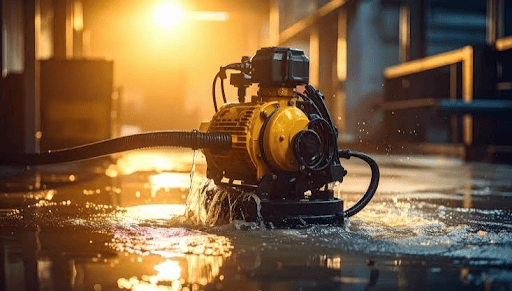
Flooding leaves standing water in homes and businesses, creating immediate restoration challenges for property owners. Water damage restoration begins with removing accumulated water and identifying moisture that remains after extraction. A rapid response links water removal with drying, cleaning, and repairs needed to restore affected areas. Here is how emergency water removal supports the restoration process after flooding:
Address Water Damage
Emergency water removal begins with assessing the affected property and identifying the flood source. Broken and frozen pipes, storm events, sewage backups, and sump pump failures represent different emergency water sources. Each situation requires attention to the water type and location before extraction begins. Residential and commercial properties also require different assessments based on their size and affected areas.
Standing water requires prompt extraction before restoration work progresses to drying and cleaning. Professional extraction equipment removes standing water from flood-affected areas. Moisture metering then helps identify water that remains after visible water has been removed.
Emergency response also addresses situations where flooding results from plumbing failures or storm-related events. Emergency plumbing services provide a separate response when a plumbing problem contributes to a water emergency. Sewage backup cleanup addresses contaminated water that requires specialized removal and cleaning.
Identify Water Sources
The source of flooding varies, and the type of flooding dictates the response. A burst pipe is different from an overflow, storm flood, or sewage backup. If the sump pump is damaged, you need to address the equipment controlling water accumulation in the sump. Knowing the source of the contamination will help restoration technicians follow the proper removal and cleanup process.
Restoration requirements differ if rainwater enters a residential or commercial property due to storm damage. For roof leaks and other storm-damage openings, emergency roofing and roof tarping services may be needed. While extraction operations are being performed, water entry can be further minimized by dealing with the source. Emergency plumbing services respond to plumbing issues that can cause flooding in the house.
Connect Removal to Repairs
Water removal represents one stage within a broader restoration process for flooded properties. Once extraction and drying reveal the extent of the damage, repair requirements become clearer. Rebuild and restoration services address property repairs identified during the restoration process. Residential and commercial owners have a pathway from emergency extraction to completed restoration work.
Coordinate Restoration Work
Flood response extends beyond removing standing water when a property requires additional restoration. Rebuild services address repairs identified after mitigation and drying work. Restoration technicians, craftsmen, plumbers, and electricians provide different skills within the rebuilding process. The following services address specific conditions that arise during flood restoration:
- Emergency plumbing addresses plumbing failures connected to water emergencies.
- Roof tarping provides temporary coverage after storm-related roof damage.
- Sewage cleanup addresses contaminated water following sewage backups.
- Water extraction removes accumulated water from affected property areas.
- Dehumidifying addresses moisture remaining after water extraction.
Measure Remaining Moisture
Visible water does not indicate how much moisture remains throughout an affected property. Moisture metering identifies damp areas requiring additional drying after extraction. Industrial air movers move air through affected spaces, while dehumidifiers remove moisture from the surrounding environment. These steps help assess the remaining moisture associated with water damage after floodwater removal.
Carpet drying forms part of the documented restoration process after water removal. Cleaning and sanitizing address affected surfaces requiring additional treatment after extraction. Moisture readings also provide restoration technicians with information before repair work begins. Drying activities address moisture conditions identified during the restoration process.
Find Water Damage Solution
A flood response also creates an opportunity to coordinate emergency services with the property’s subsequent repair requirements. Water damage restoration becomes more structured when extraction, moisture measurement, drying, cleaning, and rebuilding follow a connected process. Property owners benefit from linking emergency response with documented restoration services rather than treating water removal as an isolated task. Contact a professional water restoration provider for emergency water removal and restoration services after flooding.
