
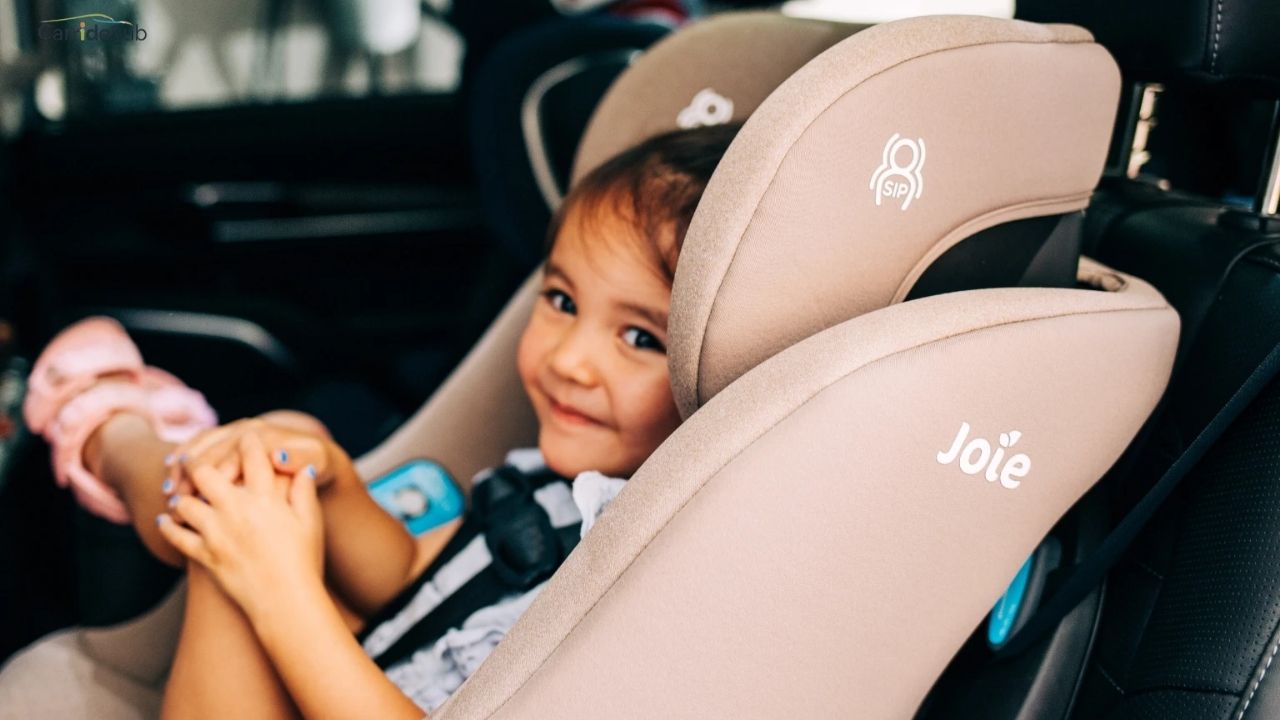
The new side-impact test standard for car seats is one of the biggest safety upgrades in decades. It adds an extra layer of protection beyond the usual frontal crash tests. This update aims to reduce serious injuries in side collisions.
Taking effect in June 2025, the rule requires car seats to withstand realistic side-impact forces. It focuses on protecting a child’s head and upper body. These changes bring U.S. safety testing closer to real-world crash conditions.
Manufacturers are already redesigning car seats with deeper head wings and stronger side structures. Many new models are arriving fully compliant ahead of the deadline. This ensures parents have safer options available right now.
Overall, the new standard helps families trust that every newly made seat meets strict federal safety rules. It also gives clearer guidance on what truly protects children in side crashes. For parents, this means more confidence and fewer risks on the road.
Why a Federal Side-Impact Test Standard Is Important
A federal side-impact standard matters because side crashes cause nearly as many serious injuries to children as frontal crashes, yet car seats were only required to pass frontal tests before. This update finally closes that safety gap.
Side-impact collisions are particularly dangerous since there’s very little space between a child and the vehicle door. A federal standard ensures every car seat is tested for these real-world risks instead of relying on optional manufacturer testing.
The new rule focuses on preventing head injuries one of the most common outcomes in side-impact crashes for young children by requiring car seats to manage crash forces and reduce harmful head contact, offering better protection for the smallest passengers.
FMVSS 213a Side-Impact Standard Overview
The FMVSS 213a side-impact standard is a major update to U.S. car seat regulations, adding a mandatory side-impact crash test for the first time. Until now, federal requirements only included a frontal crash test.
This new rule means every rear-facing and forward-facing car seat must now prove that it can restrain the child effectively in a simulated side-impact crash, not just head-on collisions.
The goal of the standard is to reduce head injuries, manage crash forces, and prevent harmful contact with the vehicle door during a near-side crash. These are the real-world dangers seen in T-bone collisions.
The test uses specialized equipment that simulates an intruding vehicle door hitting a child restraint. This intrusion element reflects how many severe injuries happen in actual side crashes.
Car seats will be tested with either a 12-month-old or 3-year-old crash dummy, depending on the seat’s weight and height limits. These dummies help measure how well the seat controls movement and protects the child.
Manufacturers must ensure that any car seat made after June 30, 2025, complies with both the existing FMVSS 213 frontal test and the new FMVSS 213a side-impact test. Early compliance is allowed and many seats already meet the standard.
Parents should know that retailers can continue selling car seats manufactured before the deadline, meaning not all seats on shelves after June 2025 will automatically be compliant.
Booster seats are excluded from the standard as long as their minimum requirements are at least 40 lbs. and 43.3 inches. This is because boosters rely on the vehicle seatbelt, which isn’t designed to meet the same containment criteria as a 5-point harness.
The rule ensures more consistency across the industry, since all manufacturers will now be testing side-impact performance in the same way instead of using proprietary or internal testing methods.
Overall, FMVSS 213a brings the biggest shift in child passenger safety requirements in decades, ensuring that all new car seats offer more realistic protection in one of the most dangerous crash types for children.
Side-Impact Test Details
The new side-impact test simulates a small vehicle being struck in a T-bone collision, closely mirroring the conditions of a real-world side crash. This setup is similar to how full-size vehicles are tested under FMVSS 214, making it one of the most realistic simulations ever used for child restraints.
During the test, a car seat is installed on a special sled designed to replicate the motion of a struck vehicle. A simulated intruding door structure then impacts the seat, recreating the rapid intrusion that often causes the most serious injuries in side crashes.
A 12-month-old CRABI dummy or a 3-year-old Q3s dummy is harnessed into the seat, depending on the seat’s rated limits. These dummies allow testers to measure head movement, chest forces, and how well the child is contained within the seat during impact.
High-speed cameras record every millisecond of the event, capturing how the car seat moves, how the dummy reacts, and whether the head makes contact with the door or windowsill area. For the Q3s dummy, additional sensors track injury-related data like HIC and chest deflection.
This is a strict pass/fail test, not a rating system. Any seat that fails to meet containment, structural integrity, or injury-limit requirements cannot be sold after the compliance deadline, ensuring that all new seats meet a consistent federal minimum for side-impact protection.
How will car seats designs adapt to pass the new standard?
Manufacturers are already adjusting designs to better manage side-impact forces, and several noticeable trends have emerged. Many new seats feature deeper or more contoured headwings, added padding, and “bump-out” structures along the sides of the shell to improve energy absorption and keep a child’s head contained during intrusion.
Engineers are also reshaping internal components such as EPS or EPP foam inside the headrest to better control movement during a near-side impact. These design changes work together to improve containment, reduce head acceleration, and ensure the seat meets the new federal performance requirements without compromising comfort or usability.
More Details on the Final Rule for CPS Techs and Advocates
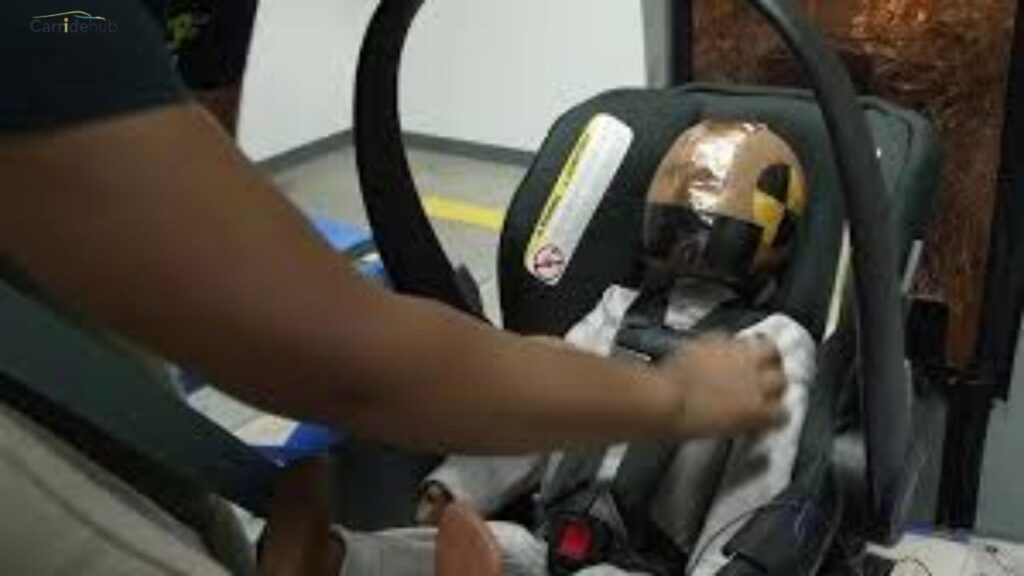
The final rule for FMVSS 213a was designed to work within the framework of the existing frontal crash requirements, ensuring that the new side-impact test complements—not replaces—the current standards. NHTSA created this rule to fulfill a federal mandate requiring improved protection for children in side-impact crashes, which have long been recognized as one of the most dangerous crash types for young passengers.
To achieve realistic results, NHTSA based the procedure on the dynamics of full-scale FMVSS 214 vehicle-to-vehicle crash tests, replicating both the movement of the struck vehicle and the intrusion of the impacting door. This makes the new side-impact test the first of its kind to combine vehicle acceleration with a simulated intruding door, offering a much more accurate picture of how car seats perform in real-world crashes.
Key points from the final rule include:
- The new rule adds FMVSS 213a as a referenced standard within FMVSS 213.
- Testing simulates a moving vehicle hit in a near-side impact using a unique Side Impact Seat Assembly (SISA).
- The intrusion-based design reflects real-world crash conditions where door deformation is a major injury factor.
- The test speed and angle are based on actual crash data, including a 10-degree impact angle.
- A 12-month-old CRABI dummy or 3-year-old Q3s dummy is used depending on the seat’s weight/height rating.
- Structural integrity, HIC limits, chest deflection, and containment requirements determine whether a seat passes.
Test Dummies (ATDs)
- CRABI (12-month-old dummy): Used for seats designed for smaller infants; measures containment and structural integrity during the side-impact test.
- Q3s (3-year-old side-impact dummy): A more advanced instrumented dummy developed in Europe that measures head injury criteria and chest deflection.
- ATD selection is based on seat ratings: The dummy used depends on the car seat’s stated weight and height limits, ensuring realistic testing for the age group each seat is intended to protect.
ATD Selection Criteria
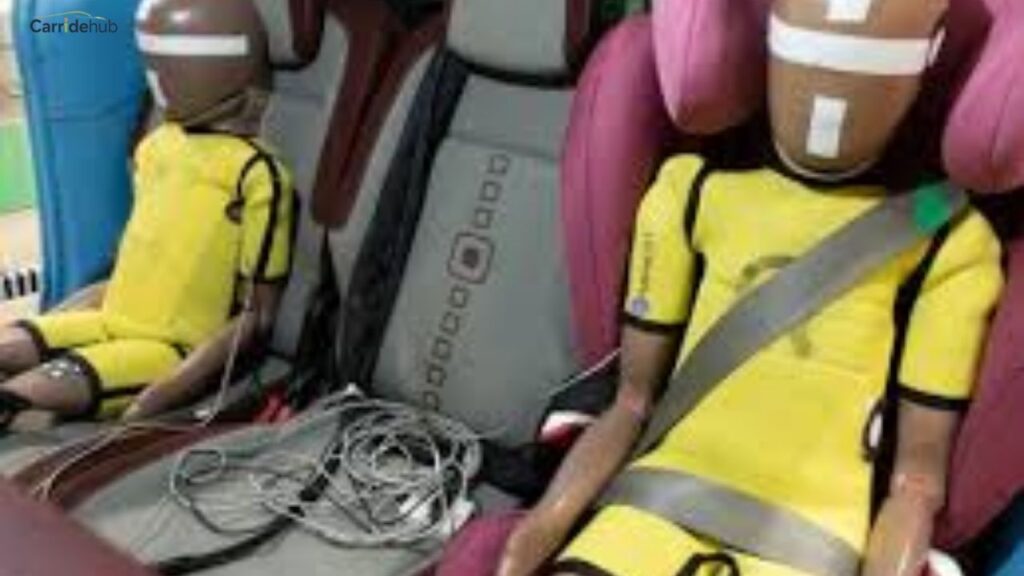
ATD selection is determined by the weight and height limits that manufacturers assign to each car seat. NHTSA created clear thresholds so the appropriate dummy size is used to reflect the real children each seat is designed to protect.
Seats rated for children between 11 and 30 pounds, or with height limits between 25.5 and 34.3 inches, are tested with the 12-month-old CRABI dummy. This applies to most infant seats and smaller rear-facing restraints.
Any infant seat with a weight limit above 30 pounds after the compliance date must fit the larger Q3s dummy and pass the test with it. For this reason, many manufacturers have reduced infant seat weight limits back to 30 pounds to avoid unrealistic fit issues with a 3-year-old dummy.
Car seats rated for children between 30 and 40 pounds, or for heights between 34.3 and 43.3 inches, will be tested with the Q3s dummy. This includes almost all convertibles, combination seats, and all-in-one models.
Booster seats must also be tested with the Q3s if their minimum weight falls below 40 pounds, which is why nearly all boosters now start at 40 pounds and 43.3 inches to avoid unnecessary side-impact testing with a dummy size that boosters aren’t designed to contain.
Installation Methods for 213a Testing
- Rear-facing CRS using lower anchors (LATCH): Simulates common rear-facing installations in vehicles.
- Rear-facing CRS using 3-point lap/shoulder seatbelt: Tests effectiveness of seatbelt-only installation for infant seats.
- Forward-facing CRS installed with LATCH: Evaluates side-impact performance when tethered and anchored via lower anchors.
- Forward-facing CRS installed with 3-point lap/shoulder seatbelt and tether: Ensures proper containment in belt-only installations.
- Consistent sled positioning: All installations replicate a near-side seating position, 11.8 inches from the intruding door, for realistic crash simulation.
Performance Requirements
CRABI:
The CRABI dummy is used to test smaller car seats, primarily for infants and younger children. It evaluates whether the child’s head and body remain properly contained within the seat during a side-impact crash.
If the dummy’s head makes contact with the simulated vehicle door, the car seat automatically fails the test. In addition to containment, the seat must meet structural integrity standards to ensure it can withstand the forces of a crash and protect the child effectively.
Q3s:
- Must not exceed head injury and chest deflection limits
- HIC15 ≤ 570
- Chest Deflection ≤ 23 mm
- Must also meet specific structural integrity requirements
Positioning of CRS on SISA:
During testing, the car seat (CRS) is positioned on the Side Impact Seat Assembly (SISA) to replicate a near-side seating location, typically 11.8 inches (300 mm) from the edge of the sliding seat next to the intruding door. This placement ensures that the test realistically simulates the child’s exposure to side-impact forces, including door intrusion, and provides consistent conditions for evaluating containment, head movement, and overall crash performance.
Rationale for limiting testing to under 40 lbs.
Children under 40 pounds are generally better protected by car seats with a 5-point harness, which offers more containment and restraint during a side-impact crash.
There is currently no appropriately sized test dummy for representing children over 40 pounds in side-impact scenarios, limiting the ability to evaluate larger seats accurately.
Children over 40 pounds and tall enough to sit on a booster can benefit from the vehicle’s side-curtain airbags, reducing the need for additional side-impact testing in this weight range.
Limitations of Standard
The FMVSS 213a standard only tests children under 40 pounds, which means older or heavier children are not evaluated under this new side-impact requirement.
The limited range of test dummies restricts the standard’s applicability, as there is no larger side-impact dummy currently available to simulate children above 40 pounds.
Infant car seats are mostly tested with the CRABI dummy, which is not instrumented to measure side-impact forces, so data on potential injuries is limited.
The 3-year-old Q3s dummy provides more injury-related data, but it only applies to certain seats within specific weight and height ranges, leaving gaps for other seat types.
Booster seats and seats in “booster mode” are exempt if they meet minimum weight and height thresholds, which means the standard does not cover every type of child restraint.
Positive Impacts of Standard
- Simulates real-world side-impact crashes more accurately than previous sled tests.
- Ensures car seats with 3-point seatbelts are tested for side-impact protection.
- Enhances side-impact protection (SIP) on most convertibles and combination seats.
- Standardizes testing across all manufacturers, creating consistent safety benchmarks.
- Boosters now start at 40 pounds, aligning with realistic protection needs for older children.
- Encourages manufacturers to design seats with improved containment, head protection, and structural integrity.
Most readers can pause here, unless you’re aiming to satisfy a deep curiosity. Tech enthusiasts and die-hard safety geeks should be warned—things are about to get very technical.
Simulating a Real-World SI Crash
The FMVSS 213a side-impact test is designed to replicate the dynamics of a real vehicle-to-vehicle crash. By simulating both the struck and striking vehicles, the test provides a realistic assessment of child seat performance. This approach ensures results are closer to what happens on actual roads.
NHTSA determined that the test should include the door velocity of the struck vehicle before impact. The acceleration profile of the vehicle is also replicated to mimic real-world forces. This allows the test to capture both the movement of the car and the intrusion of the door.
The angle of impact is critical in simulating side crashes accurately. Based on crash data, NHTSA selected a 10-degree impact angle. This angle best replicates how forces transfer to the child in near-side collisions.
The Side Impact Seat Assembly (SISA) consists of a sliding vehicle seat mounted on rails. A rigidly mounted side door structure represents the intruding vehicle. This setup allows the sled to reach the desired velocity before the seat starts to accelerate.
High-speed cameras and sensors track every millisecond of the crash. This captures head movement, chest forces, and overall containment. The data helps evaluate whether the seat meets HIC and chest deflection limits.
Rear seat features are carefully replicated, including seat geometry, cushion stiffness, and door padding. These factors influence how crash forces are absorbed. Accurate replication ensures consistent and meaningful test results.
Multiple angles and speeds were tested using the Takata sled procedure. NHTSA found that a 10-degree angle provided results closest to full-scale crash tests. This final configuration balances realism with repeatability for regulatory testing.
Additional Info on Q3s
The Q3s dummy is a sophisticated, instrumented test device designed specifically for side-impact evaluations. It measures critical injury metrics such as head acceleration, chest deflection, and other forces that a child might experience during a crash.
Unlike the CRABI dummy, the Q3s provides meaningful data on potential injury risk, allowing regulators and manufacturers to assess how well a car seat can protect an older toddler in a near-side collision. Its design is based on a European 3-year-old side-impact dummy.
Q3s testing applies to convertible, combination, and all-in-one seats within specific weight and height ranges. The data collected ensures that these larger seats meet strict HIC and chest deflection limits while maintaining structural integrity during side-impact events.
Finalized Injury Criteria
The finalized injury criteria for FMVSS 213a focus on limiting head and chest injuries during side-impact crashes. Seats tested with the Q3s dummy must stay within HIC15 ≤ 570 and chest deflection ≤ 23 mm, while maintaining structural integrity. These thresholds ensure that children are better protected from severe injuries in real-world side collisions.
Q3s Injury Criteria
The Q3s dummy is designed to provide detailed injury data during side-impact tests. Unlike CRABI, it is instrumented to measure forces on the head, chest, and upper body, giving a realistic picture of potential injury risks for older toddlers.
Head protection is measured using the Head Injury Criterion (HIC). For FMVSS 213a compliance, HIC15 must not exceed 570. This ensures that the child’s head is sufficiently protected from severe trauma during a crash.
Chest protection is evaluated through chest deflection measurements. The seat must keep chest deflection below 23 mm to pass. This helps prevent serious rib or internal injuries caused by the impact forces.
Structural integrity of the car seat is another critical aspect. Even if HIC and chest deflection limits are met, the seat must remain intact and fully restrain the dummy. This ensures the forces are properly managed throughout the crash.
The combination of HIC limits, chest deflection thresholds, and structural integrity requirements makes the Q3s test a comprehensive evaluation. It ensures that larger car seats provide realistic and consistent protection in side-impact collisions.
Chest Deflection ≤ 23 mm
The chest deflection limit ensures that a child’s chest does not experience excessive compression during a side-impact crash. Keeping deflection under 23 mm helps prevent serious injuries to the ribs and internal organs.
Measuring chest deflection with the Q3s dummy allows regulators to determine whether the seat can manage side-impact forces effectively. Seats that exceed this limit fail the test and cannot be sold after the compliance date.
Structural Integrity
Structural integrity refers to the seat’s ability to maintain its shape and containment during a crash. A car seat must remain intact, keeping the child fully restrained throughout the side-impact event.
This requirement ensures that the harness, shell, and all attachment points function as designed. Even if HIC and chest deflection limits are met, failure to maintain structural integrity results in a failed test.
Exemptions
Harnesses (Vests)
Harnesses, or vest-style restraints, are designed to provide secure containment for smaller children in car seats. They distribute crash forces evenly across the torso and shoulders, reducing the risk of injury.
These vests must pass side-impact testing under FMVSS 213a, ensuring that the child remains fully restrained during intrusion events. Proper fit is critical to maintain effectiveness.
Manufacturers often incorporate padded straps and adjustable features to enhance both comfort and safety. This helps ensure that children stay properly positioned in the harness.
The vest-style harness works in tandem with the car seat shell and side-impact protection features. Together, they limit excessive movement of the child’s head and upper body in a collision.
Car Beds
Car beds are specialized restraints for infants who cannot sit upright, providing a flat, reclined position for safe travel. They are primarily used for very young or medically fragile infants.
FMVSS 213a requires that these beds demonstrate adequate containment and protection in side-impact tests. The entire bed must remain structurally sound under crash forces.
Padding and supportive sidewalls are essential to prevent head and torso contact with the vehicle door. This minimizes the risk of severe injury during a side collision.
Car beds are installed using either LATCH or seatbelt systems, depending on the model. Proper installation is critical to ensure that the infant remains secure throughout the side-impact event.
If you’ve read this far, congratulations! Your focus and attention span are greater than 99.8% of people on Earth. Sadly, you might also be part of the 0.2% whose insomnia isn’t solved by FMVSS 213a. Have you considered a warm glass of milk?
Frequently Asked Questions
What is the FMVSS 213a side-impact standard?
FMVSS 213a is a federal regulation that requires car seats to pass a side-impact crash test in addition to the existing frontal crash test. It ensures better protection for children in near-side collisions.
Which car seats are affected by the FMVSS 213a standard?
Rear-facing, forward-facing, convertible, combination, and all-in-one car seats that meet certain weight and height limits must comply with FMVSS 213a by June 30, 2025. Booster seats are generally exempt if they meet minimum weight and height thresholds.
What dummies are used in the side-impact test?
The test uses the 12-month-old CRABI dummy for smaller seats and the 3-year-old Q3s dummy for larger seats. Each dummy provides data on containment, head movement, and injury metrics.
What are the main performance requirements for car seats under FMVSS 213a?
Car seats must maintain containment, pass structural integrity tests, and meet injury thresholds. For Q3s dummies, this includes HIC15 ≤ 570 and chest deflection ≤ 23 mm.
How do car seats adapt to pass the new side-impact standard?
Manufacturers are updating designs with deeper headwings, added side padding, and reshaped internal foam. These changes improve containment, reduce head acceleration, and enhance overall side-impact protection.
Conclusion
The new side-impact test standard for car seats marks a major milestone in child passenger safety. By adding strict side-impact requirements, it closes a long-standing gap in protection. Parents can now rely on clearer, stronger, and more up-to-date safety measures.
As manufacturers redesign seats to meet these rules, families will see better support, deeper head wings, and improved crash management. These upgrades reflect real-world crash data, not just lab simulations. It’s a meaningful step toward reducing serious injuries.
With full compliance required by June 2025, parents can feel confident choosing seats built to handle both frontal and side crashes. Many models already meet the new standard, making safer options easy to find. This helps caregivers make smarter, safer decisions.
In the end, the new side-impact standard ensures all brands follow the same rules and meet the same safety bar. It creates more trust, more consistency, and stronger protection for children of all ages. For families, that peace of mind is priceless.

Michael is a car seat specialist with 4 years of experience in reviewing, testing, and guiding people on the best car seat choices. He creates clear, reliable content to help users make safe and confident decisions.