
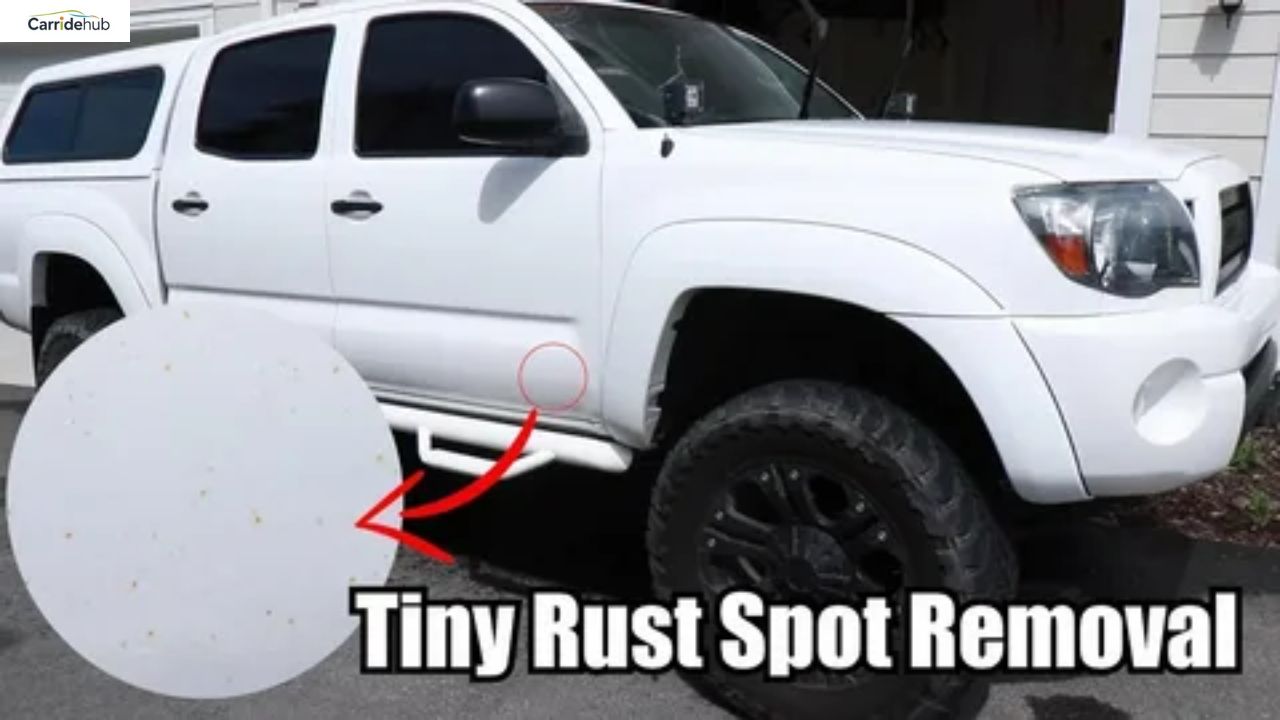
Removing car rust is essential to keep your vehicle looking new and prevent long-term damage. Rust can spread quickly if left untreated, affecting both the car’s appearance and safety. Learning simple rust removal techniques can save money and extend your car’s life.
With the right tools and products, you can remove car rust effectively at home. Regular maintenance and early treatment prevent rust from getting worse. This guide will help you tackle rust spots quickly and protect your vehicle from further corrosion.
Step 1 – Gather the Right Tools & Materials
Before starting the rust repair process, it’s important to have all the necessary tools and materials ready. This ensures the job goes smoothly and saves time. Working without proper supplies can make the repair less effective or even damage your car’s surface.
Having the right materials also improves safety and makes the task easier, whether you’re sanding, cleaning, or applying rust treatment.
Essential Tools & Materials:
- Sandpaper or wire brush for removing rust
- Rust converter or remover solution
- Automotive primer for metal surfaces
- Touch-up paint or spray paint matching your car
- Protective gloves and safety goggles
- Clean rags or microfiber cloths
Step 2 – Get Yourself Ready
Before tackling rust, it’s important to prepare yourself properly. Rust repair can be messy, and rushing through it can make the damage worse.
Wear clothing that you don’t mind getting dirty or stained, and make sure you have gloves to protect your hands. Safety goggles are also essential to protect your eyes from dust and chemical splashes.
Take a few moments to clear your workspace and organize your tools. Being fully prepared will make the process smoother, safer, and more effective.
Step 3 – Mask Around the Area You’re Treating
Before removing rust, protect the surrounding car surface carefully. Masking prevents scratches, paint damage, and accidental overspray that can ruin the finish.
Use painter’s tape along the edges and cover nearby areas with plastic sheets or newspaper. Ensure all edges are sealed properly so no dust, debris, or paint seeps under the tape.
Taking time to mask correctly keeps your car clean and ensures the repaired area looks professional. Proper preparation also makes cleanup much easier afterward.
Step 4 – Remove Rust & the Paint Around It
Remove all rust using sandpaper, a wire brush, or a rust remover solution. Even a small leftover spot can spread and worsen over time.
Lightly remove the surrounding paint to create a smooth surface for the primer. Be gentle to avoid damaging the metal while removing old paint or rust.
After cleaning, wipe the area with a microfiber cloth or damp rag. A smooth, clean surface ensures that primer and paint adhere properly for long-lasting results.
Step 5 – Sand & Paint Area With Primer
Sand the treated area lightly to make it level with the surrounding surface. This improves adhesion and prevents bumps under the paint.
Apply a thin, even layer of automotive primer over the exposed metal. Primer protects against rust and creates a strong base for the paint layer.
Let the primer dry completely before applying touch-up paint or spray paint. Proper priming ensures the repaired area looks smooth, shiny, and professional.
Step 6 – Paint the Area
Once the primer is fully dry, it’s time to apply your touch-up or spray paint. Use thin, even coats to prevent drips and ensure a smooth finish.
Hold the spray can or brush at a consistent distance from the surface. Apply multiple light layers rather than one thick coat for a more professional look.
Allow each coat to dry slightly before adding the next. Proper painting gives your car a uniform color and restores the area’s original shine.
Step 7 – Apply the Clear Coat
After the paint has dried completely, apply a clear coat to protect the finish. The clear coat adds shine and prevents rust from returning quickly.
Use even, thin layers, and avoid over-spraying. Hold the can or brush steady and keep a consistent distance from the surface for best results.
Let the clear coat dry fully according to the product instructions. A proper clear coat ensures your repair lasts longer and blends seamlessly with the rest of the car.
Understanding Rust And Its Impact On Vehicles
Types Of Rust Damage
- Surface Rust: This is the earliest stage of rust, appearing when paint chips or scratches expose the bare metal. It usually looks like small orange or brown spots and affects only the top layer. Quick treatment with sanding and touch-up paint can prevent further damage.
- Scale Rust: When surface rust is ignored, it develops into scale rust. The corrosion penetrates deeper, forming rough, flaky patches. This weakens the metal, and simple sanding may no longer be enough to repair it.
- Penetrating Rust: At this advanced stage, rust eats through the metal completely, creating holes. It compromises structural strength and requires cutting out the damaged area and welding or replacing new metal.
- Undercarriage Rust: This forms underneath the vehicle where water, road salt, and mud accumulate. It can damage the frame, suspension, brake lines, and fuel lines, potentially causing serious safety issues if left untreated.
Consequences Of Neglecting Rust
- Weakened Vehicle Structure: Rust gradually corrodes essential parts like the chassis, suspension, and frame. Over time, this reduces the car’s strength and can create serious safety risks while driving.
- Lower Resale Value: A car with visible rust loses appeal to potential buyers. Corrosion often signals poor maintenance, making it harder to sell or trade-in at a fair price.
- Rising Repair Expenses: If left untreated, rust spreads to multiple areas of the vehicle. This leads to more extensive damage, requiring costly repairs or part replacements.
- Declining Appearance: Rust spots make a car look aged and neglected. Even minor corrosion can affect the overall aesthetics, making the vehicle appear poorly cared for.
How Much For Rust Repair
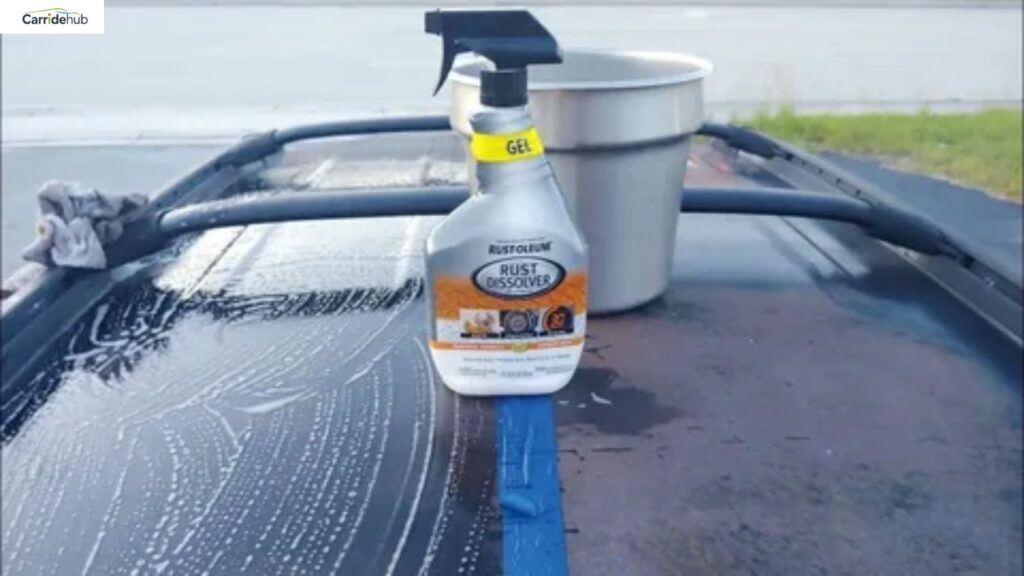
The cost of rust repair can vary widely depending on the type and extent of corrosion. Minor surface rust that only affects the paint and top metal layer can often be fixed with sanding, primer, and touch-up paint, costing as little as $50–$150.
For more serious rust, such as scale or penetrating rust, repairs may involve cutting out damaged metal, welding, and repainting larger sections. These extensive repairs can range from $300 to over $1,000, depending on the vehicle and labor costs.
Step-By-Step Guide: How To Fix Vehicle Rust
- Gather Tools & Materials: Collect sandpaper, wire brushes, rust remover, primer, paint, gloves, and safety goggles before starting.
- Prepare the Vehicle: Clean the affected area and mask surrounding surfaces to protect from overspray and debris.
- Remove Rust: Sand or wire-brush the rusted spots completely, and apply a rust converter if needed to stop further corrosion.
- Prime & Paint: Apply automotive primer to the cleaned metal, let it dry, then paint the area with matching car paint in thin, even layers.
- Finish With Clear Coat: Apply a clear coat to protect the paint and restore shine, ensuring the repaired area blends seamlessly with the rest of the car.
Common Mistakes To Avoid When Repairing Vehicle Rust
- Skipping Surface Preparation: Not cleaning or sanding the rust properly can prevent primer and paint from adhering, causing the repair to fail quickly.
- Ignoring Rust Spread: Focusing only on visible spots and neglecting surrounding areas allows rust to continue spreading underneath the paint.
- Using Too Much Paint or Primer: Applying thick layers can lead to drips, uneven surfaces, and a less professional finish.
- Skipping Protective Gear: Failing to wear gloves, goggles, or a mask exposes you to harmful chemicals and metal dust.
- Neglecting Clear Coat: Not applying a clear coat leaves the repaired area unprotected, reducing durability and shine.
How to Remove Car Rust Fast
Removing rust quickly starts with identifying the type and severity. Surface rust can be treated with sandpaper or a wire brush, while deeper rust may need chemical rust removers.
Work methodically, focusing on small sections at a time. This ensures you remove all corrosion without damaging surrounding paint.
After cleaning, apply a rust converter or primer to prevent further corrosion. Protecting the metal immediately slows down rust progression.
Finally, finish with touch-up paint or a clear coat. Quick and thorough treatment restores the appearance and prevents rust from returning.
How to Remove Car Rust at Home
Start by gathering basic tools like sandpaper, rust remover, gloves, and safety goggles. A clean, organized workspace makes the repair easier.
Clean the affected area with soap and water, then sand off loose paint and rust flakes. Use a rust converter for stubborn corrosion.
Apply automotive primer to protect the exposed metal before repainting. This prevents the rust from spreading again.
Finish with matching car paint or touch-up paint. Seal with a clear coat to restore shine and protect your repair.
Restore Car Shine from Rust
After rust removal, sanding smooths the surface and prepares it for primer and paint. Smooth surfaces reflect light better, restoring shine.
Apply primer evenly to seal the metal. Once dry, carefully paint the area in thin layers for a uniform finish.
Use multiple coats of paint if needed, allowing each to dry before the next. This ensures long-lasting color and protection.
Finish with a clear coat and gently polish the area. Proper coating restores both shine and durability.
How to Fix Small Rust Spots on Car
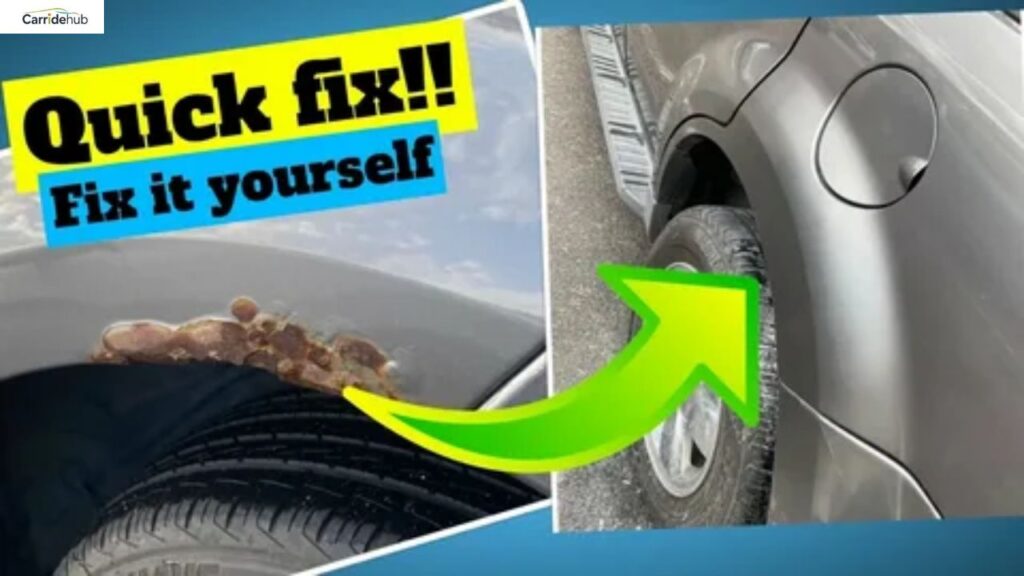
Small rust spots can often be handled with sanding and a touch-up paint kit. Start by cleaning and drying the area thoroughly.
Sand the spot lightly until smooth and free of rust flakes. Apply a rust converter if the metal is exposed.
Prime the area to prevent future rust and improve paint adhesion. Use thin layers to avoid uneven buildup.
Paint with matching car paint and finish with a clear coat. Small repairs are quick but prevent larger corrosion later.
How to Fix Large Rust Holes in Car
Large rust holes require removing all damaged metal before repair. Cut out affected areas carefully to create a clean surface.
Use a patch panel or sheet metal to replace the removed section. Welding ensures a strong, lasting repair.
Apply primer over the new metal to prevent rust. Sand smooth before painting to blend with surrounding areas.
Paint in thin layers, finishing with a clear coat. Proper repair restores structural integrity and appearance.
Tiny Rust Spots on Car
Tiny rust spots can be treated before they spread. Start by cleaning and drying the area thoroughly.
Use fine-grit sandpaper or a wire brush to remove surface rust. Treat the metal with a rust inhibitor.
Apply a small amount of primer over the cleaned spot to protect the metal. Let it dry completely.
Finish with matching touch-up paint and a clear coat. Even tiny repairs prevent future rust expansion.
Car Rust Repair Kit
Rust repair kits include sandpaper, primer, paint, and sometimes rust converter. They provide everything needed for small to medium repairs.
Start by cleaning and sanding the affected area. Follow the kit instructions carefully to ensure proper adhesion.
Apply the primer included in the kit, then paint in thin, even layers. Most kits also include a clear coat for finishing.
Using a kit simplifies the repair process, saving time and money while restoring the car’s appearance.
How to Fix Rust Holes on a Car with Spray Foam
Spray foam can fill small holes caused by rust as a temporary fix. Clean and dry the affected area first.
Apply the foam carefully, ensuring it fills the rust cavity completely. Let it expand and harden.
Trim any excess foam so it is flush with the surrounding surface. Sand lightly for smoothness.
Cover with primer, paint, and clear coat. This provides a protective seal, though permanent metal repair is recommended for structural integrity.
How to Repair Rust on Car Door
Car doors are prone to rust around edges and seams. Start by cleaning the door thoroughly and removing loose paint.
Sand or wire-brush the rusted area, treating exposed metal with a rust converter. Remove all corrosion for best results.
Apply primer and allow it to dry completely. This prevents future rust and improves paint adhesion.
Paint the door with matching car paint in thin layers, finishing with a clear coat to restore shine and protection.
How to Remove Rust from a Car Without Sanding
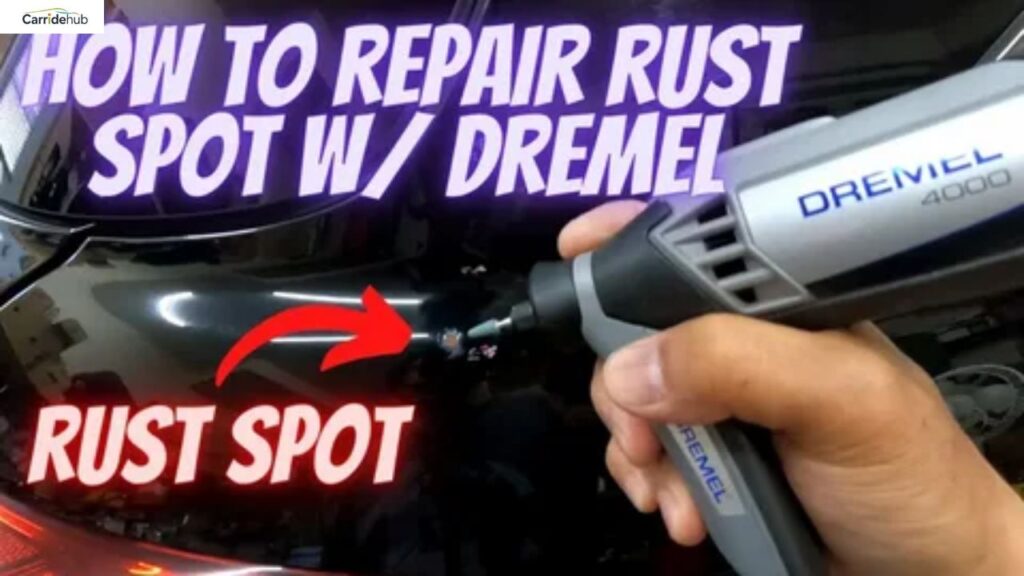
Rust removers and chemical treatments can eliminate rust without sanding. Start by cleaning the area thoroughly.
Apply a rust dissolver or converter according to the product instructions. These chemicals break down rust on contact.
Wipe the area clean and let it dry completely. For minor rust, this may be sufficient to stop further corrosion.
Finish by applying primer, paint, and clear coat to protect the metal and restore the car’s appearance.
👉🏻Discover More About Unique Information[ How Long Should Car Paint Dry Before Washing ]
Frequently Asked Questions
What is the fastest way to remove rust from a car?
The fastest way is to use a combination of sanding and a chemical rust remover. Start by cleaning the area, sand off loose rust, then apply a rust converter to stop corrosion. Finish with primer and paint to protect the metal.
Can I remove car rust at home without professional help?
Yes, minor to moderate rust can be repaired at home using basic tools like sandpaper, wire brushes, rust converters, primer, and touch-up paint. Ensure you follow safety precautions like gloves and goggles.
How do I restore shine after rust removal?
After rust removal, sand the area smooth, apply primer, then repaint with matching car paint. Finish with a clear coat and polish to restore the car’s original shine. Multiple thin coats ensure a professional finish.
How do I fix small rust spots on my car?
Clean and dry the affected area, lightly sand to remove surface rust, and apply a rust converter if necessary. Prime the area, paint with matching color, and seal with a clear coat for protection.
What is the best way to repair large rust holes on a car?
Large rust holes require cutting out the damaged metal and replacing it with a patch or new sheet metal. Weld the new metal in place, apply primer, paint, and finish with a clear coat for long-lasting protection.
Are car rust repair kits effective?
Yes, repair kits are effective for small to medium rust spots. They typically include sandpaper, rust remover, primer, paint, and sometimes clear coat. Follow instructions carefully for best results.
Can I remove rust without sanding the car?
Yes, chemical rust removers or rust converters can eliminate rust without sanding. Clean the area first, apply the product, wipe after it reacts, and then finish with primer, paint, and clear coat for protection.
Conclusion
Effectively removing car rust keeps your vehicle safe and looking its best. Treating rust early prevents it from spreading and causing costly damage. Simple steps and regular care make rust management easy for every car owner. Don’t wait—tackle rust as soon as you notice it.
By following proper rust removal methods, you can protect your car’s body and paint. Consistent maintenance ensures long-lasting results and preserves your vehicle’s value. Stay proactive to keep rust from returning and maintain your car’s shine.

Michael is a car seat specialist with 4 years of experience in reviewing, testing, and guiding people on the best car seat choices. He creates clear, reliable content to help users make safe and confident decisions.