
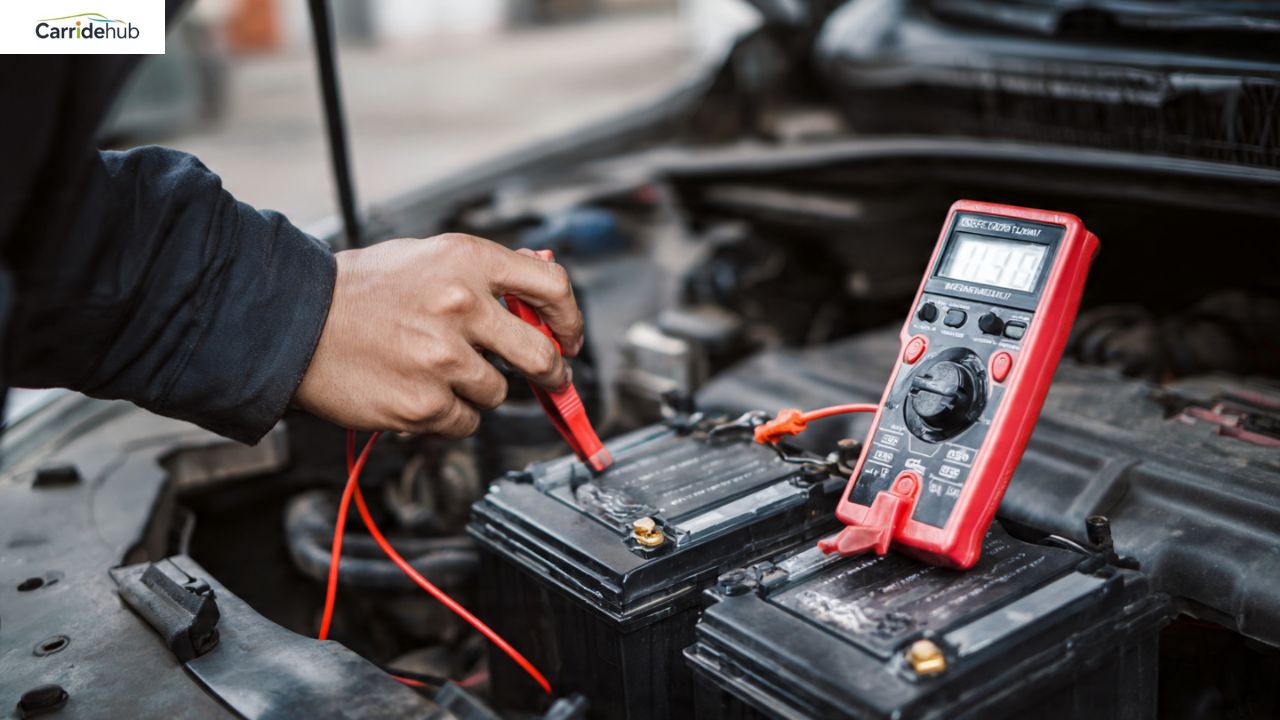
Testing a car battery is essential to ensure your vehicle starts reliably and avoids unexpected breakdowns. A weak or dead battery can leave you stranded, so regular checks save time and money. Understanding how to test a battery helps maintain its lifespan effectively.
You can test a car battery using simple tools like a multimeter or a battery tester at home. It helps detect low voltage, corrosion, or other issues before they become serious. Regular battery testing improves car performance and prevents sudden failures.
How to Check a Car Battery Using a Multimeter
If you like hands-on troubleshooting, a multimeter is the best way to verify your battery’s condition. Always wear protective gloves and goggles to stay safe when working near electrical components.
Step 1: Prepare your vehicle
Park your car in a safe, well-ventilated area. Turn off the engine, lights, and any accessories. Open the hood and let the battery rest for a few minutes so you get an accurate reading.
Step 2: Set up the multimeter
Switch your multimeter to measure DC voltage. For a standard 12‑volt battery, choose a range around 20 V to ensure proper readings.
Step 3: Connect the probes
- Attach the red probe to the positive terminal (usually marked with a “+”).
- Attach the black probe to the negative terminal or a clean metal surface on the car’s frame.
Step 4: Measure resting voltage
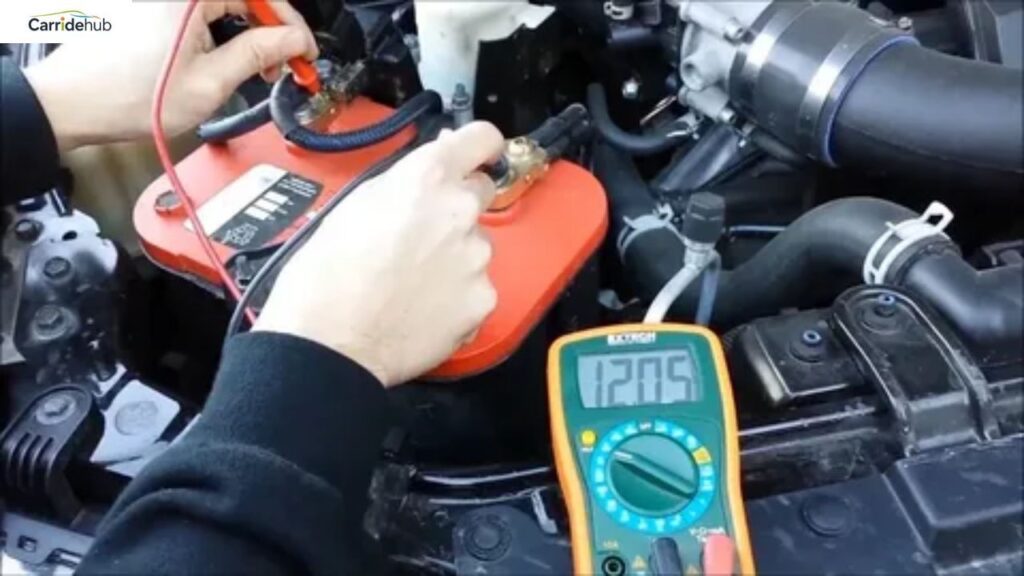
A fully charged 12‑volt battery typically reads around 12.6 V when the car is off.
Step 5: Check voltage while running (optional)
Start the engine and measure again. A healthy charging system usually gives a reading between 13.7 V and 14.7 V.
Step 6: Cranking voltage test
While turning the key to start the car, the voltage should stay above 10 V. Drops consistently below this may indicate a weak cell or failing battery.
Safety Tips:
- Work in a ventilated area to avoid harmful fumes.
- Keep metal tools away from battery terminals to prevent sparks.
- Handle the battery carefully to avoid spills or short circuits.
How to Check a Car Battery Without a Multimeter
Don’t have a multimeter? You can still get a good idea of your battery’s condition using simple at-home checks.
Step 1: Visual Inspection of the Battery
Examine the battery case and terminals carefully. Look for signs of corrosion, bulges, cracks, or fluid leaks. Any of these issues could indicate a weakening battery.
Step 2: Headlight Test to Remove Surface Charge
With the engine off, turn on the high-beam headlights for 10–15 minutes. This drains the battery’s surface charge and helps you evaluate its true performance.
Step 3: Observe Starting Performance
Try starting the car. Slight dimming of lights is normal, but heavy dimming, flickering, or difficulty starting usually signals a weak or failing battery.
Step 4: Listen for Warning Signs
Pay attention to slow cranking or repeated clicking noises when turning the key. These are common signs of reduced battery power.
Step 5: When to Seek Professional Help
If multiple warning signs appear or you’re unsure about the battery’s health, book a professional battery check or full diagnostics to confirm its condition.
What Voltage Should a Car Battery Have?
Typical Voltage Ranges for a 12 V Car Battery
| Voltage Reading | Battery Condition | Recommended Action |
| 12.6 V – 12.8 V | Fully charged and healthy | No action needed |
| 12.4 V – 12.6 V | Slightly weak | Recharge and retest |
| 12.2 V – 12.4 V | Partially charged | Recharge, let rest, then retest |
| Below 12.0 V | Discharged or failing | Recharge fully, retest, or replace if it won’t hold charge |
| 13.7 V – 14.7 V (engine running) | Alternator charging normally | Check alternator if reading is outside range |
Notes:
- Resting voltage helps assess battery health.
- Running voltage confirms alternator performance.
- Combine voltage checks with visual inspections and starting performance for best results.
What Are the Signs of a Failing Car Battery?
- Slow Engine Cranking – The car takes longer than usual to start, or the engine struggles during startup.
- Repeated Clicking Sounds – Hearing rapid clicking when turning the key is a classic sign of low battery power.
- Dim or Flickering Dashboard Lights – Interior lights, dashboard indicators, or headlights appear weak or inconsistent.
- Corrosion on Terminals – White or bluish powder around the battery terminals can prevent proper electrical flow.
- Swollen or Bulging Battery Case – Heat damage or overcharging can cause the battery casing to deform.
- Frequent Jump Starts Needed – The car regularly fails to start without a jump, indicating poor battery retention.
- Battery Warning Light on Dashboard – Some vehicles display a battery icon or check engine light related to battery issues.
- Unusual Smell – A rotten egg or sulfur odor may indicate a leaking or overcharging battery.
What Causes a Car Battery to Go Flat?
A car battery can lose charge or fail over time due to several common factors. Understanding these causes helps prevent unexpected breakdowns and extends battery life.
- Age of the Battery – Most car batteries last 3–5 years; older batteries naturally lose capacity.
- Leaving Lights or Accessories On – Forgetting headlights, interior lights, or other electronics on can drain the battery quickly.
- Faulty Charging System – A worn alternator or loose alternator belt may prevent the battery from charging properly.
- Corroded or Loose Cables – Poor connections reduce electrical flow and can cause a flat battery.
- Short Drives – Frequent short trips don’t allow the battery to recharge fully.
- Extreme Temperatures – Very hot or cold weather can reduce battery efficiency and lifespan.
- Parasitic Power Draw – Electrical components that draw power while the car is off can slowly drain the battery.
Car Battery Maintenance Tips
Proper maintenance can extend the life of your car battery and help prevent unexpected failures. Regular checks and simple habits go a long way.
- Keep Terminals Clean – Remove corrosion and dirt from the battery terminals to ensure a strong connection.
- Check Fluid Levels – For batteries with removable caps, ensure electrolyte levels are sufficient and top up with distilled water if needed.
- Avoid Short Trips – Longer drives allow the battery to recharge fully and maintain its capacity.
- Secure the Battery – Make sure the battery is firmly mounted to prevent vibrations that can damage internal components.
- Limit Power Usage When Engine is Off – Avoid using lights, infotainment, or accessories for long periods without the engine running.
- Regular Inspections – Include battery checks in your routine car maintenance schedule.
- Protect from Extreme Temperatures – Park in shade during hot weather and use insulation or a battery blanket in freezing conditions.
Common Car Battery Testing Tools
Using the right tools makes checking your car battery’s health quick, safe, and accurate. Here are the most common tools drivers and technicians use:
- Multimeter – Measures resting, cranking, and running voltage to check battery health.
- Battery Load Tester – Applies a controlled load to evaluate the battery’s ability to deliver power.
- Digital Battery Analyzer – Provides detailed readings including internal resistance, state of charge, and CCA (Cold Cranking Amps).
- Built-in Battery Indicator – Some batteries include a simple color-coded window showing state of charge.
- Clamp Meter – Measures current draw without disconnecting the battery, useful for detecting parasitic drains.
- Hydrometer – Tests electrolyte density in lead-acid batteries to determine charge and condition.
- OBD-II Code Reader – Some modern cars allow battery and charging system diagnostics through the onboard computer.
Step-by-Step Guide to Test a Car Battery at Home
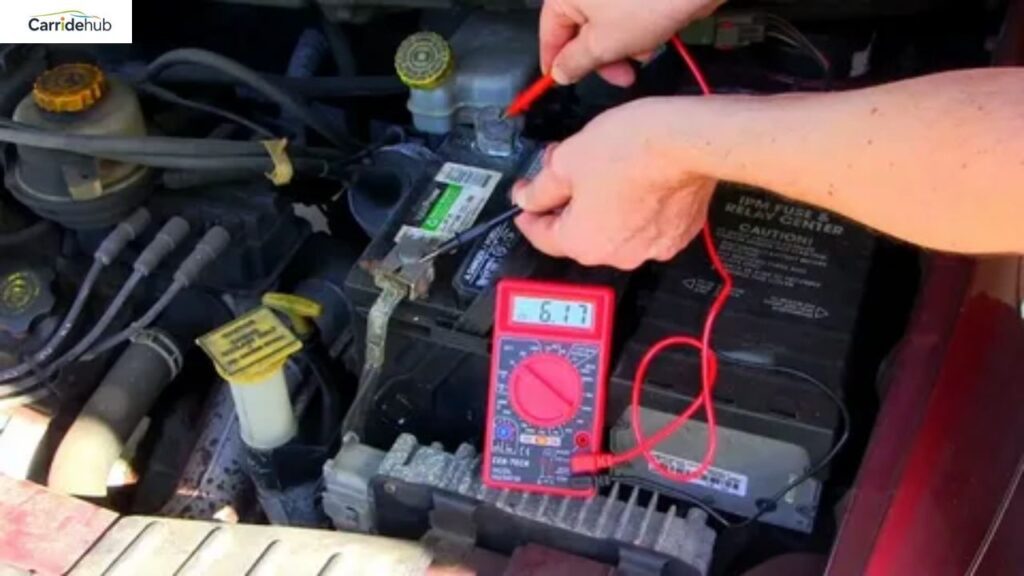
Testing your car battery at home is easier than you might think, even without professional tools. A few simple checks can help you spot potential issues before they leave you stranded.
Start by making sure your vehicle is parked safely, with the engine and all electronics turned off. Open the hood and allow the battery to rest for a few minutes to get accurate readings.
Visual inspections are an easy first step. Look for corrosion on terminals, bulges, cracks, or leaks in the battery case. Any of these signs can indicate a battery that’s struggling or near the end of its life.
If you have a multimeter, use it to measure the battery voltage at rest. A healthy 12 V battery typically reads around 12.6 V. Optionally, you can also check voltage while the engine is running to see if the alternator is charging correctly (usually 13.7–14.7 V).
Even without a multimeter, you can check battery performance by observing how the car starts and whether the lights dim excessively. Combine these observations with regular maintenance for the best results.
Testing Cold Cranking Amps (CCA) for Your Car Battery
Cold Cranking Amps (CCA) indicate how much power a battery can deliver to start your engine in cold conditions. It’s a key measure of battery performance, especially in winter.
Most modern digital testers can measure CCA directly. Older analog devices or load testers also provide a good estimate by simulating engine starting conditions.
To test CCA manually, connect the battery to a suitable load tester, ensuring correct polarity. Apply the load briefly and monitor the voltage drop – the battery should stay above recommended minimums for your model.
A battery that drops too much under load may have a weak or failing cell, even if resting voltage appears normal. Regular CCA checks help prevent unexpected starting problems.
Understanding your battery’s CCA rating and testing it periodically ensures reliable starts, longer battery life, and better overall vehicle performance.
Battery Health Check Code
Modern cars often allow battery diagnostics via the onboard computer using OBD-II codes. These codes can reveal issues with the battery or charging system without opening the hood.
To access these codes, you need an OBD-II scanner. Plug it into the vehicle’s diagnostic port, usually located under the dashboard, and follow the scanner instructions to read battery-related error codes.
Common codes indicate weak battery voltage, charging system failures, or problems with alternator performance. These alerts help you take action before a breakdown occurs.
Some advanced scanners can also display battery voltage, CCA, and state-of-charge information in real time, giving a clear picture of battery health.
Regularly checking these codes is especially helpful for drivers with older vehicles or those experiencing intermittent starting problems.
How to Check Car Battery Water Level
Some car batteries, particularly older lead-acid models, require monitoring of electrolyte levels to maintain proper performance. Low fluid levels can reduce battery efficiency and lifespan.
First, locate the removable caps on top of the battery. Carefully remove them and inspect the fluid inside. The electrolyte should cover the battery plates but not overflow.
If the level is low, top it up with distilled water only. Avoid tap water as minerals can damage the battery and reduce conductivity.
Check fluid levels regularly, especially in hot climates or during extended driving periods, to prevent damage from overheating or evaporation.
Maintaining the correct water level ensures your battery continues to perform reliably and extends its service life.
Car Battery Health Indicator Color
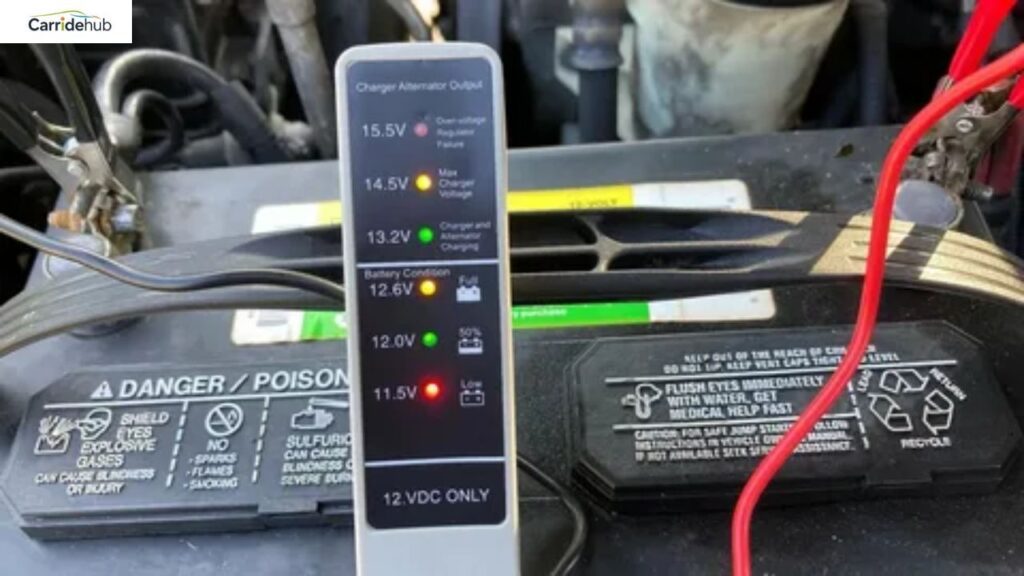
Many modern batteries include a built-in visual indicator, often a small colored window, to show the state of charge. This provides a quick and easy way to assess battery health.
Typically, a green indicator means the battery is fully charged and healthy. A black or dark indicator may signal that the battery is low on charge. A white or clear color can indicate that the electrolyte level is low.
Always check the indicator when the car has been off for a while to get an accurate reading. Surface charge can temporarily mask the battery’s true condition.
While convenient, these indicators should be used alongside other tests, such as voltage checks or performance observation, for a complete assessment.
Regular monitoring of the battery indicator color helps prevent unexpected failures and ensures your vehicle starts reliably every time.
👉🏻Discover More About Unique Informations[ Does Car Seat Expire or Is It a Myth ]
Frequently Asked Questions
How do I check if my car battery is good?
Use a multimeter to measure the resting voltage. A healthy 12 V battery typically reads around 12.6 V. You can also check for signs like slow cranking, dim lights, or corrosion on the terminals.
How can you tell if a car battery needs replacing?
Look for repeated difficulty starting the car, excessive voltage drops under load, bulging or leaking battery cases, corrosion on terminals, or a resting voltage consistently below 12.0 V.
How do I check my car battery health at home?
Perform visual inspections, test voltage with a multimeter, observe starting performance, and if available, use a battery load tester. Even without tools, dimming lights, slow cranking, and clicking sounds are good indicators.
How do you know if your car battery is healthy?
A healthy battery shows a resting voltage of 12.6–12.8 V, starts the car quickly, maintains voltage under load, and has no physical damage, corrosion, or leaks.
What are signs of a weak car battery?
Slow engine cranking, repeated clicking, flickering or dim lights, frequent need for jump starts, and low voltage readings are typical signs of a weak battery.
How can I test my car battery without a tester?
Use simple checks like observing how the car starts, performing a headlight load test, inspecting for corrosion or swelling, and listening for unusual sounds during startup.
How often should I test my car battery?
At minimum, test your battery once a year and before winter or long trips. Test sooner if the car starts slowly or you mostly take short drives.
What is the best way to test a car battery load?
A battery load tester or digital analyzer is ideal. Apply a controlled load and monitor voltage drop more than 1 V typically indicates a weak battery.
What are the safety precautions when testing a car battery?
Always wear gloves and eye protection, work in a ventilated area, avoid sparks near terminals, and clean corrosion before testing.
What should I do if my car battery fails the test?
Book a professional battery service or replacement. If symptoms persist despite good voltage, have a full diagnostics check to ensure the alternator or wiring isn’t the issue.
Conclusion
Testing a car battery regularly ensures your vehicle stays reliable and prevents unexpected breakdowns. It helps identify issues like low voltage or corrosion early, saving repair costs. Simple tests at home can keep your battery in top condition.
By checking your car battery often, you extend its lifespan and improve overall performance. Regular testing gives peace of mind and avoids roadside emergencies. Staying proactive with battery care keeps your car running smoothly every day.

Michael is a car seat specialist with 4 years of experience in reviewing, testing, and guiding people on the best car seat choices. He creates clear, reliable content to help users make safe and confident decisions.