
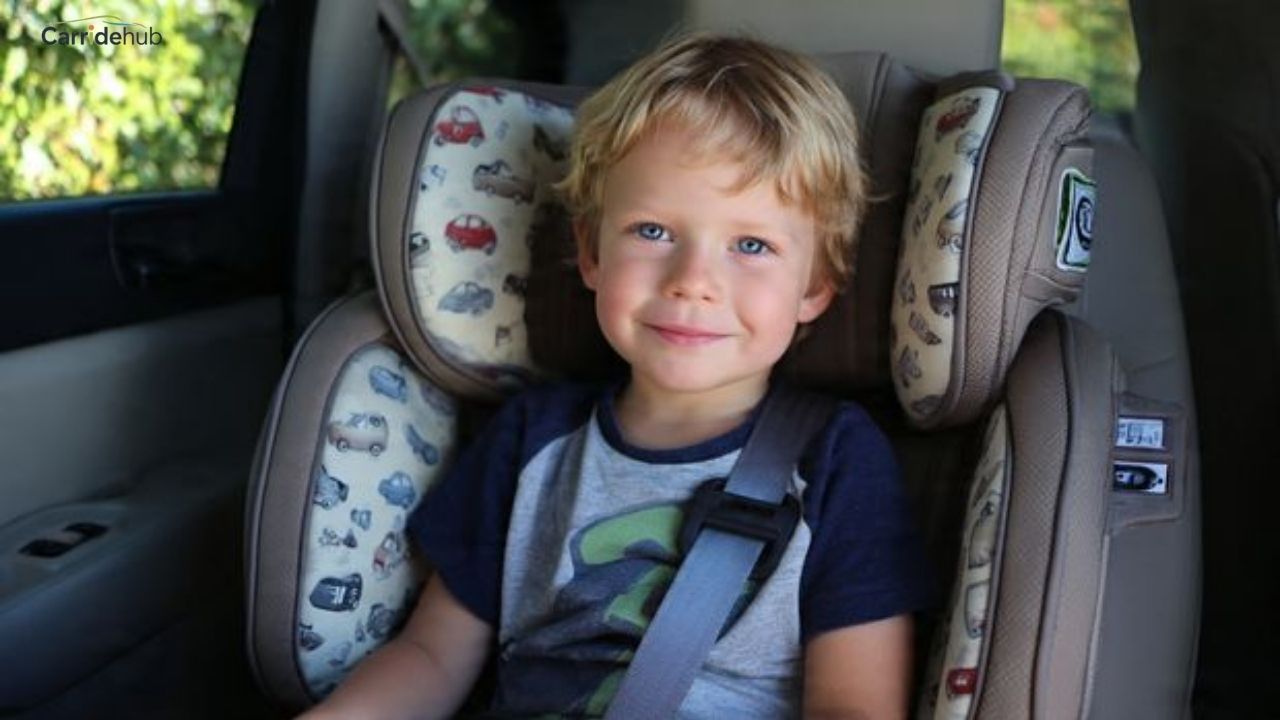
Choosing the right car seat for your child is crucial for safety, especially when they are just 3 years old. Many parents wonder if a 3-year-old can use a booster seat safely. Understanding the risks and proper guidelines helps protect your little one.
A booster seat lifts a child so the vehicle’s seatbelt fits correctly, but it does not provide a 5-point harness. Most experts recommend keeping 3-year-olds in a harnessed car seat until they meet weight, height, and maturity requirements. Proper use ensures maximum safety on every ride.
What is a Booster Seat and How Does it Protect?
A booster seat is designed to elevate a child so that the adult seatbelt fits properly across their smaller body. Unlike a car seat with a 5-point harness, a booster does not restrain the child directly. It relies entirely on the vehicle’s lap and shoulder belt for protection.
By raising the child, the booster ensures the seatbelt sits across the chest and hips instead of the neck or stomach. This alignment helps reduce the risk of serious injuries in a crash. Without the boost, the belt could cause internal injuries or fail to restrain the child effectively.
While boosters improve seatbelt fit, they are less protective than a 5-point harness, especially in side-impact or rollover crashes. The child’s safety depends heavily on remaining properly seated throughout the ride. Any movement can compromise the seatbelt’s effectiveness.
Boosters are best for children who have outgrown their harnessed car seat but are not yet tall enough for an adult seatbelt alone. They provide a bridge between the harnessed seat and full seatbelt use, making seatbelt protection functional for smaller children in vehicles.
Is It a Booster? Confusing Marketing Terms Are… Confusing
Car seat marketing can be tricky, with terms like “Harnessed Booster,” “3-in-1,” or “All-in-One” often used interchangeably. These labels can confuse parents about whether the seat is safe for a preschooler. Understanding the difference is key to proper safety.
A harnessed booster typically includes a 5-point harness for younger children and can later convert to a booster using the vehicle seatbelt. The conversion should only happen after the child outgrows the harness in both weight and height.
Many combination seats allow multiple stages rear-facing, forward-facing, and booster mode in a single product. Parents should always check the manufacturer’s instructions to know which mode is appropriate for their child’s current age and size.
Marketing terms may make it seem like a seat is ready for a 3-year-old, but the harness is still essential for most preschoolers. Boosters without a harness are only safe once the child is both physically and behaviorally ready to use the seatbelt properly.
Reasons Why 3-Year-Olds Should NOT Ride in a Booster
- Most booster seats have a minimum weight of 40 lbs and are intended for children 4 years and older.
- 3-year-olds usually lack the maturity to sit properly for the entire ride.
- 5-point harness car seats provide better protection for younger children under 40 lbs.
- Boosters rely on the vehicle’s seatbelt, which may not fit correctly on smaller children.
- Improper seatbelt positioning can cause serious injuries during a crash.
- Young children often fidget or shift, reducing the booster’s effectiveness.
- Boosters offer less protection in side-impact or rollover crashes compared to harnessed seats.
- Many states legally restrict booster use for children under 4 years or under 40 lbs.
- Responsibility for safety shifts to the child, and most 3-year-olds cannot manage it reliably.
- Premature use of a booster can increase the risk of serious injury, rather than improving safety.
Maturity Matters
When a child rides in a 5-point harness seat, the parent is fully responsible for their safety. The harness keeps the child properly restrained at all times. The child does not need to understand positioning or crash dynamics. Parents can ensure the straps are snug and secure.
In a booster seat, the responsibility shifts to the child. They must remain seated correctly, keep the shoulder belt over the chest, and avoid slipping out of the seatbelt. Any movement can reduce the seatbelt’s effectiveness. The booster cannot protect if the child is out of position.
Most 3-year-olds lack the impulse control and awareness required for booster use. Wiggling, leaning, or shifting can compromise safety. Even short lapses in positioning can lead to injuries. This is why young children are not ready for boosters.
Children must be mature enough to sit still for the entire trip, awake or asleep. They need to follow safety rules consistently. Otherwise, the seatbelt may fail in a crash. Maturity is just as important as size for booster readiness.
By kindergarten age, many children develop enough size and maturity to safely transition to a booster. Until then, a harnessed car seat ensures proper protection. Parents can maintain control over safety. The extra security reduces risk in every ride.
But What About Giant 3-Year-Olds?

Some 3-year-olds are taller or heavier than average and may outgrow their current harnessed car seat. In these cases, parents often worry about safety and comfort. Finding the right seat that accommodates both size and protection is key.
Look for car seats with a higher weight limit, up to 65 lbs, and tall top harness slots. These allow larger preschoolers to stay in a 5-point harness longer. Maintaining harness use ensures maximum safety, even for bigger kids.
Forward-facing combination seats like the Chicco MyFit or Graco Nautilus 2.0 are excellent options. They support higher weight and height limits while keeping the child properly restrained. These seats bridge the gap between harnessed car seats and boosters.
For long-lasting solutions, all-in-one seats like Britax One4Life Slim or Evenflo Revolve360 Extend offer multiple stages. They can be used rear-facing, forward-facing, or as a booster when the child is ready. Parents get flexibility without compromising safety.
Even if your child is “giant” for their age, it’s usually safer to stay in a harnessed seat until they are both physically and behaviorally ready for a booster. Safety should always take priority over convenience. The right seat grows with your child.
Can a 3-Year-Old Sit in a Booster Seat?
Most safety experts agree that 3-year-olds are generally too young for a booster seat. Boosters rely on the vehicle’s seatbelt, and children at this age often lack the maturity to sit still and stay properly positioned.
Using a booster too early can increase the risk of injuries during a crash. A 5-point harness car seat provides better protection for children under 40 lbs. It keeps the child restrained regardless of movement.
Only in rare cases, when a child is very large for their age, might parents consider a booster. Even then, the child must be physically and behaviorally ready to stay in position for the entire ride.
3-Year-Old Car Seat Requirements
Children under 4 years or under 40 lbs should remain in a harnessed car seat. Most seats have manufacturer guidelines specifying weight, height, and age limits for safety compliance.
A 3-year-old must use a forward-facing seat with a 5-point harness if they have outgrown rear-facing limits. The harness should be snug, with straps positioned at or above the shoulders.
Parents should also ensure the seat is properly installed in the vehicle, following the manufacturer’s instructions. Proper installation is critical for maximum protection in case of a crash.
3-Year-Old in Booster Seat

A 3-year-old in a booster seat is usually at risk because the child might not stay properly positioned. Boosters depend entirely on the vehicle’s seatbelt to provide protection.
Seatbelt fit is another concern. The lap belt should lie across the upper thighs, not the stomach, and the shoulder belt should cross the chest. Most 3-year-olds are too small for correct positioning.
Maturity is key. Even if the child physically fits in a booster, they must remain still and follow safety rules. Most preschoolers are not ready to handle this responsibility reliably.
3-Year-Old in Car Seat
A 3-year-old should remain in a harnessed car seat until they meet weight, height, and age requirements for a booster. This ensures full protection in all types of crashes.
Forward-facing seats with 5-point harnesses are recommended. They distribute crash forces evenly across the body, reducing the risk of injury.
Parents should monitor their child’s growth and behavior. If the child is consistently outgrowing the current seat, look for a seat with higher weight and height limits, but continue using the harness until a booster is safe.
👉🏻Discover More About Unique Information[ Evenflo Revolve180 LiteMax NXT Review ]
Frequently Asked Questions
Can a 3-year-old sit in a booster seat?
Most safety experts advise against it. A 3-year-old usually lacks the maturity and size to sit properly in a booster. A forward-facing car seat with a 5-point harness is safer until they meet weight and age requirements.
What are the car seat requirements for a 3-year-old?
A 3-year-old should use a forward-facing harnessed car seat. The seat must follow manufacturer guidelines for height, weight, and installation. Children under 40 lbs or under 4 years should not use boosters.
Is it safe for a 3-year-old to ride in a booster seat?
No, it is generally unsafe. Boosters rely on the vehicle seatbelt, which may not fit small children correctly. Staying in a 5-point harness seat provides better protection against crashes.
When can a 3-year-old transition to a booster seat?
Children can transition when they meet minimum weight and height requirements, usually 40+ lbs and around 4 years old. They also need the maturity to sit still and keep the seatbelt in position.
Can a giant 3-year-old use a booster seat safely?
Even large 3-year-olds should remain in a harnessed car seat. Only after reaching proper weight, height, and maturity can they safely switch to a booster.
What type of car seat is best for a 3-year-old?
A forward-facing car seat with a 5-point harness is best. It keeps the child restrained during a crash and distributes impact forces safely across the body.
How do I know if my 3-year-old is ready for a booster?
Your child is ready when they meet the minimum weight (40 lbs), proper height, and maturity level. They should sit still, keep the seatbelt in place, and follow basic safety rules.
Why is a 5-point harness better than a booster for a 3-year-old?
A 5-point harness secures the child at the shoulders and hips, keeping them in the safest position during a crash. Boosters rely on seatbelts that may not fit small children correctly, increasing injury risk.
Conclusion
Using a booster seat for a 3-year-old is generally not recommended due to safety risks. Children at this age are usually too small and not mature enough to stay properly seated. Keeping them in a 5-point harness car seat is the safest choice.
Parents should always check weight and height limits before switching seats. A booster is suitable only when a child is older, bigger, and mature enough. Following these guidelines ensures your child stays protected on every ride.

Michael is a car seat specialist with 4 years of experience in reviewing, testing, and guiding people on the best car seat choices. He creates clear, reliable content to help users make safe and confident decisions.