
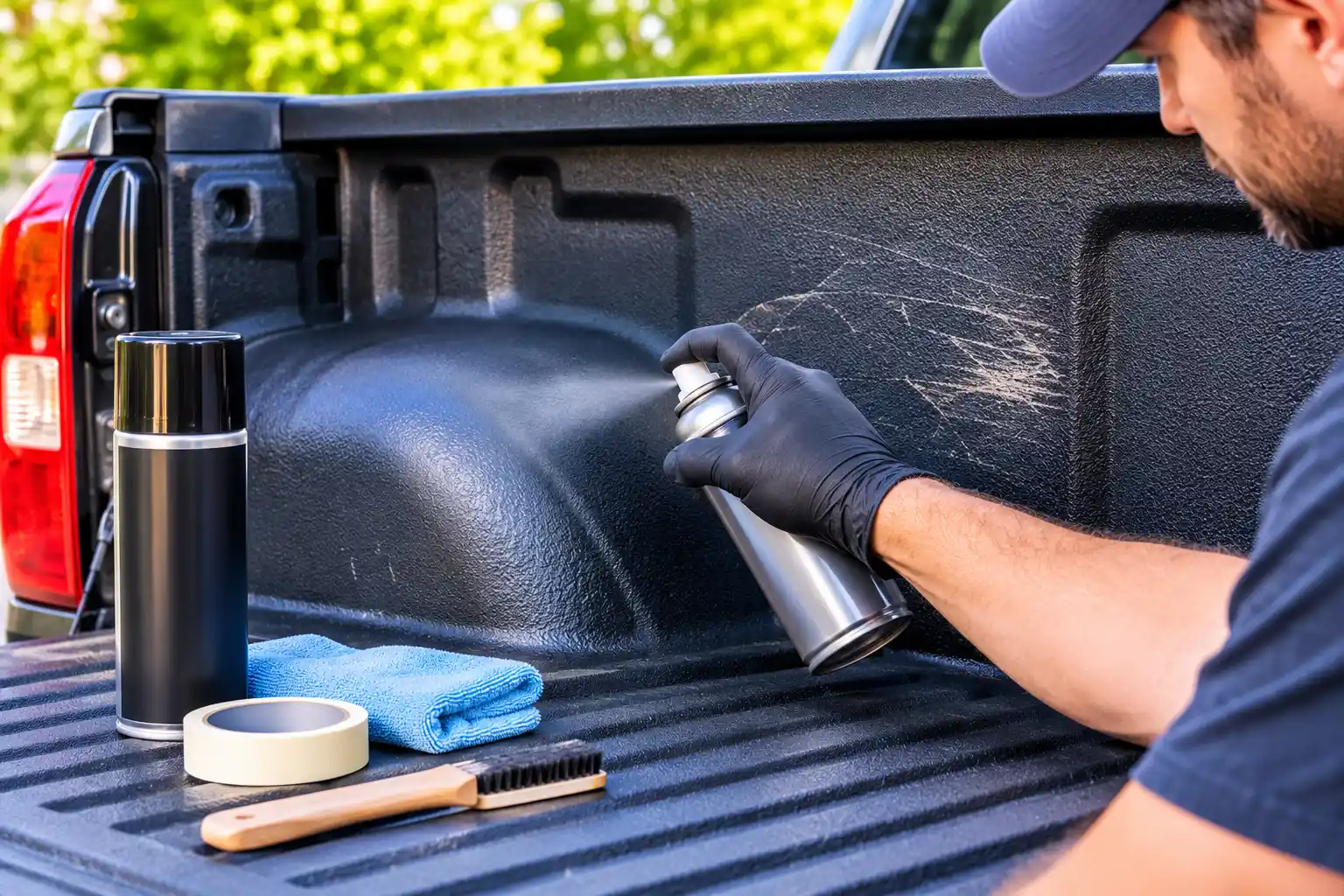
Scratches and dings happen when heavy cargo rubs or bangs against your truck bed during loading and transport. A bed liner spray kit provides a protective coating, but repeated contact with sharp materials can still wear down some areas. The right repair depends on the damage depth and the liner’s condition. Here are some of the ways to repair scratches and dings in your bed liner spray kit:
Restore Texture and Color
A repaired section stands out when its texture differs noticeably from the surrounding liner. Spray technique affects coverage, while inconsistent application leaves visible variations across the truck bed. Color matching also requires attention if the existing liner has a customized finish. The following details help guide the final application:
- Match the texture: Compare the repaired surface with adjacent areas for consistent coverage.
- Check color compatibility: Review available automotive toners when matching or customizing the finish.
- Inspect the edges: Look for gaps between the repaired section and the surrounding coating.
- Follow curing instructions: Allow the new coating to cure before loading cargo.
- Review the finish: Check for missed areas or uneven coverage before returning the truck to service.
Reapply Compatible Coating
After assessing and preparing the damaged section, identify a coating compatible with the existing bed liner spray kit. Urethane-based liners resist abrasion and impact, making compatibility key when restoring a damaged protective surface. If the existing liner is loose or extensively damaged, applying new material directly over it may not produce a sound repair. Check the manufacturer’s instructions or request product guidance before choosing between a localized repair and broader recoating.
Inspect Damage Patterns
Always inspect the damaged area under good lighting; shallow scratches are not the same as deep gouges. Different assessment methods are needed for marks that only affect the liner’s texture, compared with damage that exposes bare metal and the actual truck bed. When transporting construction materials, check places in the bed where sharp points come into contact.
Be sure to check around the edges of each damaged area. If the peeling or loose coating isn’t just a surface scratch, or if the metal is exposed, investigate it. Rust under the liner also alters the preparation needed prior to applying another coat.
Depending on the size of the damaged area, your next step depends. One ding near the tailgate is not a large problem when there is extensive damage to the loading area. Damage assessment will determine if localized or large-area recoating is warranted.
Prepare Damaged Areas
To bond effectively, a new coating must have a clean, properly prepared surface. Cleaning is the first step in the process, as dirt and grease can hinder adhesion. Different kinds of liners and different materials below the liners will require different preparation methods.
If a scratch runs deep, it will need special care in preparation of the metal. The surface must be thoroughly cleaned and dried, and the surface may or may not be primed according to the nature of the surface. Preventing contamination to the repaired area is achieved by following the instructions for the preparation of the product.
Maintain Your Bed Liner Spray Kit
How you load your cargo affects how quickly scratches and dents develop. Using metal tools reduces the likelihood of direct contact between the tools and your bed liner when loading. Regular inspection of your truck bed liner assists you in finding any worn parts before they need extensive preparation. Consult with a supplier of a truck bed spray kit to find out compatible coatings and application procedures beforehand.
