
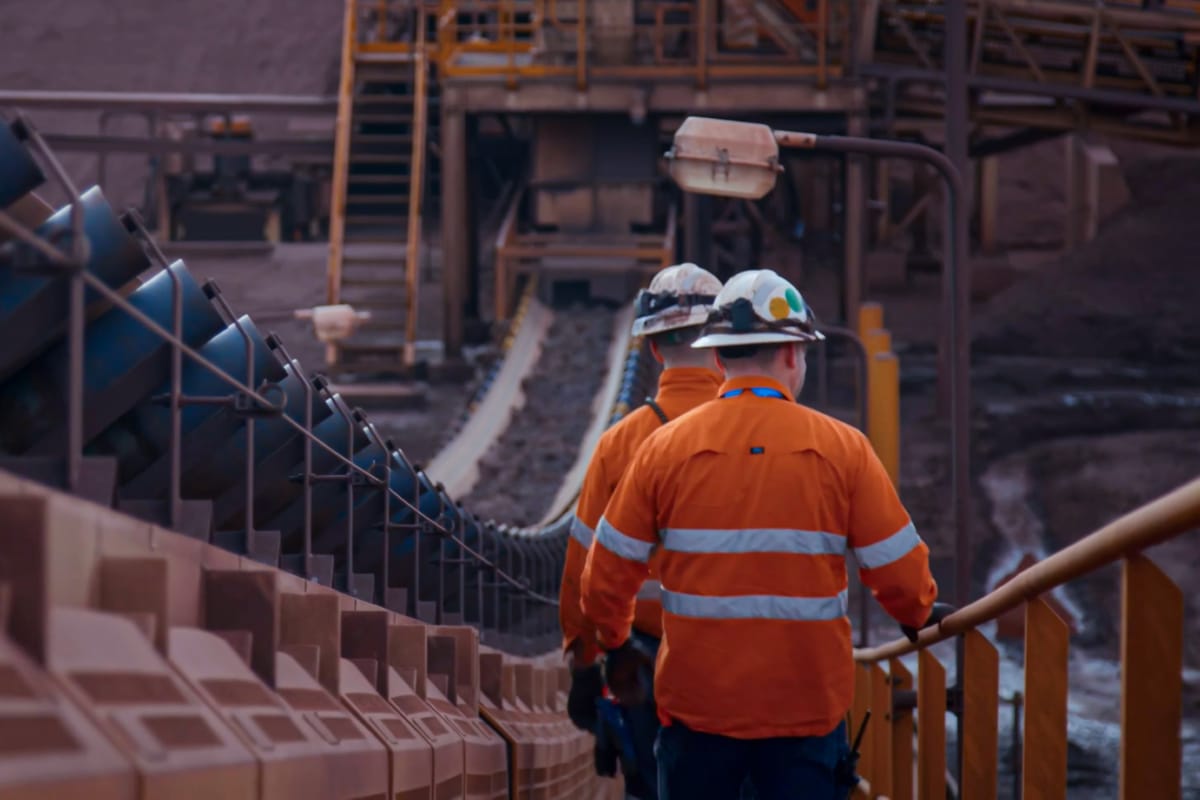
Australia’s mining industry is moving into a new phase. Alongside the established iron ore and coal operations, a wave of critical minerals projects is opening up, chasing the lithium, nickel, cobalt and rare earth elements that battery and clean-technology supply chains depend on. Many of these deposits sit in some of the most remote country on the continent, well beyond the reach of any transmission line.
That distance turns power into one of the first problems a project has to solve. A processing plant, an accommodation camp, a workshop and a communications network all need electricity before the first tonne of ore is moved, and there is rarely a grid connection to plug into. For much of the sector, reliable on-site generation is not a backup measure. It is the primary source of power, and it has to run continuously.
Why remote mines make their own power
Most critical minerals deposits lie hundreds of kilometres from the nearest substation. Extending high-voltage infrastructure to a single site is slow and costly, and it rarely stacks up for a project with a defined life. Instead, operators build their own power supply on site, usually diesel sets sized to carry the full processing load with headroom to spare.
Prime power is the term for generation that runs as the main supply rather than as an occasional standby. It has to cope with a load that varies as crushers, pumps and conveyors cycle on and off, and it has to do so without interruption. An unplanned stop at a remote plant is more than a minor inconvenience, because restarting a processing circuit can take hours and every idle hour carries a cost.
Early in a project’s life the picture shifts quickly. An exploration camp needs modest, portable power, while a producing mine needs a great deal more. Generator hire suits the exploration and construction phases well, because the requirement is temporary and the equipment can be scaled up or returned as the site develops.
The conditions that make mine-site power hard
Remote generation has to survive an environment that is hard on machinery. Dust is constant, and fine particulates clog air filters and abrade moving parts. Heat is relentless across much of inland Australia, and high ambient temperatures reduce the output an engine can safely deliver. Distance compounds both, because a technician cannot simply drop in when something needs attention.
Equipment specified for these sites is configured accordingly, with heavy-duty filtration, cooling designed for high ambient conditions, and enclosures that keep dust and weather out. Maintenance intervals are planned around the difficulty of access, and spare parts are often held on site rather than ordered as needed.
The shift toward hybrid and cleaner power
Diesel has long been the default for remote mines, but the picture is changing. Growing interest in lower-emissions operation, combined with the practical cost of hauling fuel long distances, is pushing operators toward diesel-battery hybrids and, where the site suits it, solar.
A hybrid system pairs generators with battery energy storage. The batteries absorb short load swings and cover quiet periods, which lets the diesel sets run at their most efficient point or switch off entirely for a time. The result is less fuel burnt, fewer running hours on the engines and lower emissions, without giving up the reliability a mine depends on. For sites producing the minerals that feed the battery supply chain, cleaner power on site also aligns with what their customers increasingly expect.
Fuel logistics and the true cost of running remote
For a diesel power supply in remote country, fuel is a logistics exercise in its own right. It has to be trucked in over long distances, stored safely on site in enough quantity to ride out a supply interruption, and managed so that it does not degrade before it is used. Wet-season road closures in the north can cut a site off for weeks, so fuel planning is built around the worst case, not the average.
This is one reason hybrids and right-sized equipment matter beyond emissions. Every litre not burnt is a litre that does not have to be hauled in, and a set matched to the real load runs more efficiently than one that is oversized and idling. The economics of remote power are as much about logistics as about the generators themselves.
How suppliers fit the sector
Operators generally work with a power specialist that can cover the whole lifecycle rather than a single transaction. That means matching equipment to the load, delivering and commissioning it in difficult country, and keeping it running through service and support. The choice between a generator hire agreement and an outright generator sale usually comes down to project life. Hire keeps capital free and suits temporary or changing requirements, while a generator sale makes sense for permanent infrastructure a mine expects to run for years.
Melbourne-based East Coast Generators is one example of a supplier working across that full span, offering hire through its division Generator Rentals Australia, new and used sales, and service across all makes, backed by a 24/7 service line. Whether a site is served through generator hire during construction or a generator sale for its permanent plant, the same disciplines apply: size for the real load, specify for the conditions, and plan the servicing around the distance.
Powering the next chapter
Australia’s critical minerals growth will be built on reliable power in places the grid does not reach. The operators who plan generation early, specify it for dust, heat and distance, and build in the flexibility to move toward hybrids will spend less time wondering whether the lights stay on and more time on the ore. Some will do that through generator hire as they ramp up, others through a generator sale once the plant is permanent, and many through a mix of both as the project matures.
For mine operators and contractors weighing up remote power, talking to a specialist that handles generator hire, a generator sale and ongoing service under one roof is a sensible first step.
