
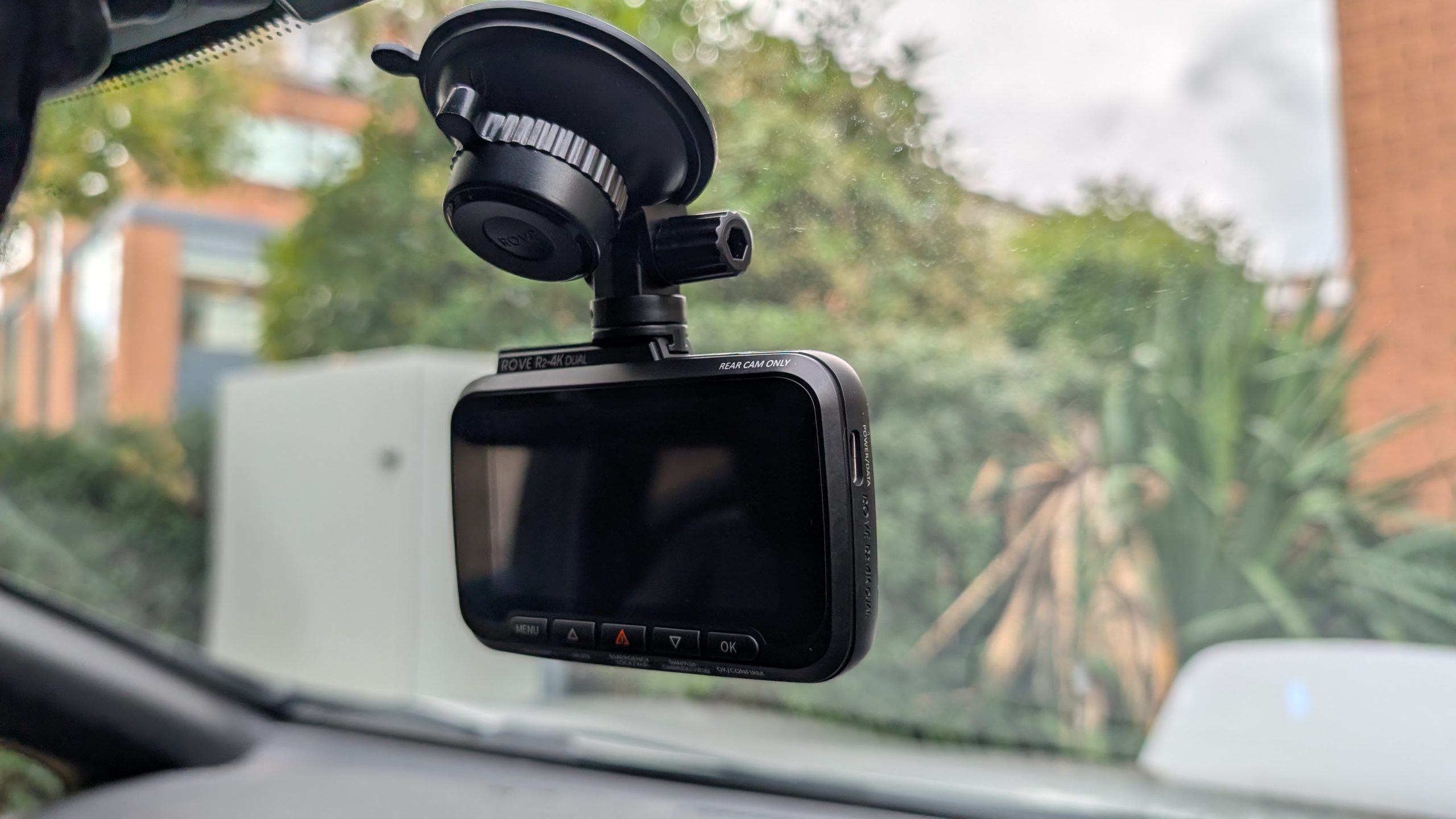
Driving in busy traffic can be unpredictable. A sudden stop, a minor collision, or an unexpected incident in a parking lot can leave drivers wishing they had a recording of what happened. A dash cam can help by capturing important moments on the road. For drivers who want coverage from both the front and rear of their vehicle, a dual-camera system can be a useful option.
The ROVE R2-4K Dual Dash Cam is designed for this purpose. It combines front and rear recording with a Sony STARVIS 2 image sensor, built-in GPS, Wi-Fi connectivity, and an included 128GB memory card. These features make it an option for commuters, families, rideshare drivers, and people who spend a lot of time behind the wheel.
However, choosing a dash cam involves more than looking at its advertised resolution. Buyers should also consider night recording, storage, installation, parking mode, and the additional equipment they may need. Here is a closer look at the ROVE R2-4K Dual Dash Cam and what drivers should know before purchasing it.
A Closer Look at the ROVE R2-4K Dual Dash Cam
The ROVE R2-4K Dual Dash Cam is a two-camera recording system that captures activity in front of and behind a vehicle. The front camera records the road ahead, while the rear camera provides a view of traffic and events behind the car.
This arrangement offers more coverage than a front-facing camera alone. For example, footage from the front camera may help document a sudden stop, while the rear camera may capture a vehicle approaching too closely from behind.
The system includes a three-inch IPS screen, built-in GPS, Wi-Fi connectivity, and a 128GB microSD card. Drivers can use these features to review recordings, access video files, and view supported driving information.
A dash cam cannot prevent every accident, and it may not capture every detail of an incident. Its main purpose is to provide a visual record that may be helpful when reviewing what happened.
Front Camera Resolution and Video Quality
One of the main selling points of the ROVE R2-4K Dual is its advertised 4K front video output. Higher-resolution footage can help preserve visible details such as road markings, nearby vehicles, and traffic movements.
There is an important specification to understand, though. The front camera captures video natively at 2.5K resolution and processes it to provide 4K output. Upscaled 4K output is not the same as recording directly at native 4K resolution.
For everyday driving, the front camera can still provide useful footage. However, buyers who specifically want native 4K capture should compare this detail with other dash cams before deciding.
Video clarity also depends on factors beyond resolution. Lighting, windshield cleanliness, weather, camera position, and vehicle speed can all affect the quality of a recording.
Keeping the lens and windshield clean is a simple way to help the camera capture a clearer view of the road.
Rear Camera Recording Adds Another View
A rear camera can be particularly useful because not every road incident happens in front of the vehicle. Rear-end collisions, close following, and certain parking incidents may occur outside the front camera’s view.
The included rear camera records at 1080p Full HD resolution. This provides a separate recording of activity behind the vehicle and can help create a more complete record of a journey.
Correct installation is important. The camera should be positioned to provide a clear view without unnecessary obstruction. Drivers should also make sure that cables are secured properly and do not interfere with airbags or other vehicle equipment.
The rear camera is a useful addition for people who regularly drive on busy highways, commute through crowded cities, or want extra coverage during everyday trips.
How the Sony STARVIS 2 Sensor Helps in Low Light
Nighttime recording is an important consideration when choosing a dash cam. Poor lighting, bright headlights, streetlights, and reflections can make it difficult to capture clear footage after dark.
The ROVE R2-4K Dual uses a Sony STARVIS 2 IMX675 image sensor. This sensor technology is designed to improve image capture in challenging lighting conditions.
The camera also uses high dynamic range processing to help manage scenes containing both bright and dark areas. This can be helpful when driving through areas where streetlights and vehicle headlights create uneven lighting.
For drivers who regularly travel at night, low-light performance can be an important advantage.
However, no dash cam can guarantee perfectly clear footage in every situation. Heavy rain, glare, dirty glass, fast-moving vehicles, and very dark roads can still affect the image. Buyers should keep realistic expectations and understand that the camera’s performance depends on the conditions in which it is used.
Wi-Fi Connectivity and Smartphone Access
Accessing recorded footage should be straightforward, especially when a driver needs to save a clip after an unexpected incident.
The ROVE R2-4K Dual includes Wi-Fi connectivity that allows compatible smartphones to connect with the camera through the manufacturer’s app. Depending on the device and supported functions, users can access recordings and transfer selected videos to their phones.
This can be more convenient than removing the memory card whenever a recording needs to be reviewed.
Wireless transfers are useful for saving important footage, but actual transfer speeds can vary. Video resolution, file size, phone compatibility, and connection conditions may affect how long the process takes.
It is a good idea to learn how the app works before relying on it during an emergency. Drivers should also avoid using their phones while driving and make any necessary changes when the vehicle is safely parked.
Built-In GPS for Location and Driving Details
The built-in GPS adds another useful feature to the ROVE R2-4K Dual Dash Cam. Depending on the settings and compatible playback software, GPS data can provide information about the vehicle’s location and route. Supported recordings may also display speed information.
This information can help drivers understand where a particular event occurred and review the circumstances surrounding a journey.
GPS can be useful for people who travel regularly for work, drive long distances, or want more context when reviewing recorded footage.
However, GPS accuracy can depend on signal conditions and device settings. Drivers should confirm that the feature is working correctly and remember that location or speed data may not always be perfectly accurate.
The value of GPS depends on how a driver plans to use the camera. Some people may find route information helpful, while others may care more about video quality and storage.
Is the Included 128GB Memory Card Enough?
The included 128GB microSD card is a practical advantage because buyers can start recording without immediately purchasing separate storage.
The amount of footage the card can hold depends on recording settings, video compression, and the amount of data generated by both cameras. Higher-quality recordings generally use more storage space.
Understanding Loop Recording
Dash cams commonly use loop recording to manage storage automatically. When the memory card becomes full, the camera can overwrite older routine recordings with newer footage.
This means drivers do not need to clear the card manually after every journey.
Important clips may be protected through the camera’s supported file-locking function. However, drivers should not rely on a locked recording as their only copy. Important footage should be transferred to a phone or computer as soon as practical.
Choosing Suitable Storage
Continuous recording places repeated demands on a memory card. A compatible high-endurance microSD card can be a sensible choice for regular use.
Before upgrading the storage, buyers should check the manual for the exact model’s supported card types and maximum capacity. A card that works in another camera may not necessarily be the best choice for this system.
Parking Mode and Additional Power Requirements
Some drivers want their dash cam to provide protection when the vehicle is parked. Parking mode can help record certain events when the engine is off, depending on the selected recording mode and power arrangement.
The ROVE R2-4K Dual supports parking monitoring, but the advertised 24-hour parking setup requires a compatible hardwire kit that is purchased separately.
This is an important detail for buyers because the camera’s initial price may not represent the complete cost of using every feature.
A hardwire kit connects the camera to the vehicle’s electrical system and provides power for supported parking functions. Installation must be carried out correctly to reduce the risk of battery drain or electrical problems.
Drivers who do not need parked-vehicle monitoring may prefer a simpler setup. Those who want it should factor in the extra hardware and installation requirements before purchasing.
Installation and Everyday Use
Installing a dual dash cam takes more work than installing a front-only model because the rear camera also needs to be positioned and connected.
The front camera is generally mounted near the windshield, while the rear camera is placed to capture the road behind the vehicle. The connecting cable should be routed neatly and secured away from pedals, moving parts, and airbag deployment areas.
The three-inch display helps users check the camera view and navigate settings. It can also be useful when confirming that both cameras are positioned correctly.
The ROVE R2-4K Dual uses a supercapacitor rather than relying on a conventional rechargeable battery for its power-loss and temperature-related functions. Supercapacitors are commonly used in dash cams because they can handle certain temperature conditions better than typical lithium-ion batteries.
Even so, the device should be installed and operated according to the manufacturer’s instructions.
Main Benefits of the ROVE R2-4K Dual
Several features may appeal to drivers considering this camera system.
Front and rear recording: Two cameras provide coverage from different directions and can capture more of a journey than a single camera.
STARVIS 2 image sensor: The sensor is designed to improve recording in difficult lighting conditions.
Included memory card: The 128GB card gives buyers storage to get started without an immediate extra purchase.
Built-in GPS: Supported recordings can include location and driving information.
Wi-Fi connectivity: Compatible smartphones can access supported camera functions and video transfers.
Three-inch display: The screen makes it easier to check views and adjust settings.
Parking monitoring support: The system offers parking-related recording options when the required additional hardware is installed.
These features make the ROVE R2-4K Dual worth considering for drivers who want a feature-rich recording system.
Limitations Buyers Should Understand
Despite its useful features, the camera may not suit everyone.
The first consideration is the front camera’s resolution. Its advertised 4K output is upscaled from native 2.5K capture, which may matter to buyers who specifically want native 4K recording.
The rear camera records at 1080p rather than 4K. Drivers who want the same high resolution from both cameras should compare alternatives.
Parking mode can also add to the total cost because the compatible hardwire kit is sold separately. Installation may require additional time or professional assistance.
Finally, recording quality is affected by lighting, weather, glare, and camera positioning. Buyers should focus on the complete feature set rather than choosing a dash cam based on resolution alone.
Who Is This Dash Cam Best Suited For?
The ROVE R2-4K Dual may suit daily commuters, families, rideshare drivers, and motorists who regularly travel on highways.
It can be especially appealing to people who want front and rear recordings, smartphone access, and GPS information in one system.
Drivers who frequently park in public areas may also appreciate its parking-monitoring capability, provided they are comfortable purchasing the additional hardware and arranging a suitable installation.
On the other hand, someone who only wants a basic record of the road ahead may not need a dual-camera setup. Drivers who prioritize native 4K recording should also compare other models carefully.
The right choice depends on budget, driving habits, desired coverage, and the importance of specific features.
Final Thoughts on the ROVE R2-4K Dual
The ROVE R2-4K Dual Dash Cam brings together front and rear recording, a Sony STARVIS 2 sensor, GPS, Wi-Fi connectivity, and a 128GB memory card. These features provide a useful combination for drivers who want to keep a record of everyday journeys and certain unexpected events.
Its main appeal is the additional rear-camera coverage combined with convenient ways to access recordings. Still, buyers should understand the difference between upscaled and native 4K, the rear camera’s 1080p resolution, and the extra equipment required for 24-hour parking monitoring.
Before making a decision, review the current product specifications, confirm compatibility with your vehicle, and consider the full cost of any accessories you need. If front and rear recording are important to you, this dash cam is worth comparing with other available options.
